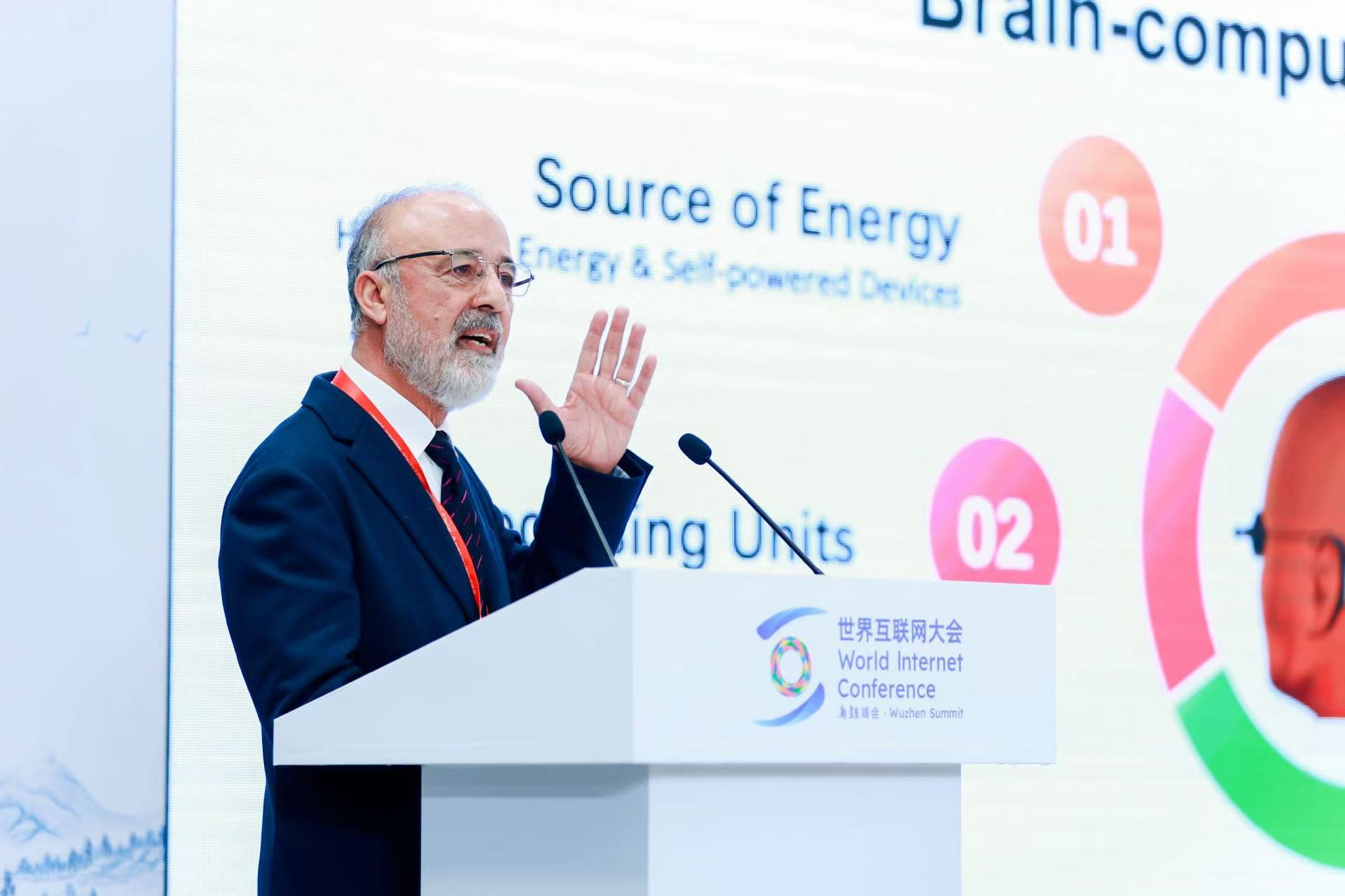
The 2025 World Internet Conference Wuzhen Summit was concluded earlier this week bringing together over 1,600 participants from more than 130 countries and regions. This prestigious gathering, often referred to as the "Internet Olympics", featured a remarkable keynote by Chair Professor Mohamad Sawan, Fellow of the Royal Society of Canada and Founding Director of CenBRAIN Neurotech Center of Excellence at Westlake University.
近日,2025年世界互联网大会乌镇峰会顺利闭幕。这场素有“互联网奥林匹克”之称的盛会,汇聚了来自全球130多个国家和地区的1600余位嘉宾。加拿大皇家学会院士、西湖大学先进神经芯片中心主任默罕默德·萨万教授受邀出席。
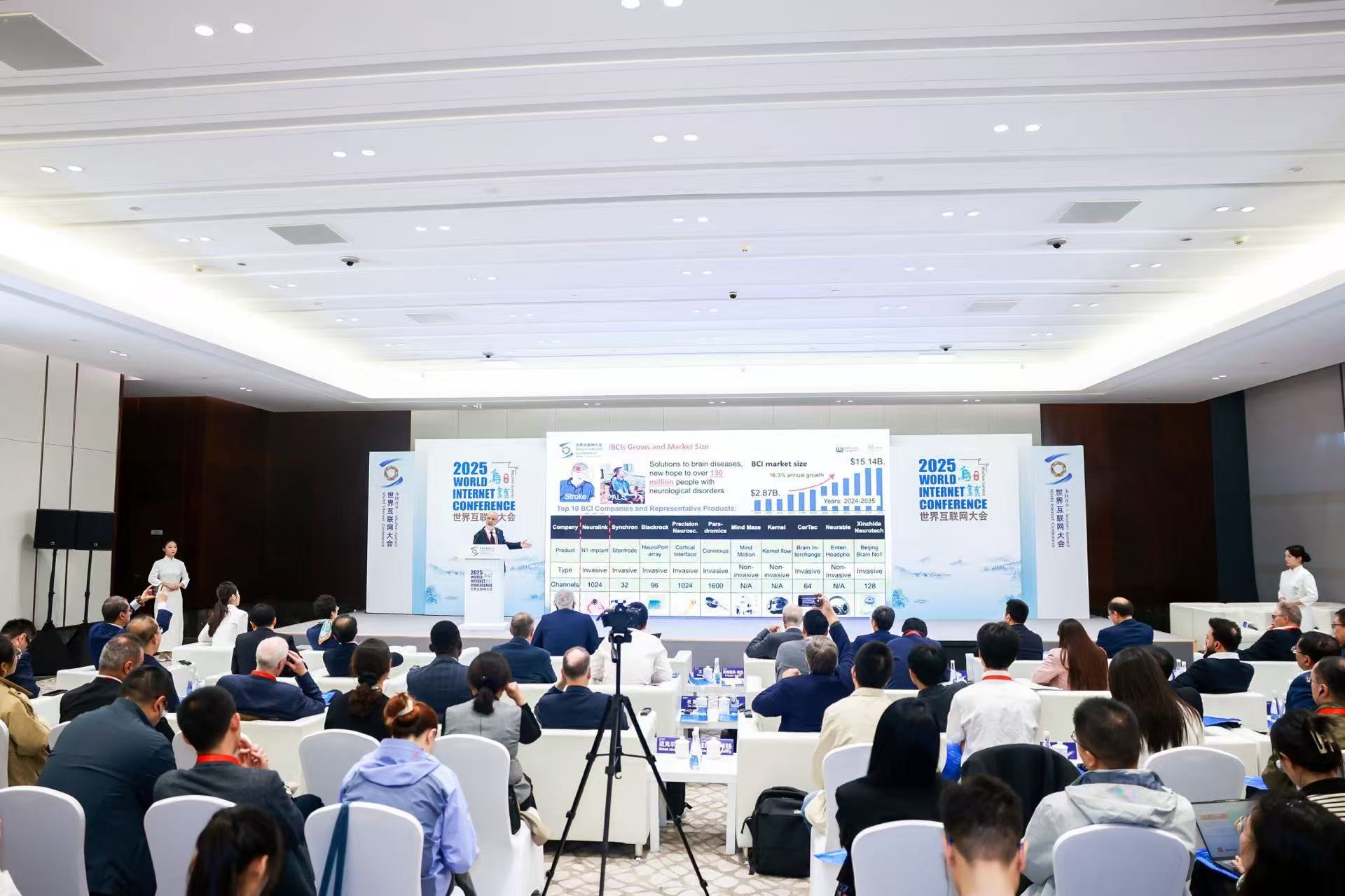
Speaking at the forum on “AI enabled Scientific Research,” Professor Sawan presented cutting-edge advances in brain-computer interface (BCI) technology from his research center, under the title “AI-Based Brain-Computer Interfaces for Efficient Management of Neurodegenerative Diseases.” His talk stood out as one of the notable highlights of this year’s summit.
在“人工智能赋能科学研究“论坛上,萨万教授以《用于高效神经退行性疾病管理的人工智能脑机接口》为题,分享了其研究中心在脑机接口(BCI)领域的前沿进展,成为本届峰会的亮点之一。
In the field of visual function, CenBRAIN Neurotech Center of Excellence has made significant progress in introducing devices to improve subjects’ vision acuity for age-related macular degeneration dysfunction. They are introducing systems based on multiple micron-scale chips with custom electrodes, they are conducting optogenetic-based experiments through retinal neural roots. This technology is being validated in animal experiments, opening a new path of hope for patients with visual impairments.
在视觉功能研究领域,萨万教授表示西湖大学先进神经芯片中心通过采用微米级定制电极芯片系统,利用视网膜神经通路开展光遗传学实验,在改善因年龄相关性黄斑变性导致的视力功能障碍方面取得重要进展。目前该技术正在动物实验中进行验证,有望为视力障碍患者带来新的希望。
For epileptic seizures detection, this can be done in the onset side of the seizures which is around 20 seconds before a seizure emerges. Professor Sawan’s center has developed an implantable device that incorporates a microchip to detect the seizure in the onset time. Also, the center introduced neuromorphic computing control units achieving several neuromodulation miniaturized devices. Also, some of these devices are intended to predict seizures more than the 20 sec on set timing described above, providing patients with critical intervention time.
针对癫痫发作检测,其中心的研究团队开发出可在发作前约20秒预警的植入式微芯片检测装置。该中心还创新性地引入神经形态计算控制单元,研制出多款神经调控微型设备。部分设备甚至能突破20秒预警时限,为患者争取更关键的治疗干预时间。
Additionally, his center has conducted in-depth language decoding research tailored to the characteristics of the Chinese. Based on the structural features of 407 commonly used syllables, their speech decoding algorithm has achieved a success rate up to 70%. This technology holds promise for patients who have lost the ability to speak due to severe paralysis, potentially allowing them to communicate directly through their “thoughts” and rebuild their connection to the outside world.
在语言解码方向,中心研究人员基于407个常用汉语音节的结构特征开展针对性研究,已经实现语音解码算法成功率达到70%。这项技术有望帮助因严重瘫痪丧失语言功能的患者,通过"思维"直接实现对外交流,重建与世界的联系。
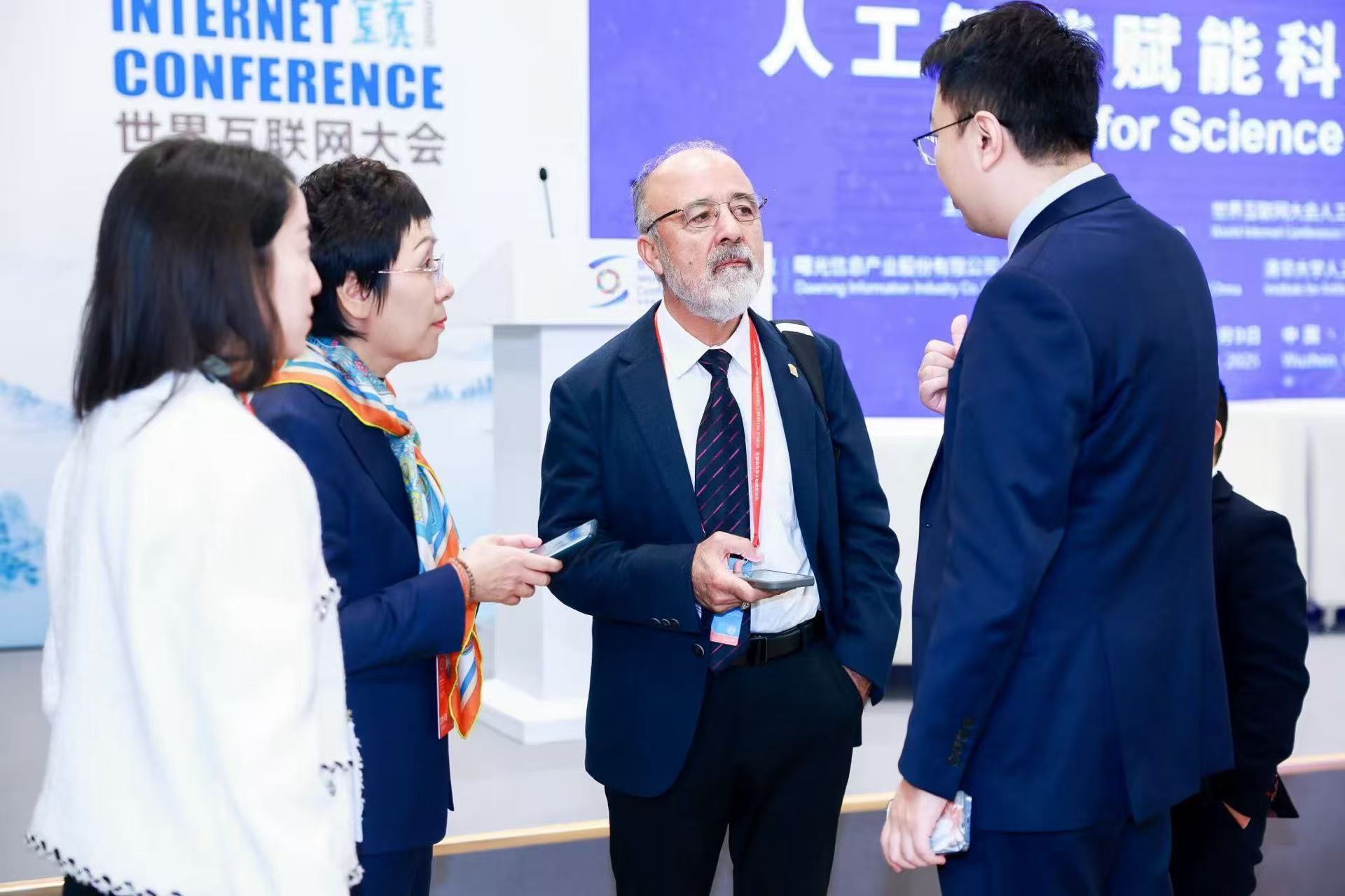
In his concluding remarks, Professor Sawan emphasized that the BCI is undergoing a historic transition from a low accuracy wearable EEG interface to clinical utility. Looking ahead, the integration of neuromorphic computing with implantable devices is expected to offer efficient solutions for neurological disorders such as vision for blinds, memory, and Alzheimer’s. At the same time, he noted that achieving this vision will require global, interdisciplinary collaboration to address key challenges including device safety, biocompatibility, and extremely low-power consumption of implantable intelligent devices.
萨万教授在总结中指出,脑机接口技术正在经历从低精度可穿戴脑电设备向临床应用的重大历史性转变。
未来,神经形态计算与植入式设备的融合将为视觉重建、记忆增强、阿尔茨海默病治疗等神经疾病领域提供创新解决方案。同时,他也强调实现这一愿景需要全球性的跨学科协作,共同攻克设备安全性、生物相容性、植入式智能设备超低功耗等多重挑战。