On the morning of November 24, 2025, Westlake University's Academic Ring buzzed with intellectual excitement as Prof. Moustafa Nawito took the stage in classroom E10-205 for the 52nd academic lecture organized by the CenBRAIN Neurotech Center of Excellence.
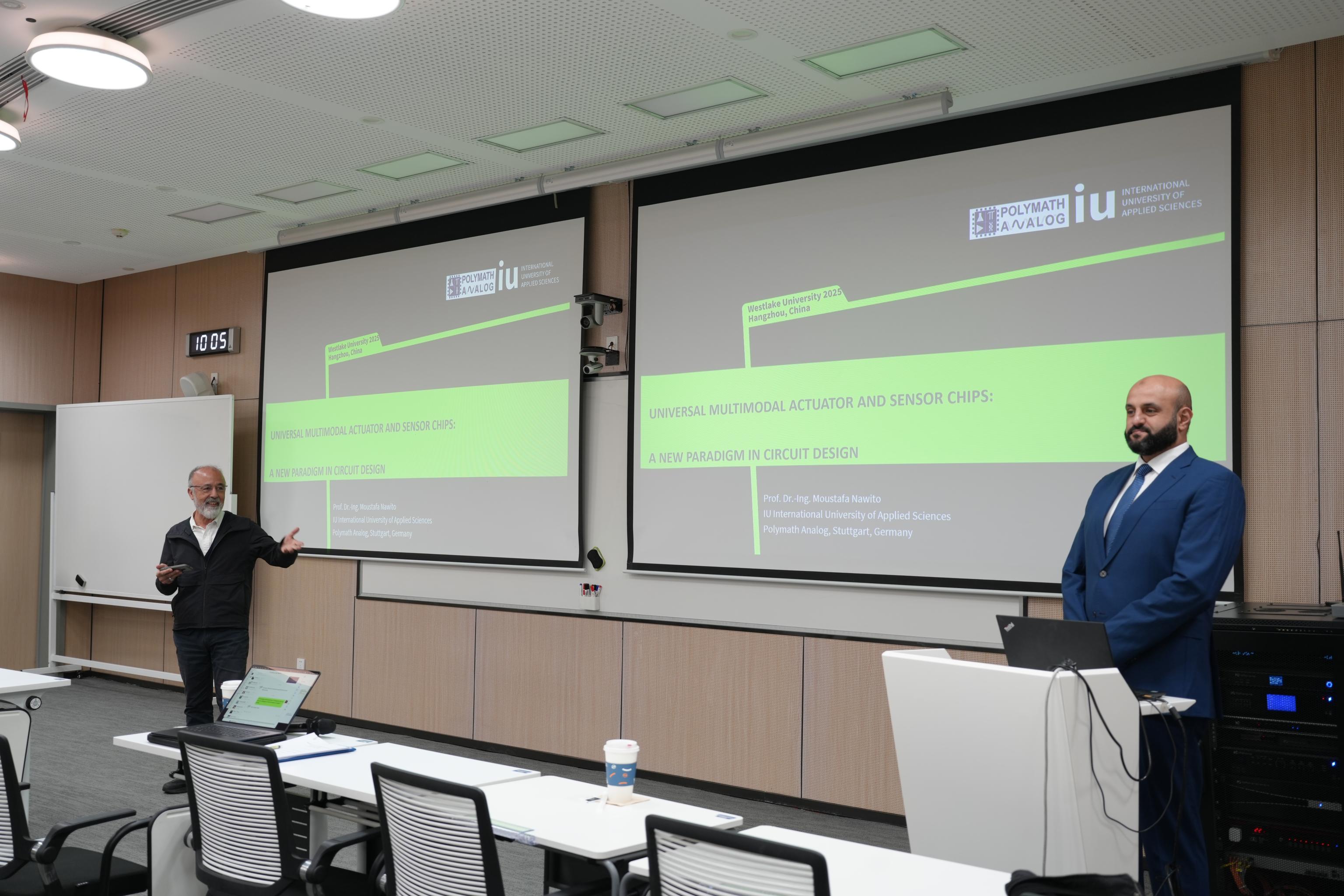
"Da Jia Hao, Wo Shi Wei Dian Zi Jiao Shou (Hello everyone, I am a professor in microelectronics)," said Prof. Moustafa Nawito. Driven by his love for Chinese culture, he learned Chinese independently through YouTube and practices martial arts.
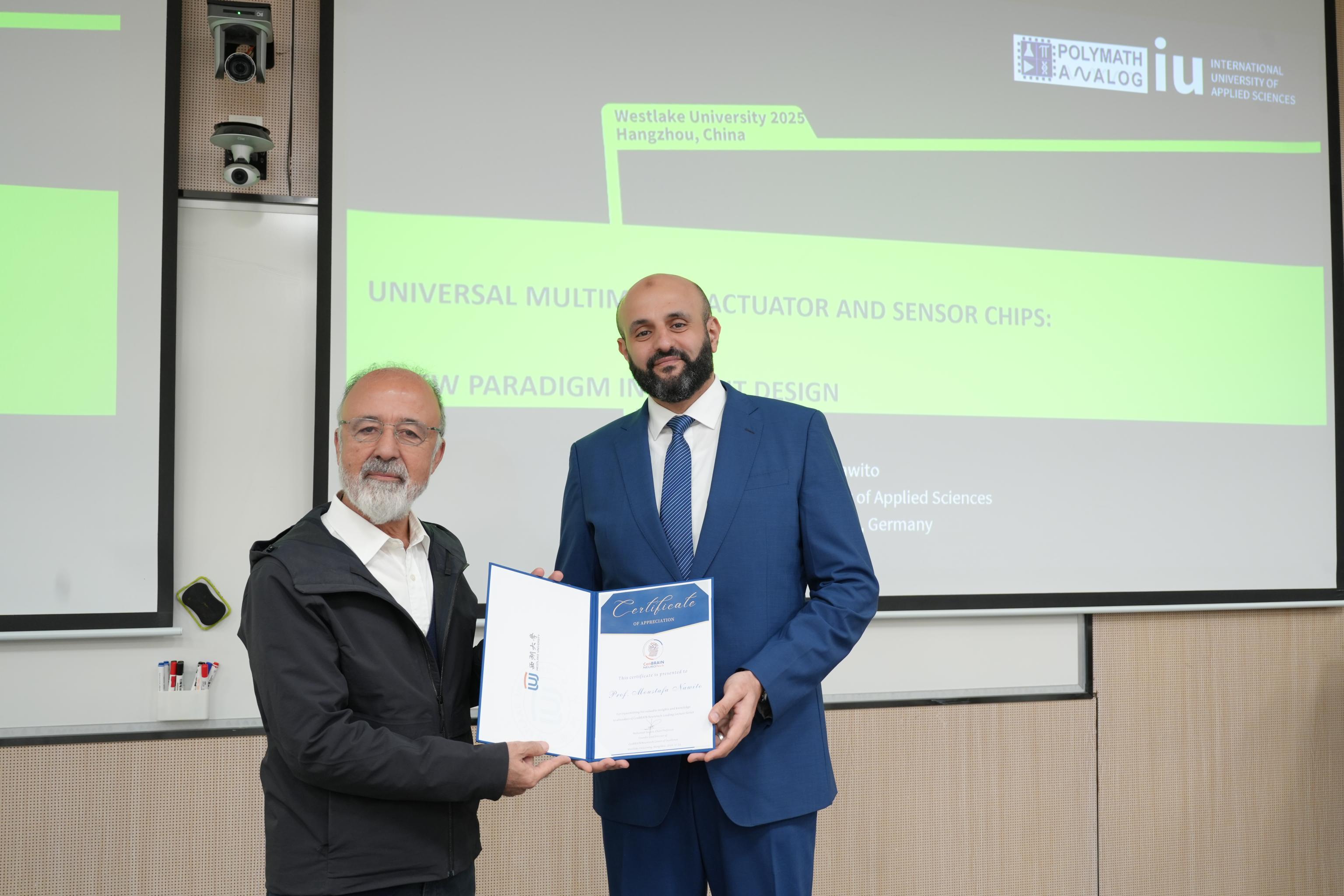
Invited by Chair Prof. Mohamad Sawan, Prof. Nawito visited Westlake University and delivered a lecture titled “A New Paradigm in Circuit Design: Universal Multimodal Actuator and Sensor Chips”. This talk balanced rigorous academic content with engaging delivery, captivating the audience throughout.
Biography
Prof. Nawito has been deeply engaged in the field of microelectronics for many years, with remarkable achievements in ASIC design, sensor technology, and other areas. He has provided technical solutions for enterprises such as Bosch and Daimler and currently serves as Dean of the Faculty of IT & Engineering at [MS1] International University of Applied Sciences (Germany).
Abstract
During his presentation, Prof. Nawito highlighted a critical shift underway in the development of integrated sensor systems. He noted that traditional approaches rely either on highly specialized ASICs (Application-Specific Integrated Circuits), which provide accuracy and efficiency but are expensive and inflexible, or on general-purpose platforms such as microcontrollers and FPGAs (Field-Programmable Gate Arrays), which offer programmability but fall short in power efficiency, multifunctionality, and form factor adaptability. As sensor applications expand rapidly across medical healthcare, IoT, and Industry 4.0, these limitations have emerged as major bottlenecks to industry growth.
To address this challenge, Prof. Nawito unveiled the innovative design paradigm of Universal Multimodal Actuator Sensor Chips (UMASCs). This technology merges the precision of ASICs with the flexibility of programmable systems, achieving universality in two dimensions:
Functional universality: UMASCs reuse mature analog/mixed-signal modules—including amplifiers and analog-to-digital converters—to adapt seamlessly to diverse sensing modalities, from electrophysiological and electrochemical sensing to optical monitoring.
Form factor universality: Supporting implementations such as bulk CMOS and ultra-thin silicon chips, UMASCs meet varied application needs, spanning implantable biosensors to large-area distributed systems, solidifying its role as a cross-domain “platform-based technical solution.”
The biomedical domain serves as natural proving ground, where multimodality and compact integration are urgently required. Prof. Nawito illustrated UMASCs’ applications with some case studies in neural recording and stimulation, electrochemical impedance spectroscopy, and wearable optical monitoring. Beyond healthcare, the UMASC framework extends to IoT, predictive maintenance, and Industry 4.0. He emphasized that the technology eliminates the need to spread design resources thin while catering to diverse use cases, paving a new path for academic research and industrial innovation in integrated circuits.
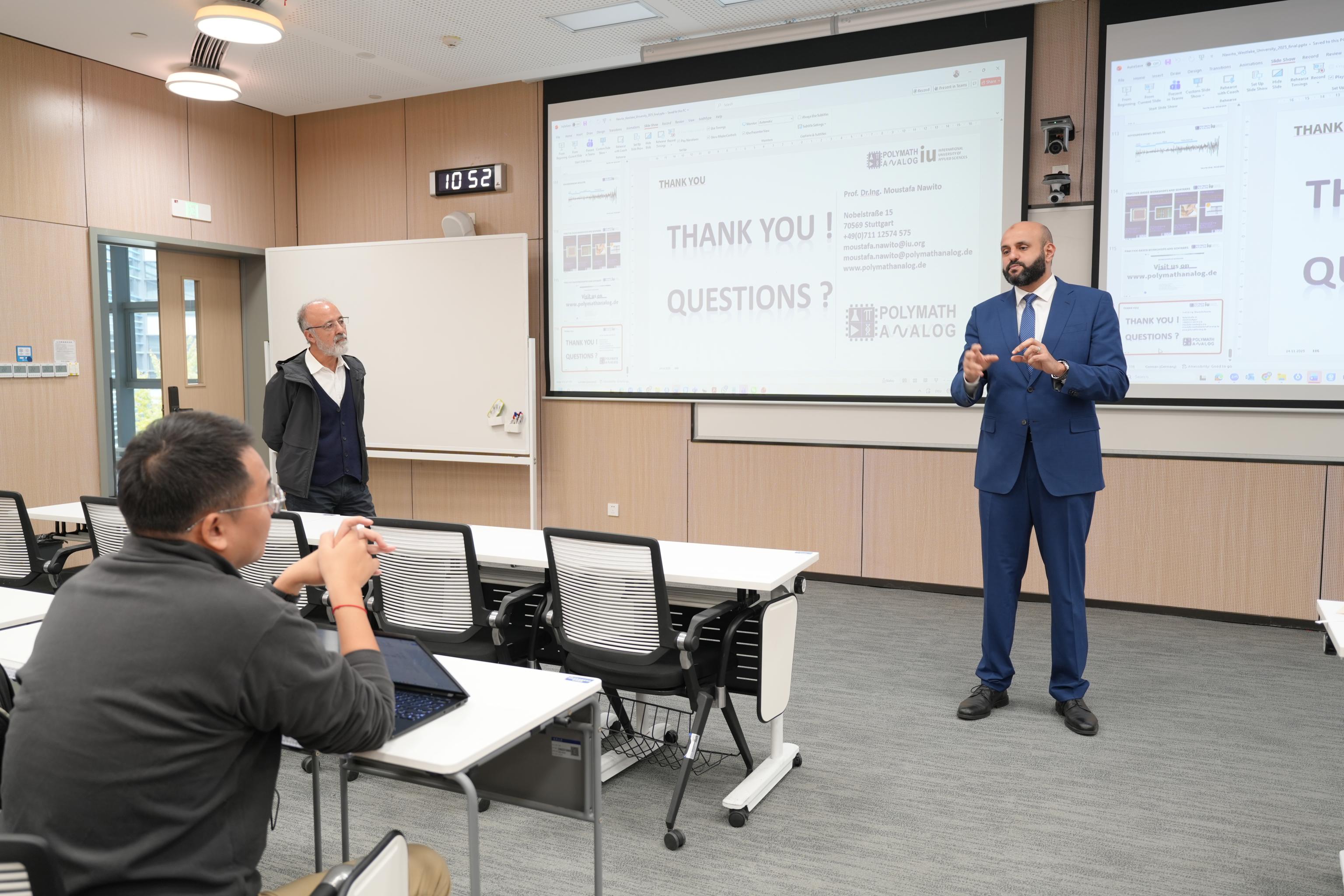
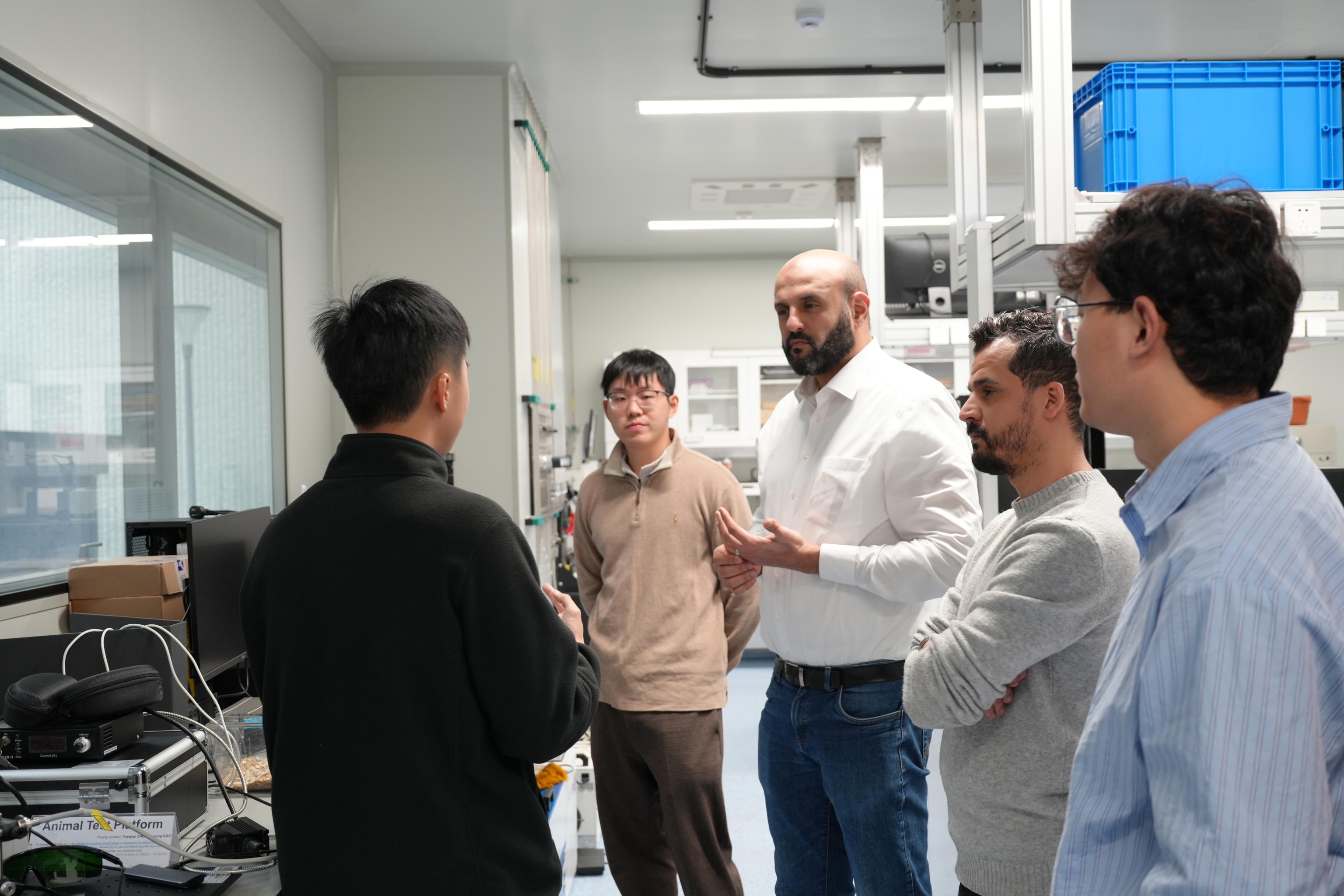
Following the lecture, Prof. Nawito toured CenBRAIN Neurotech’s electronics and biomedical laboratories with the center’s research team. He commended the center’s advancements in integrating biosensors and neural chips and shared insights on potential technical synergies with UMASCs. His approachable demeanor added warmth to the academic exchange, complementing its technical depth and reinforcing the center’s efforts in promoting international academic collaboration.