We are thrilled to announce a research advance from Prof. Mohamad Sawan’s group at Westlake University!
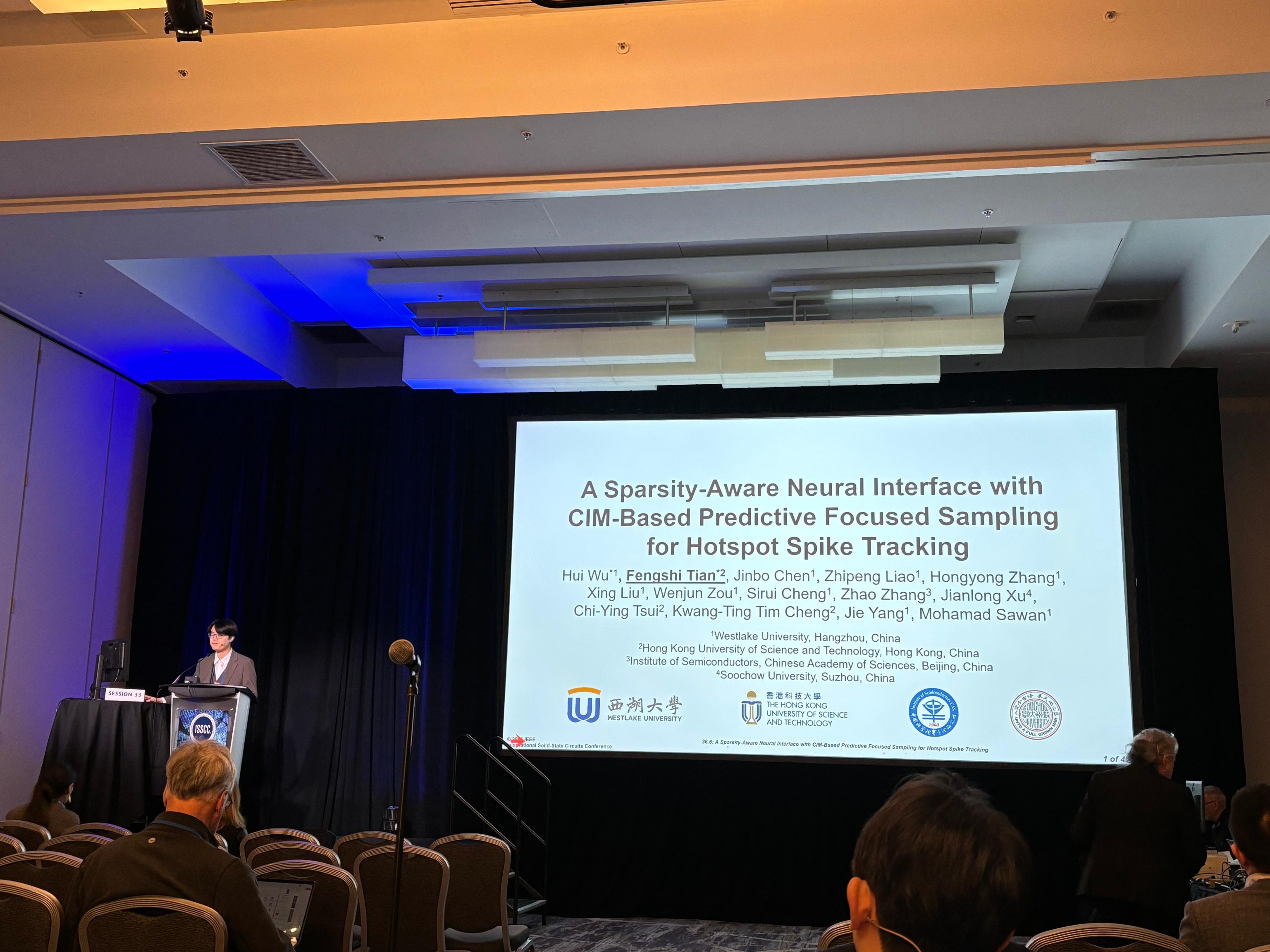
Our paper titled “Sparsity-Aware Neural Interface with CIM-Based Predictive Focused Sampling for Hotspot Spike Tracking” has been accepted for publication in the 2026 IEEE International Solid-State Circuits Conference (IEEE ISSCC’26), which is the premier global conference in integrated circuit design.
Often regarded as the “Olympics of IC design,” IEEE ISSCC showcases the world’s most pioneering trends and breakthroughs in solid-state circuit technology each year. Having our work recognized here is a testament to the team’s years of dedicated exploration in neural interface chip design.

This achievement holds significant promise for next-generation, long-term implantable brain–computer interface (BCI) chips with high channel counts, offering a highly potential architectural paradigm. It marks a solid step forward in our pursuit of understanding brain science, treating brain disorders, and realizing high-performance brain–machine integration.
Warm congratulations to the paper’s co-first authors, our PhD candidate Hui Wu, from Westlake University, and former visiting student Fengshi Tian (study at HKUST now), for their outstanding contributions!
Abstract
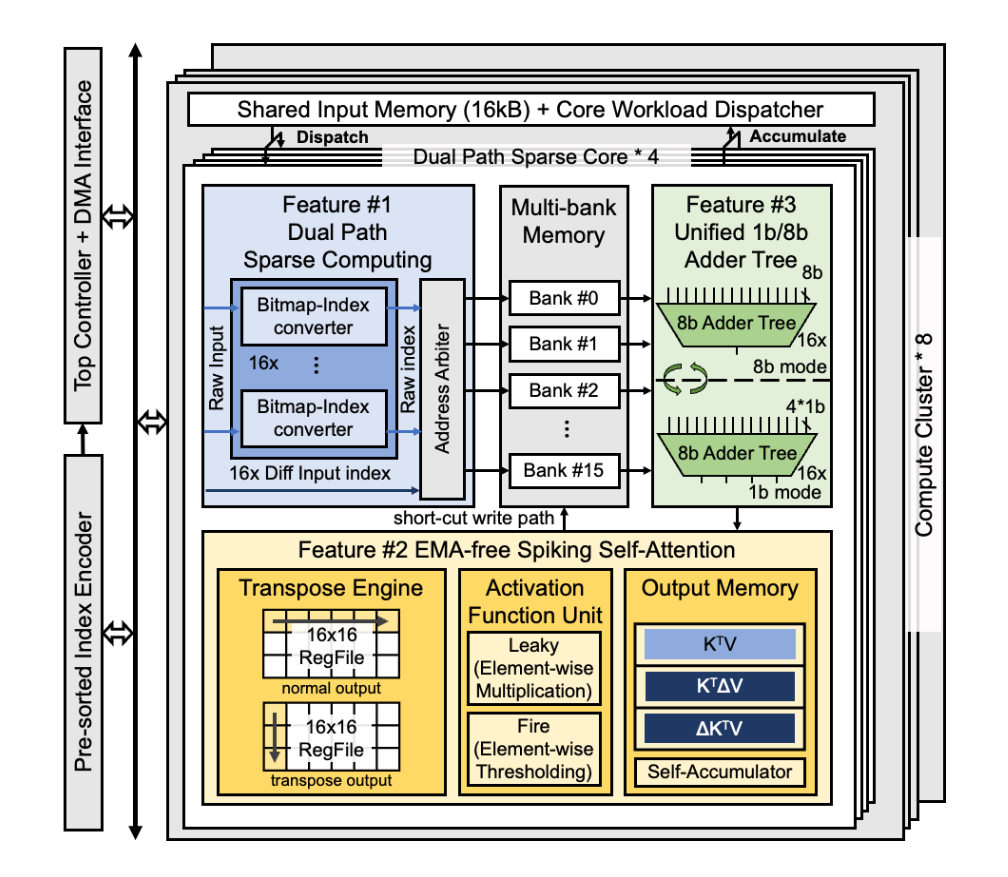
This paper presents a 1024-channel sparsity-aware neural interface in 40nm CMOS. It features a predictive focused sampling scheme guided by a real-time compute-in-memory (CIM) hotspot predictor. This architecture combines low-power panoramic scanning with high-fidelity spike tracking, providing a 16x temporal resolution boost (10kHz) for active hotspots. Achieving a silicon area of 0.22 mm2 and power efficiency of 1.83 μW/ch, the design effectively solves power and bandwidth bottlenecks in high-density recording by dynamically allocating resources to spike-rich regions.
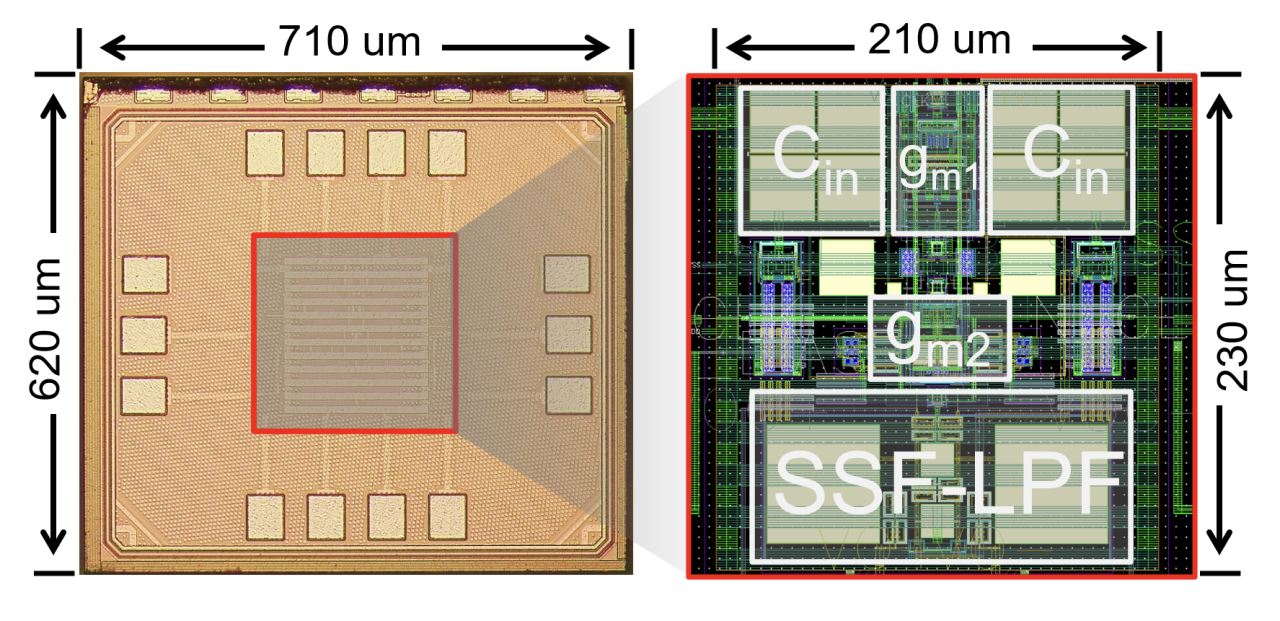
Figure 1: Micrograph of the 1024‑channel chip fabricated in 40 nm CMOS technology.
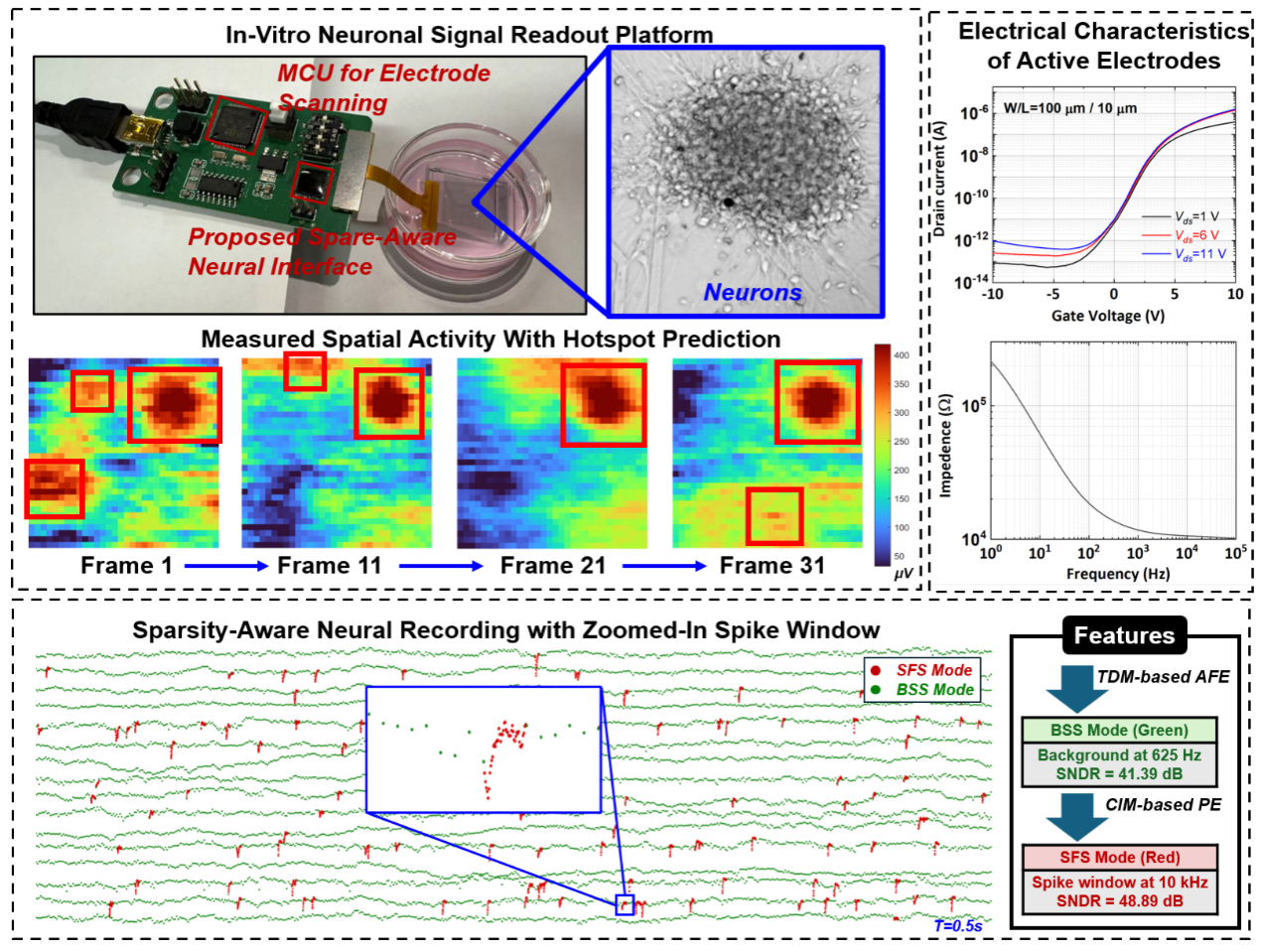
Figure 2: Results of in vitro neuron culture experiments, demonstrating successful digital hotspot prediction and the transition from panoramic mode to a high‑SNR focus mode.