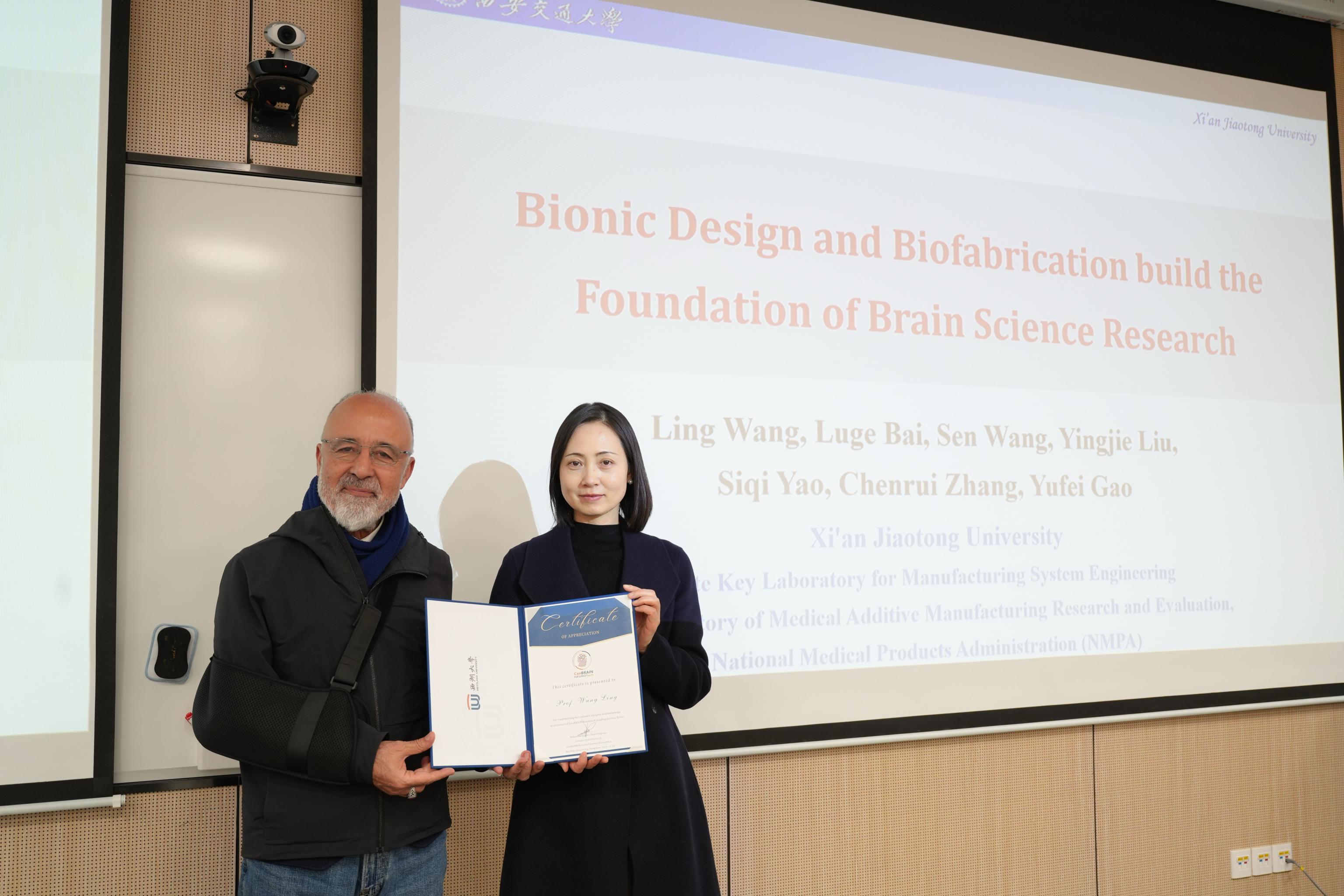
On December 9th, Professor Ling Wang from Xi’an Jiaotong University visited at the invitation of Professor Mohamad Sawan, Chair Professor at Westlake University, and delivered an impressive talk on the CenBRAIN Neurotech Leading Lecture Series (CELLS), titled "Bionic Design and Biofabrication build the Foundation of Brain Science Research." This lecture attracted many faculty and students from related fields.
About the Speaker:
Professor Ling Wang received her Ph.D degree from the University of Leeds, UK. She currently serves as a professor and the Ph.D supervisor at Xi’an Jiaotong University and she is the deputy director of the NMPA Key Laboratory for Research and Evaluation of Additive Manufacturing Medical Devices. She is also the winner of Shaanxi Outstanding Youth Fund. Professor Wang has led and participated in multiple research projects, including those funded by the Natural Science Foundation, the National Science and Technology Support Program, the Key R&D Program of the Ministry of Science and Technology, the EU Framework Program Horizon 2020. She serves as the Deputy Editor-in-chief of Additive Manufacturing Frontiersand the editorial board member of Molecular & Cellular Biomechanics. Her research focuses primarily on additive manufacturing, biomanufacturing, biomechanics, and tissue engineering. As the first or corresponding author, she has published over 70 SCI-indexed papers and holds more than 30 authorized national invention patents. She received the First Prize of the 2022 Shaanxi Provincial Science and Technology Progress Award and the First Prize of the 2017 Shaanxi Higher Education Science and Technology Award.
Lecture Summary:
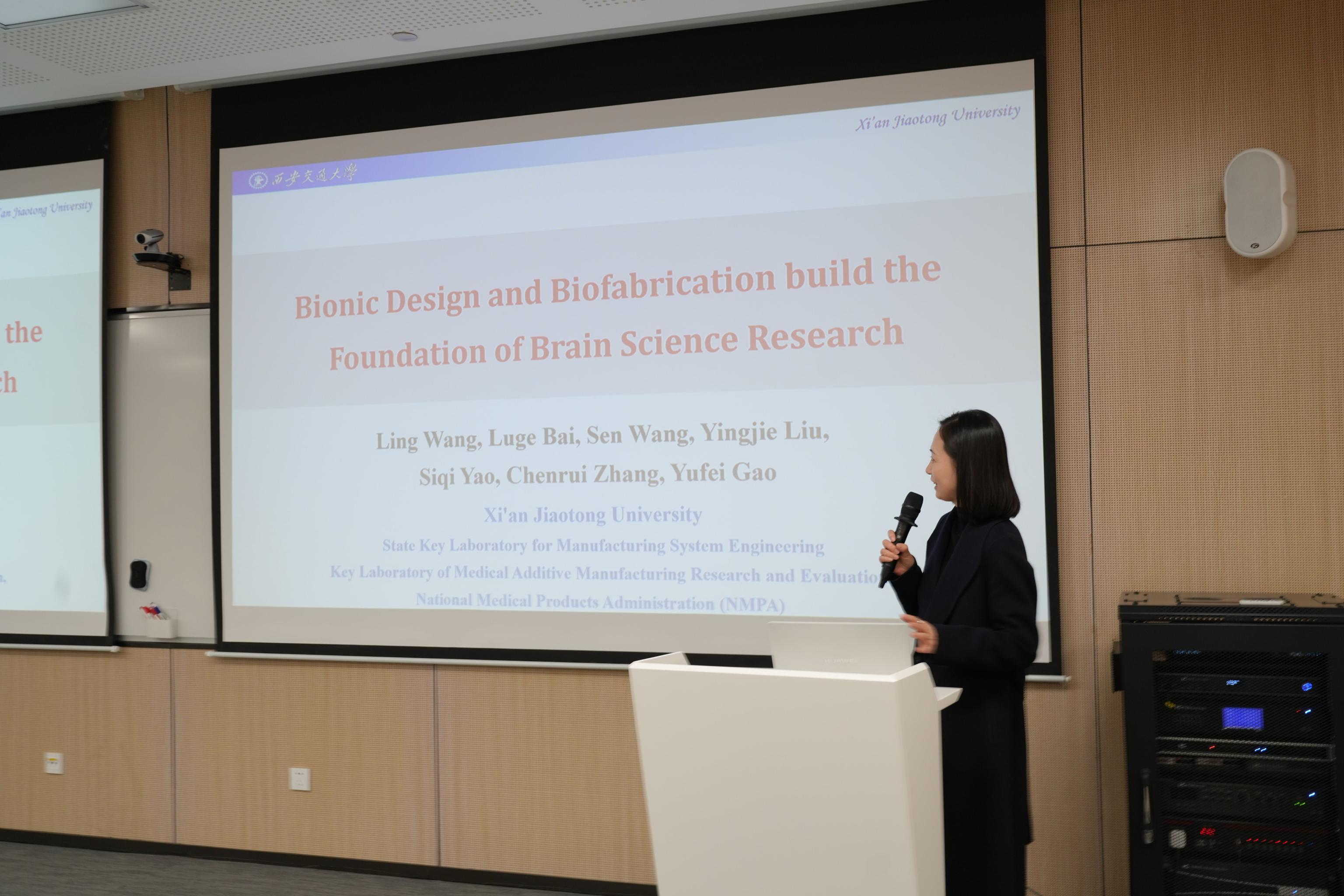
Professor Ling Wang primarily introduced the challenges her team faces in constructing in vitro multicellular and complex brain-like models for neuroscience research. She highlighted three core achievements in foundational technologies for brain science research:
1. Constructing Bionic Brain Tissue Models: By integrating bioprinting with multi-scale manufacturing technologies, her team successfully created a functionally layered "cortex-like" tissue in vitro. This model can be used to simulate neural network formation and the interactions between glioma cells and neurons.
2. Establishing a Three-Dimensional Blood-Brain Barrier Model: The team developed a three-dimensional blood-brain barrier model that closely mimics physiological conditions. This model is primarily used to evaluate drug permeability and study related pathological mechanisms.
3. Developing Novel Neural Electrodes: To address the common issue of signal degradation in long-term implantable neural electrodes, the team designed a bio-enhanced invasive neural electrode. This technology establishes a more stable bioelectronic interface, enabling long-term and reliable electrophysiological signal recording and stimulation. It serves as a crucial tool for brain-computer interfaces and neurological disease research.
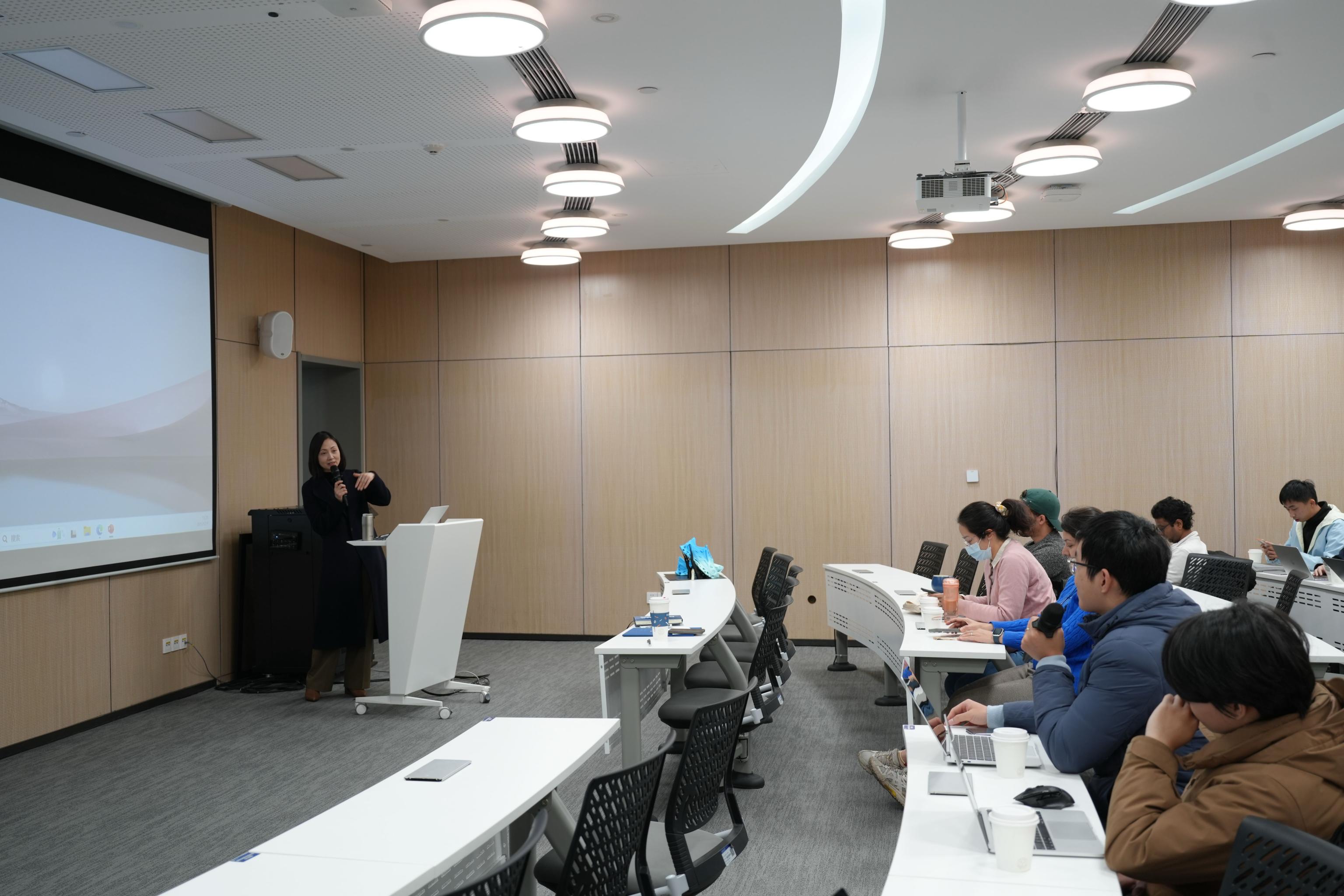
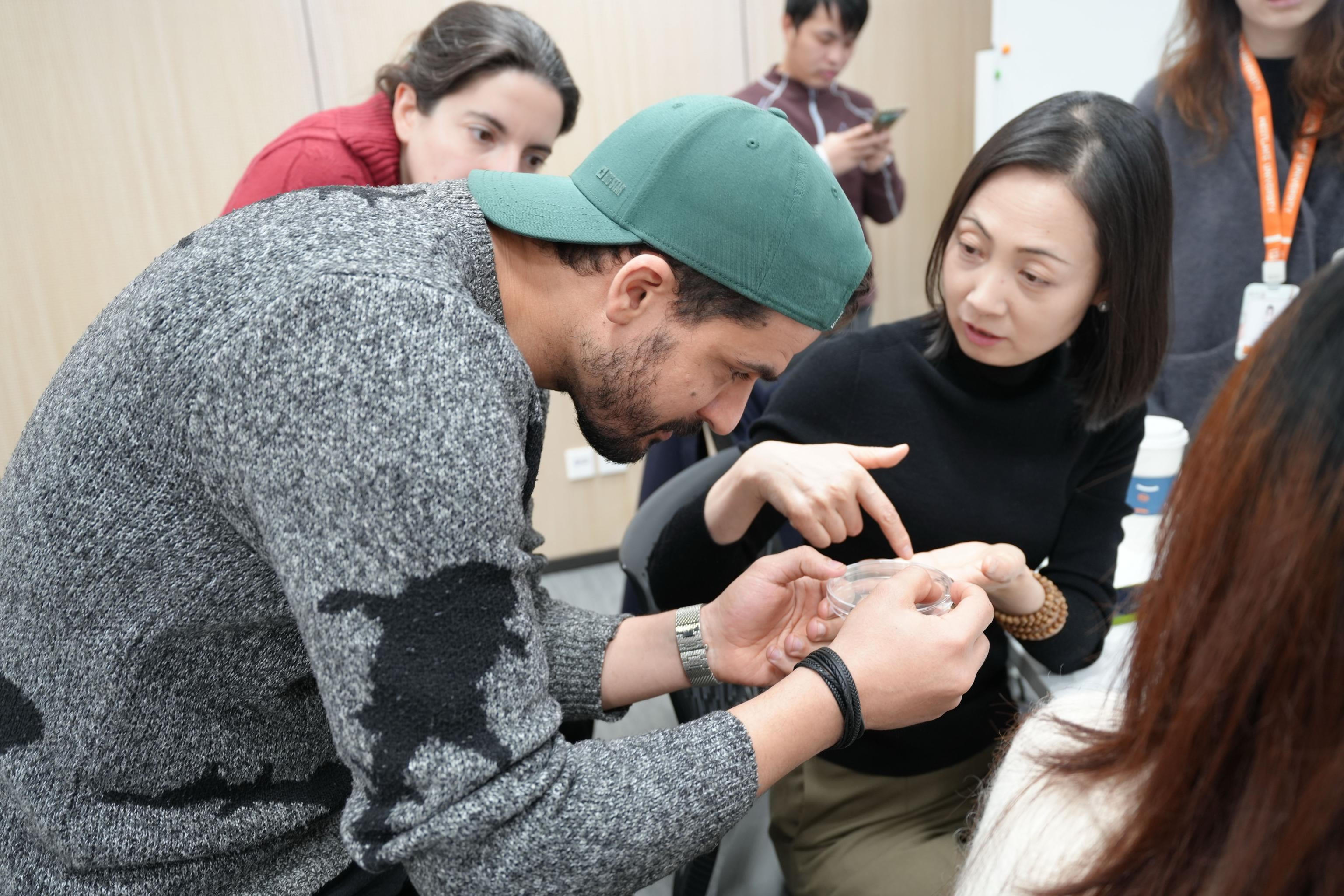
These three achievements systematically address key technological challenges in brain science research, from constructing foundational models and simulating functional barriers to achieving long-term stable recording. Together, they form a complete technological chain, ranging from microscopic to macroscopic scales and from static to dynamic applications. Her team’s research contributions provide a solid and coherent technical foundation for brain science, from basic research to clinical translation (new drug testing and brain-computer interfaces).
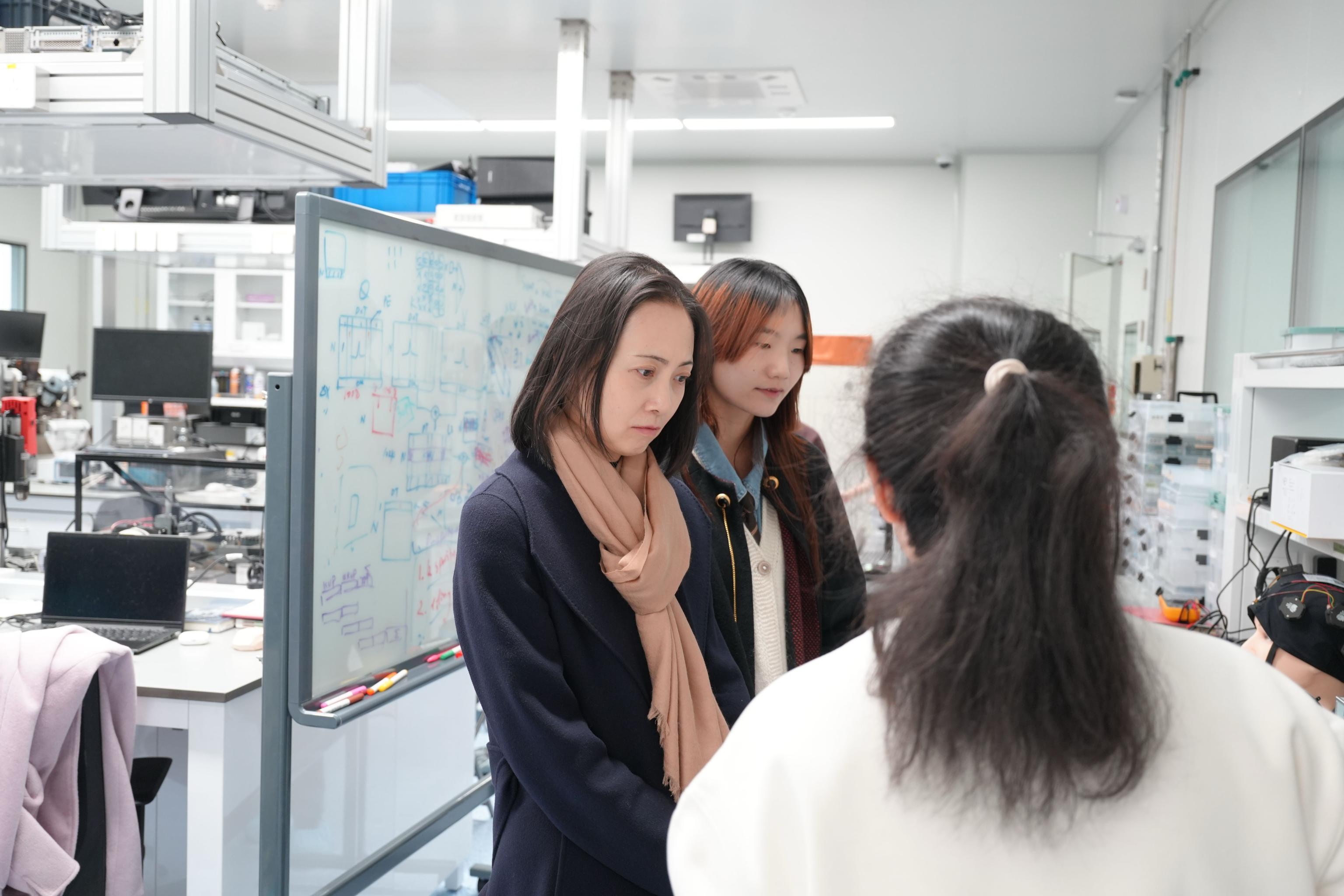
Following the lecture, Professor Wang visited our Center of Excellence in Biomedical Research of Advanced Integrated-on-chips Neurotechnologies (CenBRAIN Neurotech) and engaged in lively discussions with students in the electronics laboratory on topics such as retinal prosthesis processing and novel multimodal wearable brain-computer interface imaging technologies. She expressed keen interest in these research directions.
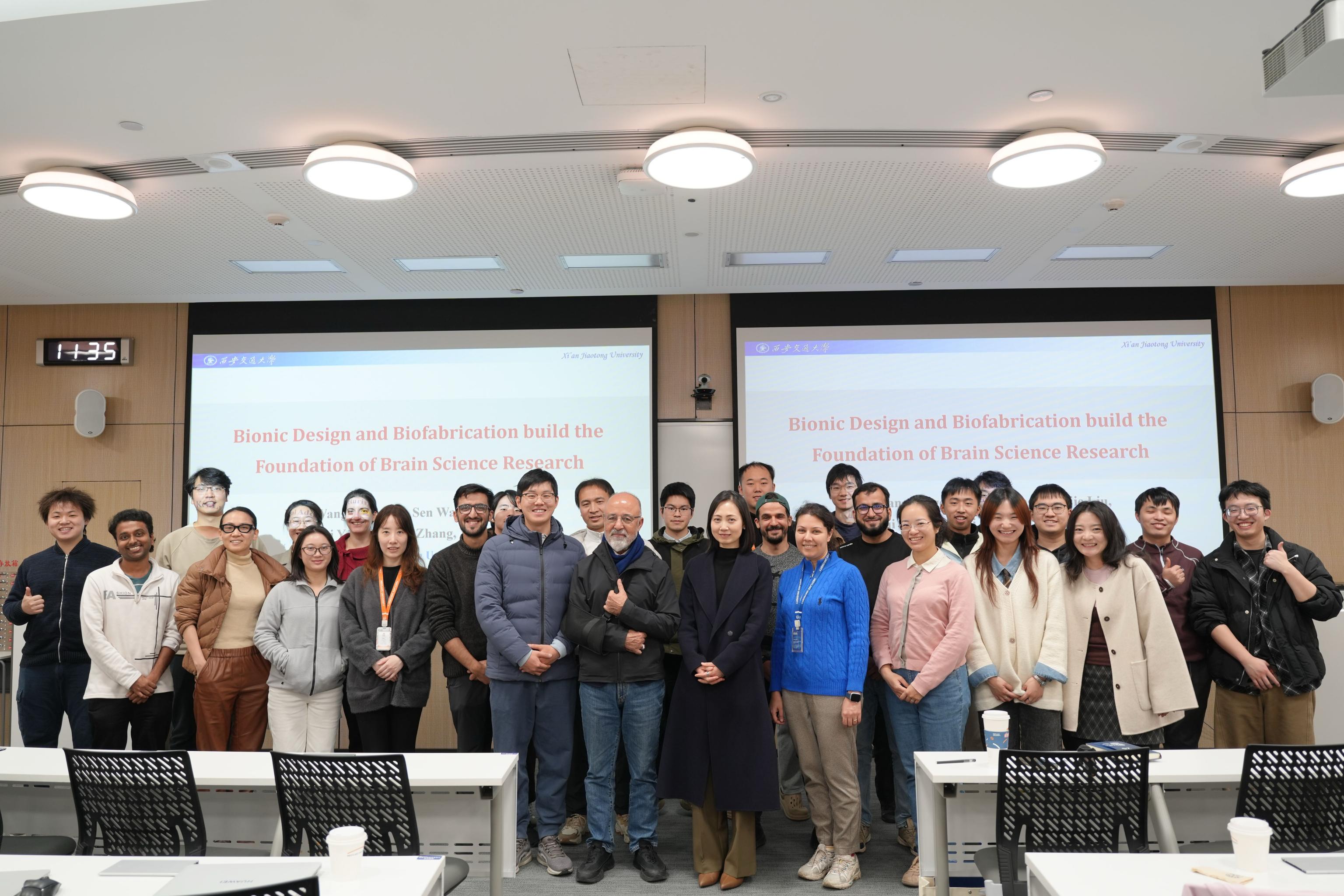
During her visit, Professor Wang candidly remarked that she was drawn to Westlake University by its vibrant research atmosphere and wanted to experience it firsthand. In her interactions with students, she repeatedly noted how deeply impressed she was by their enthusiasm and dedication to research. We sincerely hope that this event will serve as a starting point for future collaboration between both sides, fostering further exchanges in areas such as biosignal decoding.