On January 13, Professor Saber Imani, a visiting scholar at the National Institute of Health and Medical Research (INSERM), France, was invited by Chair Professor Mohamad Sawan to deliver the first CELLS lecture of 2026.
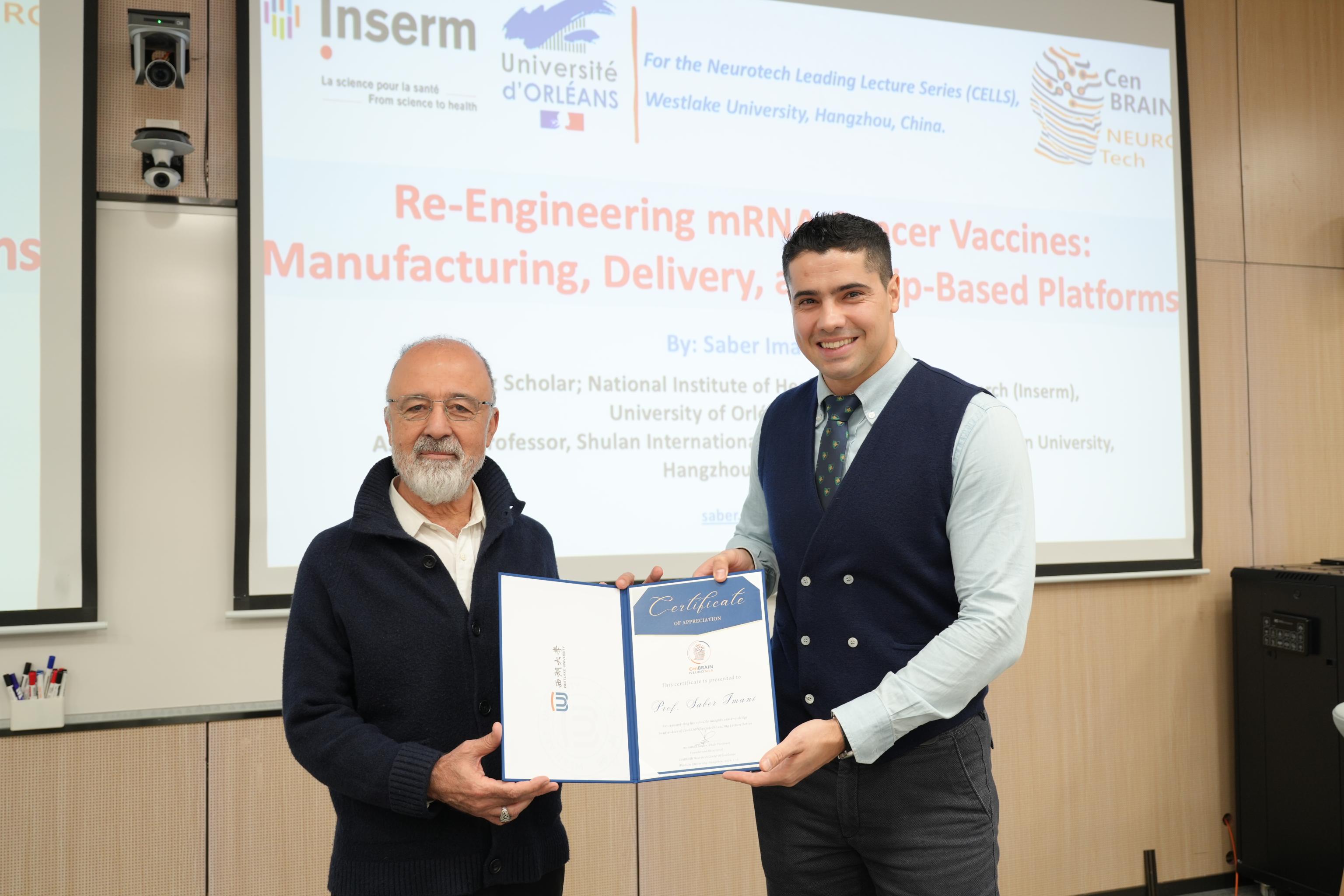
Under the title “Re-Engineering mRNA Cancer Vaccines: Manufacturing, Delivery, and Chip-Based Platforms,” he systematically presented cutting-edge advancements in the field. He focused on key issues such as mRNA vaccine manufacturing processes, delivery strategies, and the integration of Lab-on-chip based platforms, while also providing an in-depth analysis of challenges in brain tumor treatment, including blood-brain barrier penetration and personalized vaccine design.
Biography
Saber Imani is an accomplished precision and molecular oncologist with extensive experience in translational oncology, cancer genomics and epigenetics. His research focuses on cancer immunology and next-generation therapeutic strategies. He has published over 120 peer-reviewed papers, received more than 3,000 citations, and he holds an H-index of 33, reflecting sustained impact in the field of oncology research. In collaboration with international institutions such as INSERM and ESMO, he contributes to interdisciplinary efforts at the intersection of mRNA cancer vaccine design and formulation, molecular oncology, immunology, and biomedical innovation. He is strongly committed to advancing precision medicine and organ-aware therapeutic strategies to improve cancer treatment outcomes.
Lecture Summary
In his lecture, Professor Imani systematically introduced the core mechanism of neoantigen-based mRNA cancer vaccines: specific neoantigens produced by cancer cells due to genetic mutations act as “keys” to activate the immune system. His team analyzes individualized cancer characteristics of patients to screen for the most effective neoantigens, which are then encoded into mRNA vaccines to precisely target and eliminate cancer cells, offering a breakthrough in personalized cancer treatment.
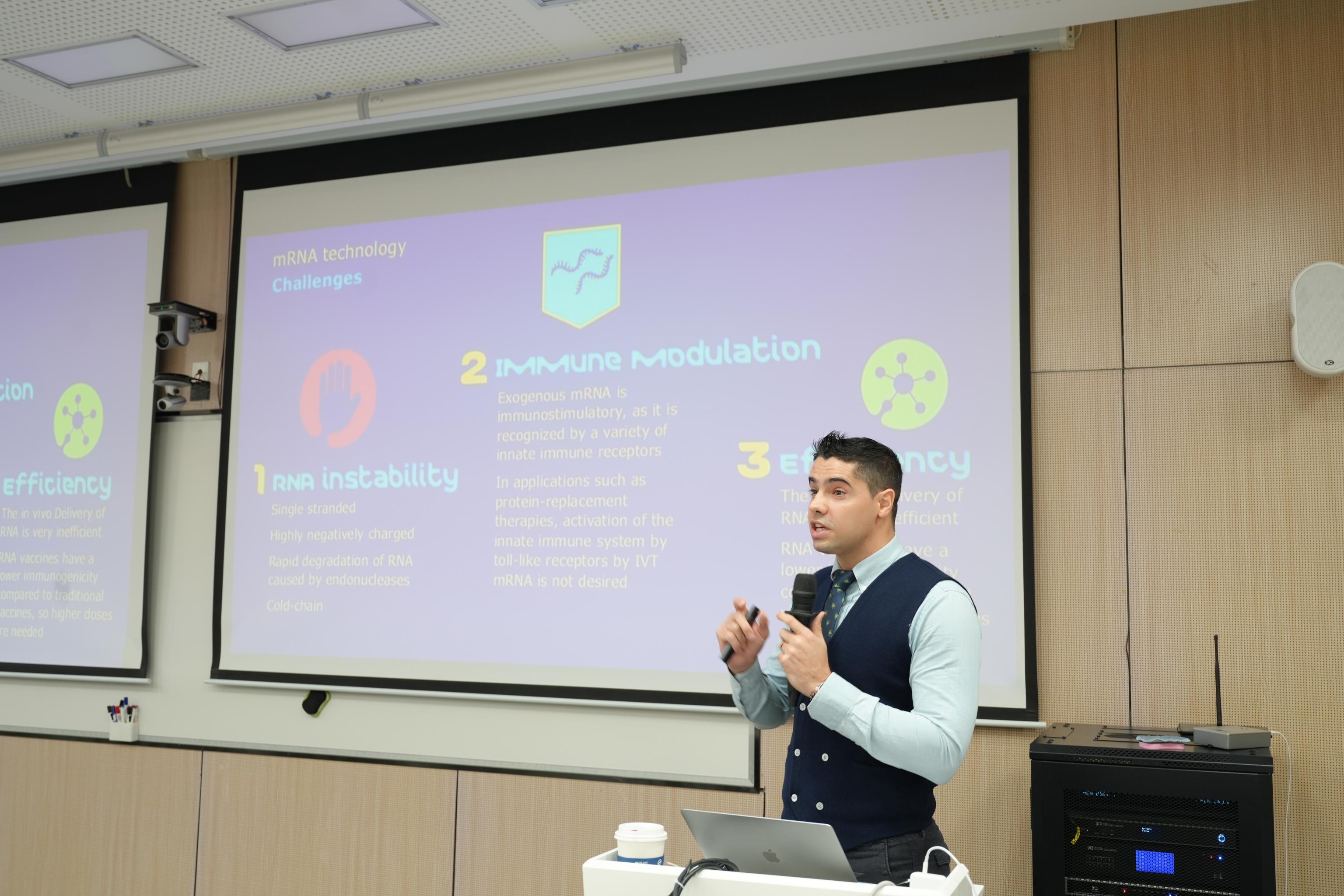
To advance the application of this technology in central nervous system (CNS) cancer treatment, Professor Imani further integrated an mRNA production system, delivery strategies, and a Lab-on-chip based neuro-oncology research platform, constructing a practical framework for developing more effective, CNS-targeted mRNA cancer vaccines.
mRNA Production System
This includes in vitro transcription (IVT), chemically modified mRNA (cmRNA), sequence optimization, and quality control, ensuring vaccine stability and reproducible production.
mRNA Delivery Strategies
Comparing lipid nanoparticle (LNP) -based systems with naked mRNA approaches, the focus is on addressing delivery challenges such as brain penetration, intratumoral distribution, and dosing behavior.
Lab-on-Chip based neuro-tumor platforms
Integrating traditional 2D cultures with advanced 3D microfluidic tumor-on-a-chip models, these platform systems allow direct investigation of mRNA delivery efficiency, protein expression, toxicity, and immune activation under conditions that highly simulate the human brain tumor microenvironment.
This integrated framework not only provides a clear pathway for developing CNS-targeted mRNA vaccines but also highlights the critical role of cross-technology integration in advancing translational tumor immunotherapy.
During the Q&A session, the exchange between Professor Imani and the attendees gradually expanded from technical details to broader scientific themes. When asked about the future of cancer treatment, he admitted that despite years of dedication to the field, he has always maintained a sense of reverence for the complexity of cancer. This reverence, particularly deepened by his personal experience of a family member battling cancer, has transformed into a profound driving force for his ongoing research. Precisely because of his reverence for the intricacy of cancer, he firmly believes that the purpose of science is not to fight against disease but to win more possibilities for life.
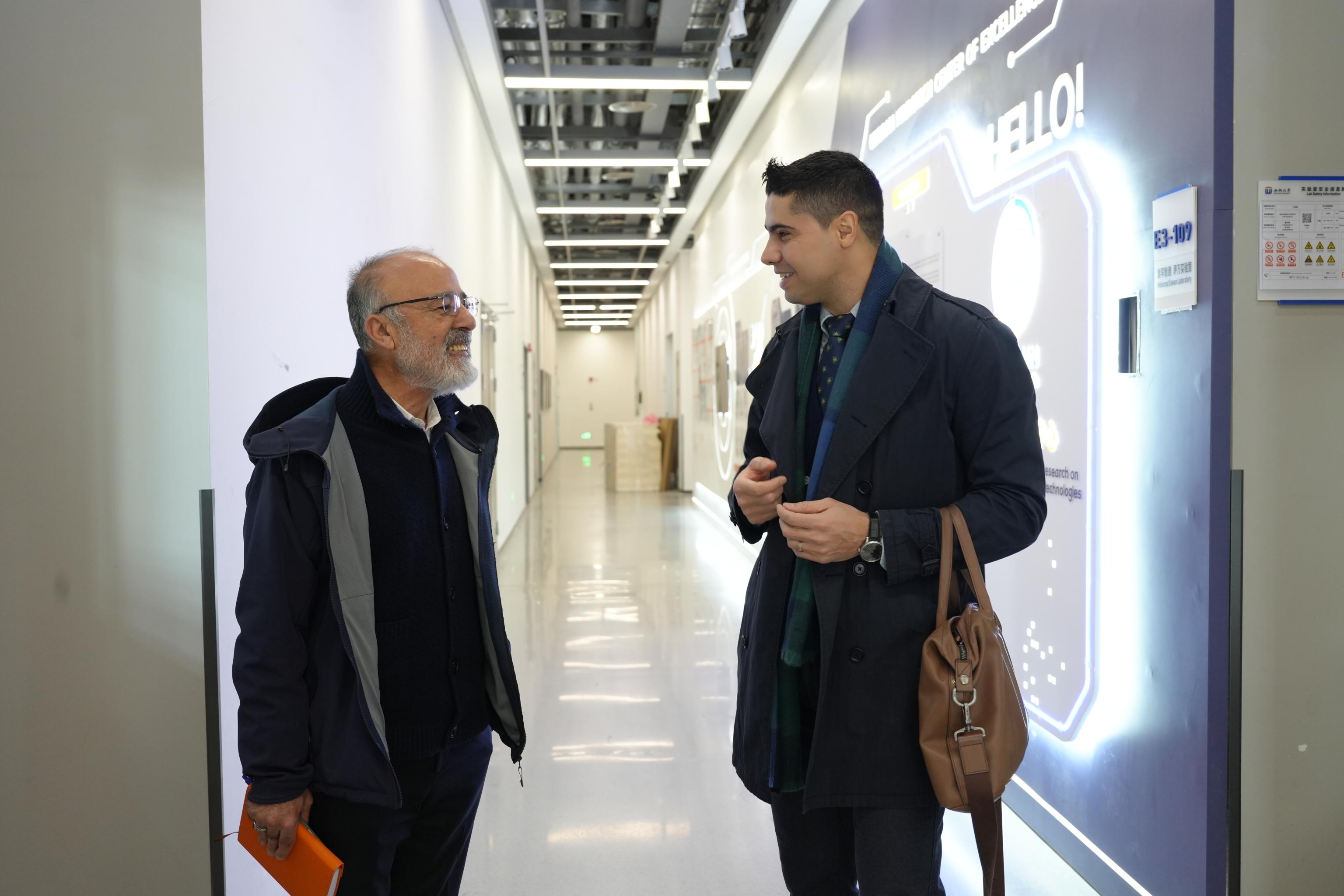
During his visit, Professor Imani toured the CenBRAIN Neurotech Center of Excellence. From the sophisticated electronics laboratory to the pristine biology laboratory, he engaged in lively discussions with faculty and students, fostering a relaxed vibe. We look forward to using this exchange as a starting point to collaborate on more vibrant and meaningful research works, jointly welcoming an eternal spring for interdisciplinary exploration.