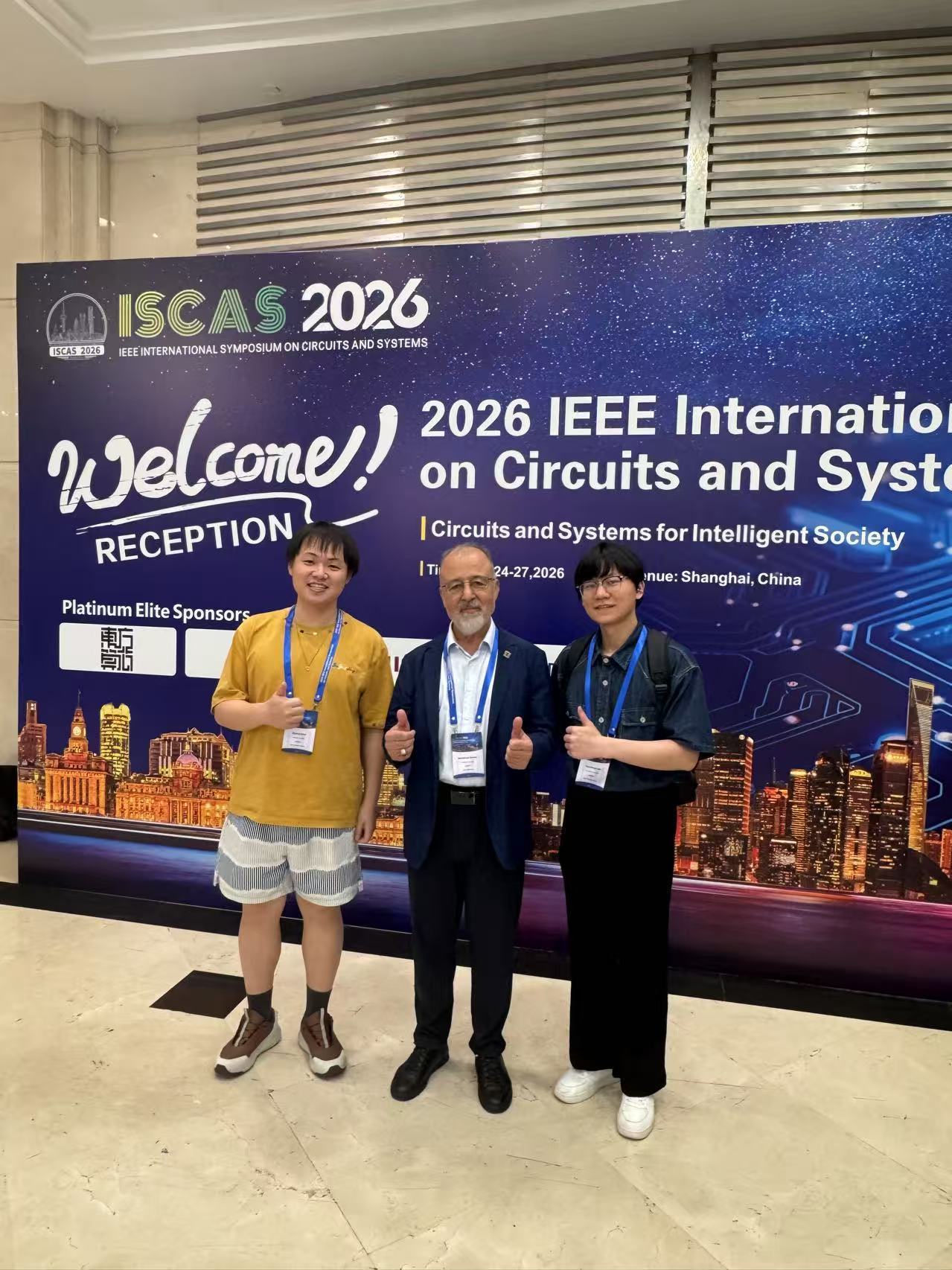
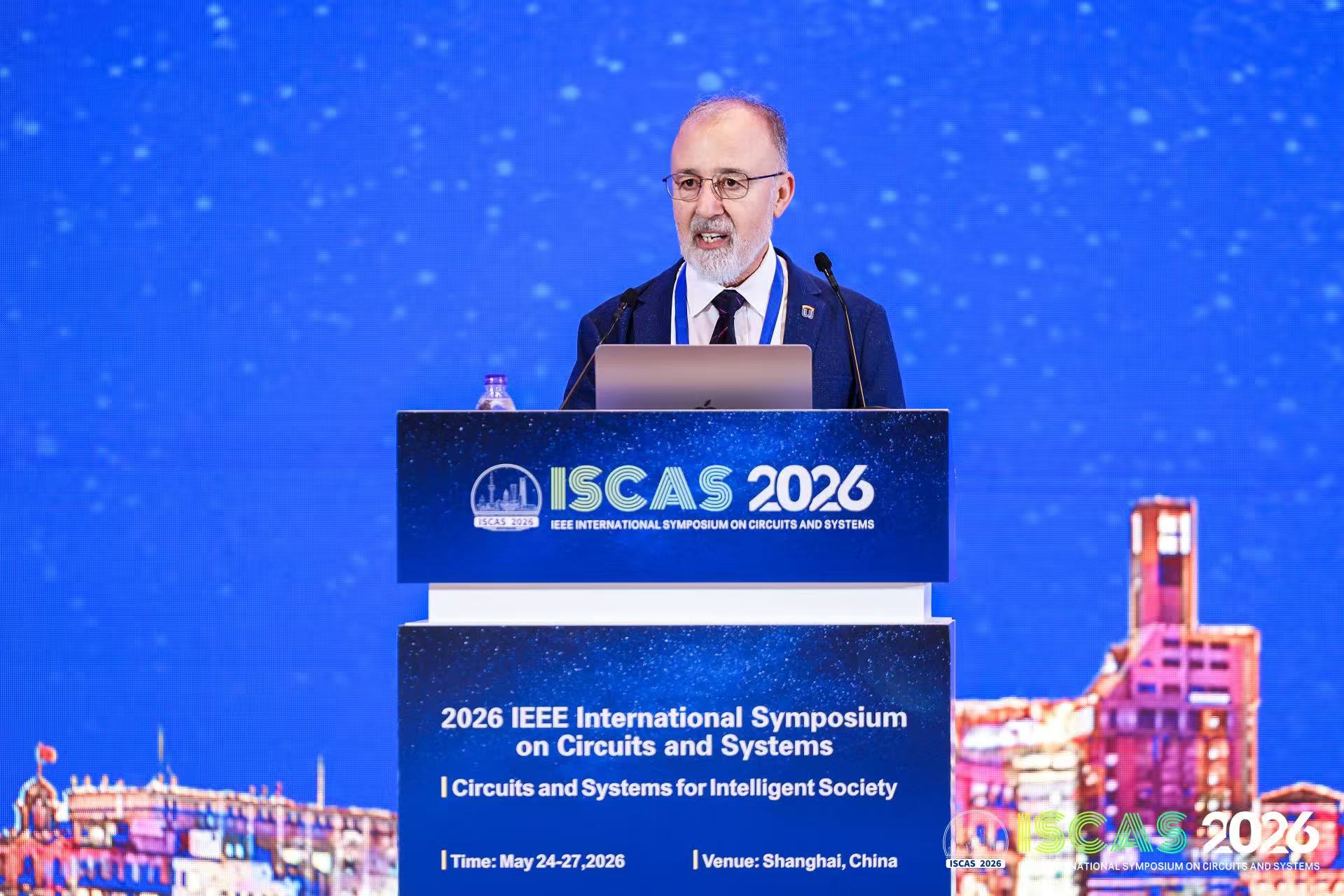
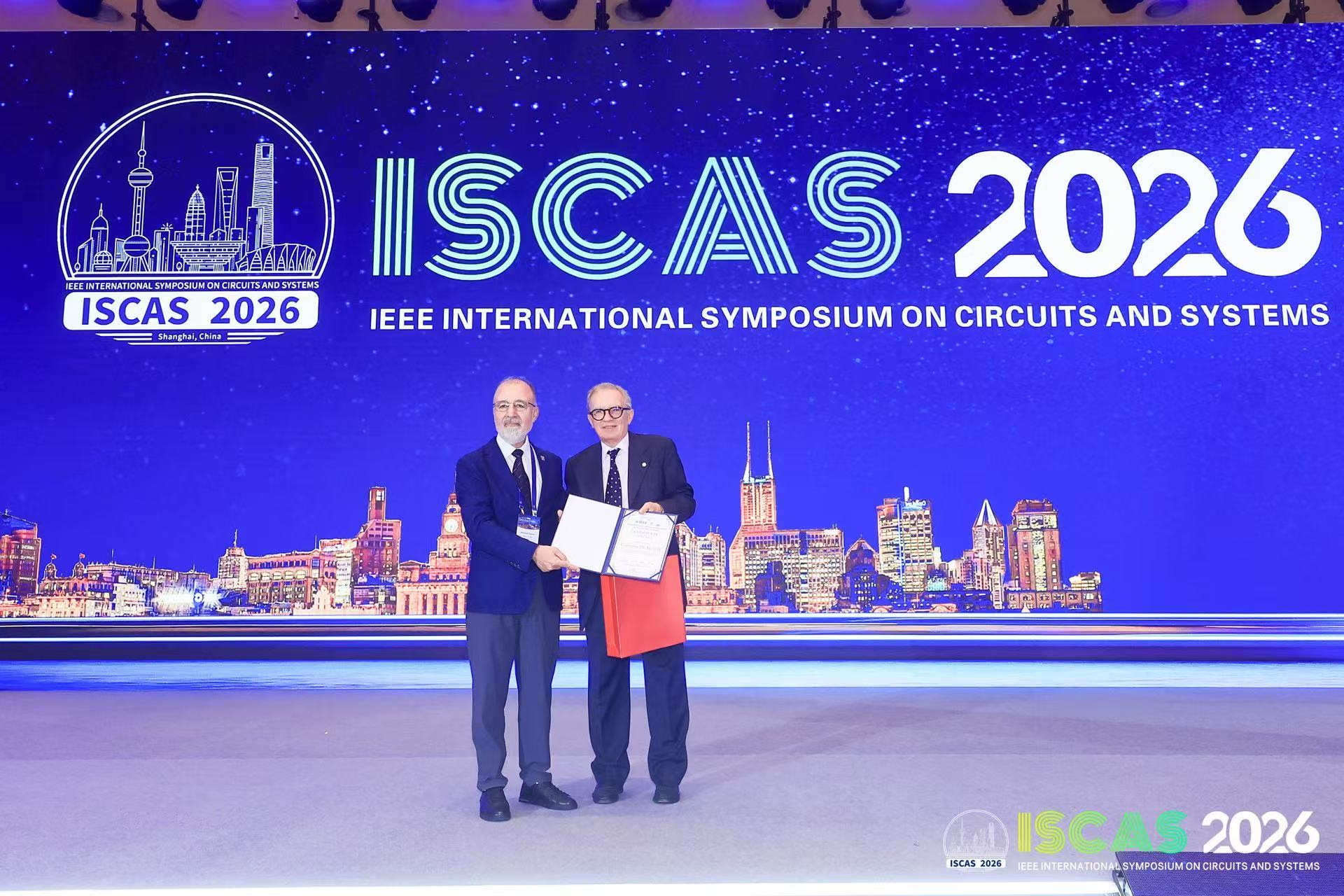
Recently, the 2026 IEEE International Symposium on Circuits and Systems (ISCAS) successfully concluded in Shanghai.
Mohamad Sawan, Chair Professor at Westlake University, together with Ziyang Shen and Yunsheng Liao, Ph.D candidates from the CenBRAIN Neurotech Center of Excellence, attended the conference.

As a renowned international expert in circuits and systems, Professor Mohamad Sawan was invited by the conference committee to serve as co-chair of the plenary committee and chair of a plenary session.
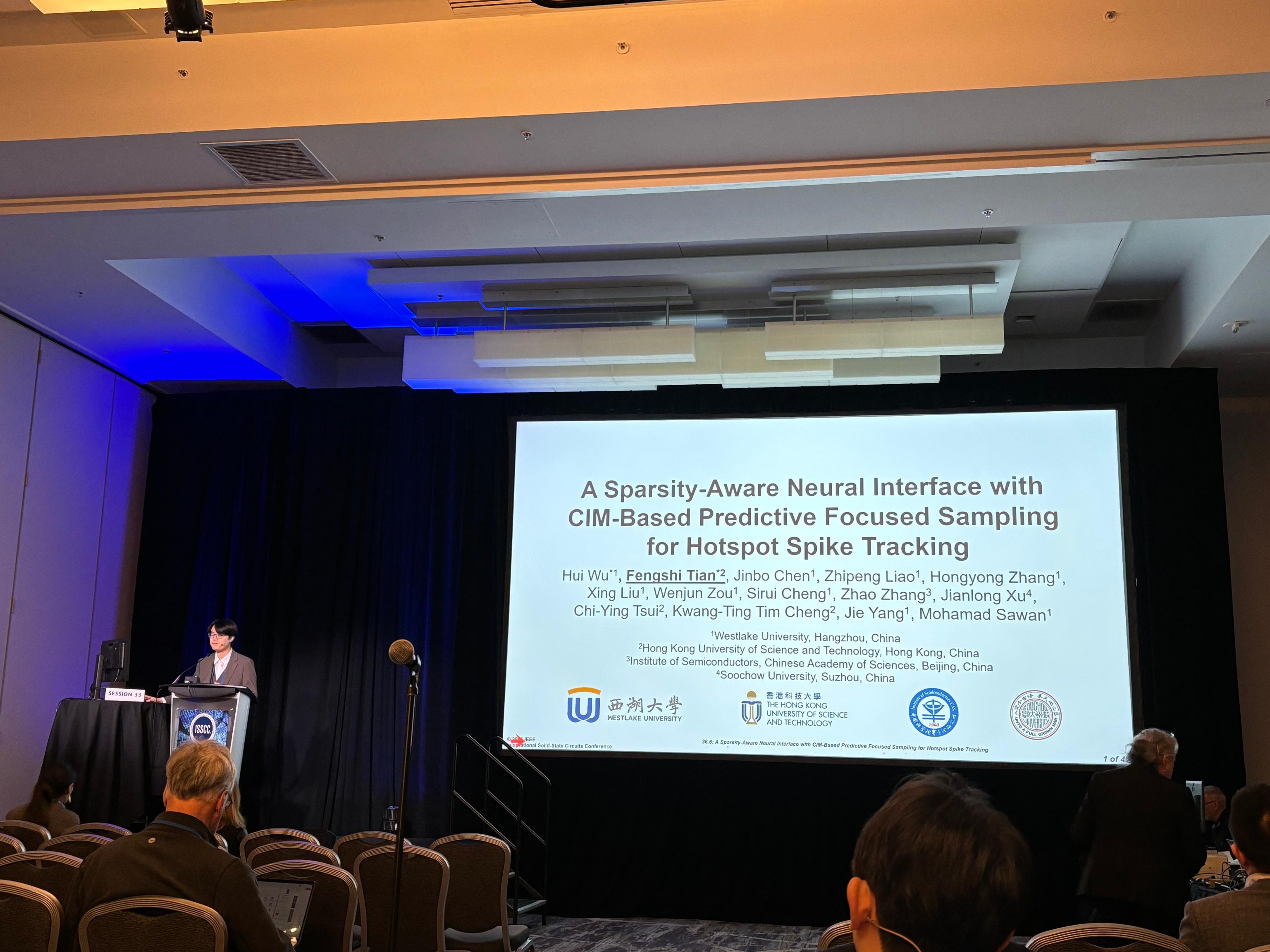
Our center members presented two important research achievements, which focus on intelligent hardware acceleration and intelligent medical signal processing respectively, featuring both theoretical innovation and practical application value.
《异构决策脉冲 Transformer 加速器:助力具身智能硬件高效落地》
文献引用:Shen Z.*, Liao Z.*, Shen S., Fang C., Tian F., Yang J., Sawan M., A Heterogeneous Decision Spiking Transformer Accelerator with Locality-dependent KV Product Cache and Compute Pattern Reconfigurable Engine. 2026 IEEE International Symposium on Circuits and Systems.
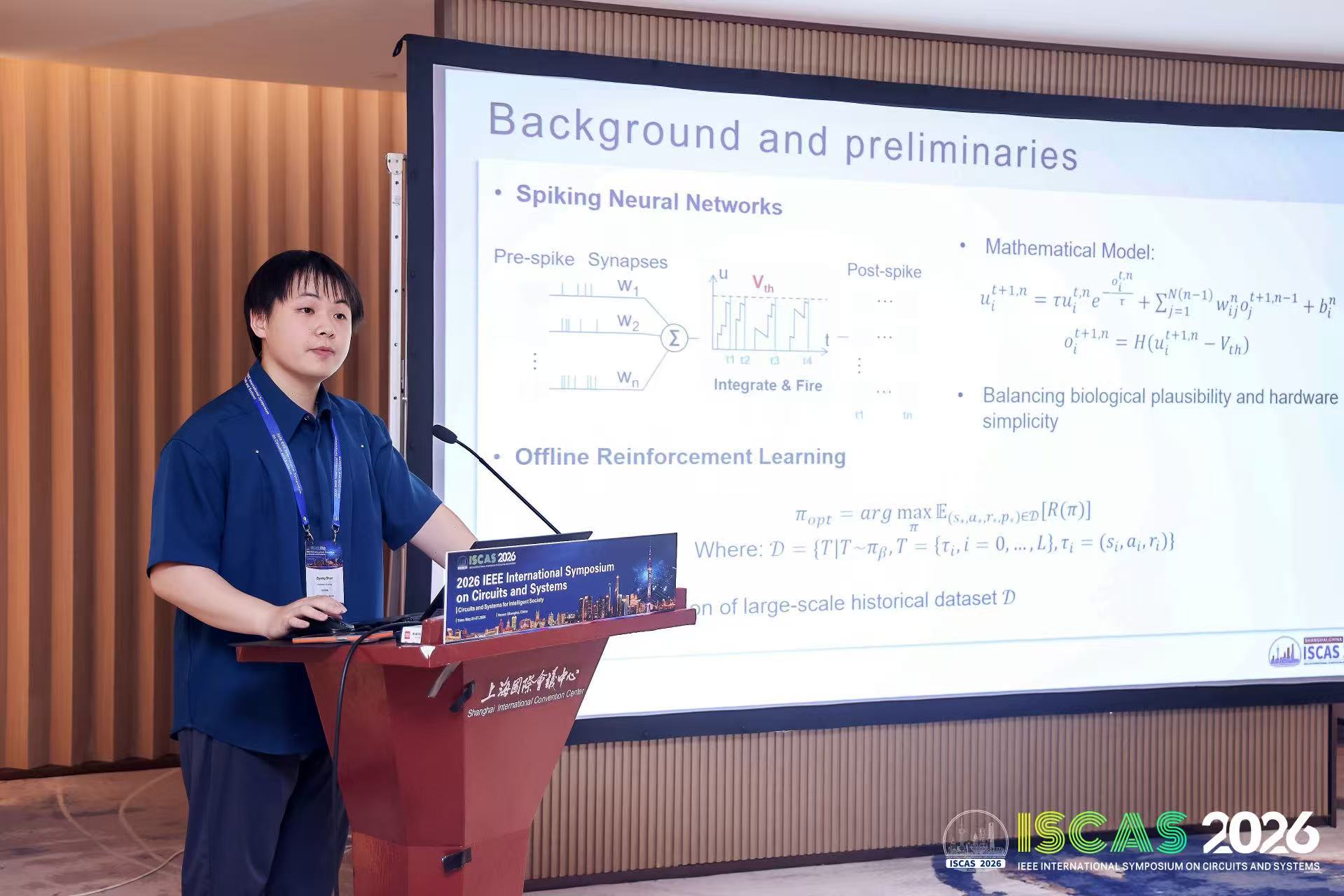
Embodied Artificial Intelligence (EAI) represents an emerging challenging research area which emphasizes the tight integration of perception, cognition, and actuation in real world environments. Leveraging transformer architectures for sequential action generation has shown remarkable potential in EAI workloads. However, existing EAI accelerators struggle to meet the stringent power and accuracy requirements of embodied deployment. Neuromorphic computing, characterized by its event-driven and energy-efficient nature, offers a promising computational paradigm that aligns well with the requirements of EAI.
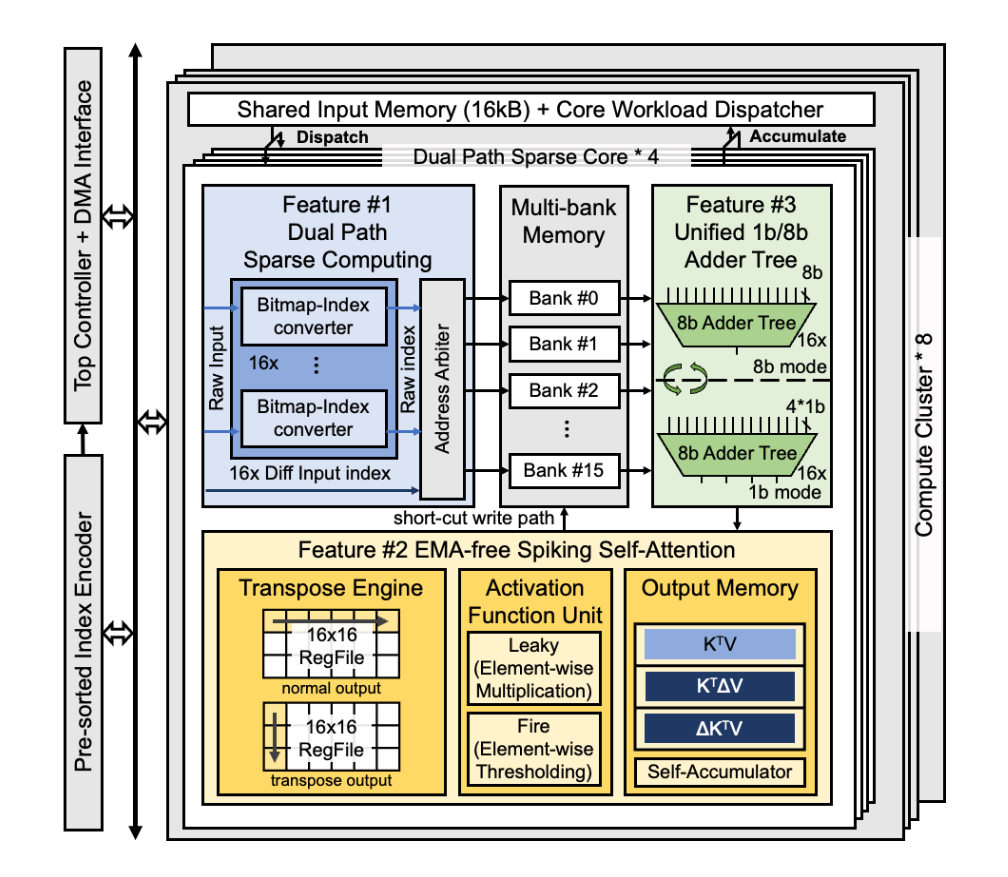
The Ph.D student Ziyang Shen and the research assistant Zhipeng Liao from CenBRAIN Neurotech Center of Excellence, propose a decision spiking transformer based neuromorphic accelerator, specifically designed for EAI applications. The proposed architecture introduces a locality dependent KV product cache, a compute-pattern reconfigurable engine and a heterogeneous core to efficiently handle the dynamic computation patterns of spiking transformers. We evaluate our design on multiple MuJoCo Gym benchmark tasks. Experimental results demonstrate that our accelerator achieves up to 10.9× improvement in energy efficiency over state-of-the-art EAI accel erators, while maintaining high task performance of 92.4, 105.3 and 101.5 average normalized score in HalfCheetah, Hopper and Walker2D, respectively. These findings highlight a feasible pathway toward neuromorphic hardware deployment for EAI.
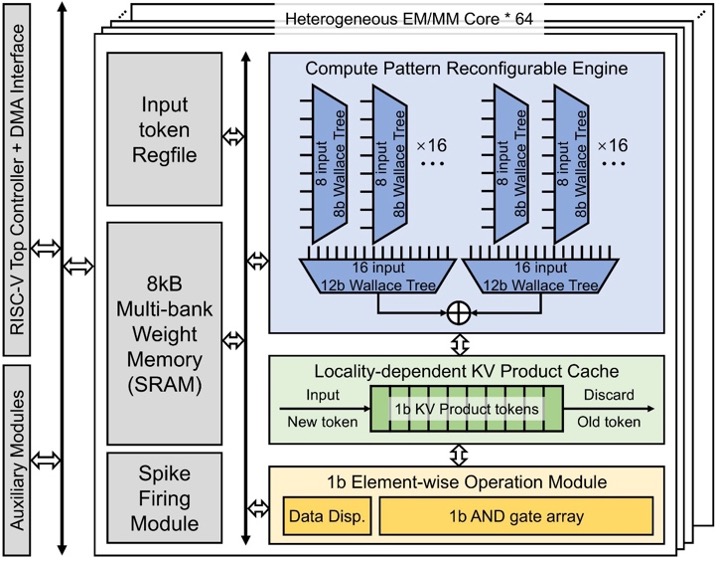
Fig. 1: Architecture of the proposed decision spiking transformer acceleration system. Three key features illustrated in distinctive colors are proposed to jointly improve the overall performance of the system.
《TF-MV SwAV++:攻克跨受试者 sEEG 癫痫检测难题》
文献引用:Liao Y., Yang J., Sawan M., TF-MV SwAV++: Subject-Invariant Time--Frequency Prototype Learning for Cross-Subject sEEG Seizure Detection. 2026 IEEE International Symposium on Circuits and Systems.
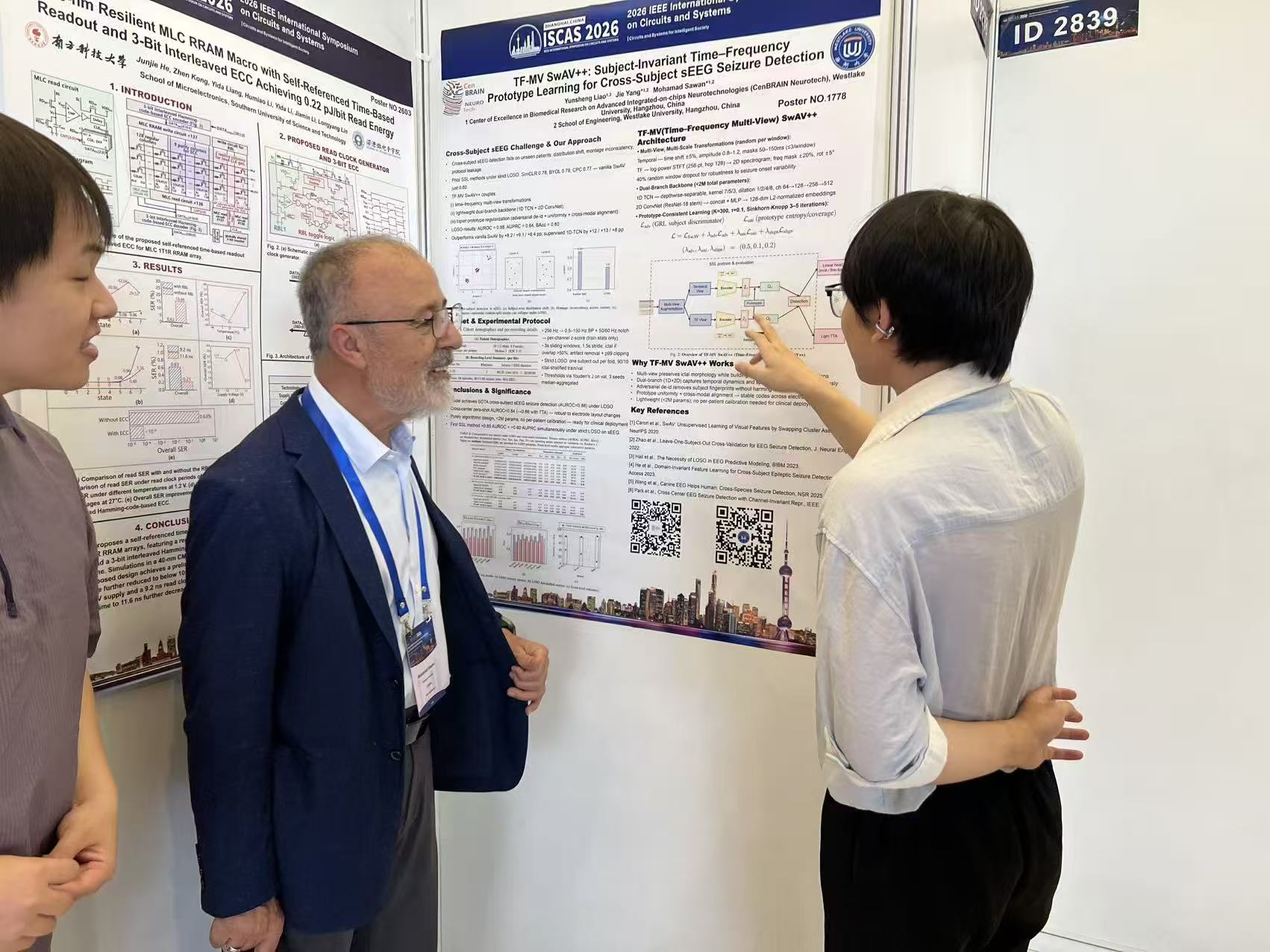
Cross-subject stereoelectroencephalography (sEEG) seizure detection often suffers from performance degradation on unseen subjects due to inter-subject heterogeneity and electrode-layout discrepancies.
The Ph.D student Yunshen Liao from CenBRAIN Neurotech Center of Excellence, proposes TF-MV SwAV++, a time–frequency multi-view, prototype-consistent self-supervised learning framework for learning subject-invariant seizure representations. The method integrates multi-view and multi-scale consistency across temporal and time–frequency domains, a lightweight dual-branch backbone, and three prototype-level mechanisms: adversarial de-identification, prototype uniformity, and cross-modal prototype alignment. Experiments on a de-identified hospital sEEG cohort containing 33 two-hour recordings from 20 patients demonstrate that, under strict leave-one-subject-out validation, TF-MV SwAV++ achieves an AUROC of 0.88, AUPRC of 0.64, and balanced accuracy of 0.80, outperforming vanilla SwAV and a supervised 1D-TCN baseline. Cross-center zero-shot evaluation further shows robust generalization, with AUROC reaching 0.84 and improving to 0.86 after light test-time adaptation. Event-level analysis achieves 90.7% sensitivity at 0.18 false positives per hour. These results indicate that prototype-consistent self-supervision combined with time–frequency multi-view learning can effectively reduce subject bias and improve cross-subject generalization for sEEG seizure detection.
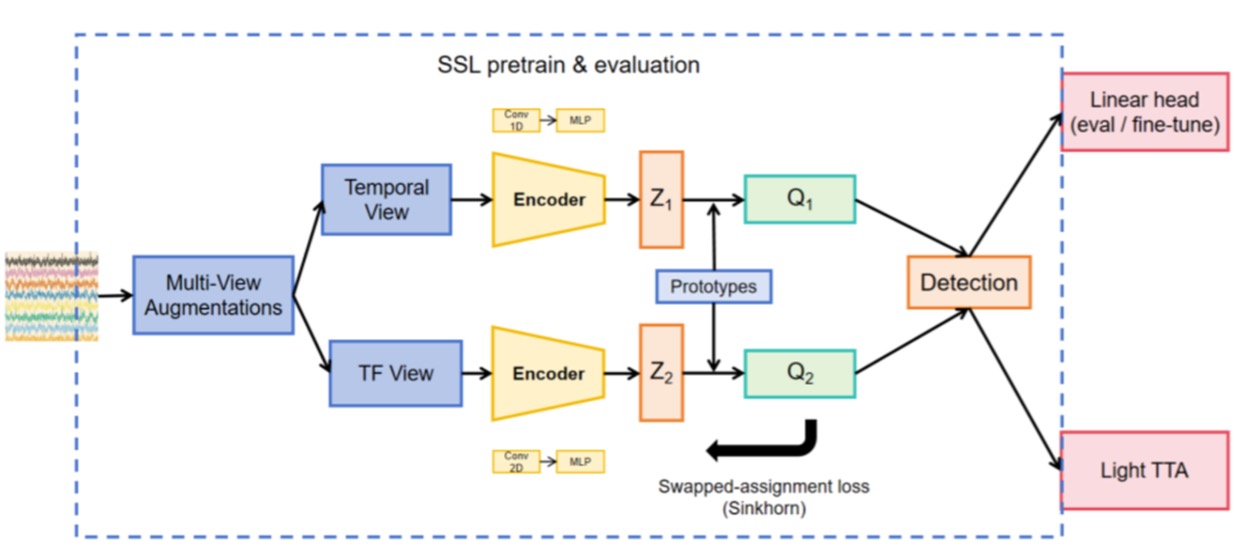
Fig. 2: Overview of TF-MV SwAV++ (Time–frequency Multi-view)
This year's ISCAS focuses on interdisciplinary fields including circuits and systems, artificial intelligence, and biomedicine, fully demonstrating the development trends of cutting-edge technologies worldwide.
Leveraging this top-tier academic platform, our Center presented the latest research achievements and conducted in-depth academic exchanges. We will continue to delve into neurochips, intelligent computing, biological signal processing and other related areas, advance the translation of pioneering technologies from theoretical research into practical applications, and facilitate technological innovation in the field of circuits and systems.