Micro-nanophotonic sensing technology has propelled ultra-sensitive disease diagnosis. However, simultaneously optimizing strong optical field confinement and multi-scale light-matter interaction strength remains challenging, thereby constraining the optimization of the limit-of-detection (LOD). On the one hand, high quality (Q)-factor resonant structures provide stable resonance wavelengths, yet exhibit lower sensitivity. On the other hand, once the device is fabricated, its fixed mode profile makes it difficult to achieve effective simultaneous detection across multi-scale analytes (e.g., from tens of nanometers for viral proteins to hundreds of nanometers for viral particles).
To address this bottleneck, the latest research from the CenBRAIN Neurotech, Westlake University, published in Photonics Research journal, employs an off-resonant coupling mechanism to excite out-of-plane nonlocal coupling from microscale Fabry–Pérot (F-P) to nanoscale plasmonic resonances. This coupled mode simultaneously inherits the robust high Q-factor and high bulk sensitivity of the F-P mode, as well as the high surface sensitivity of the plasmonic resonance. Consequently, it significantly reduces the limit of detection across a multi-scale range, offering a novel technological paradigm for multi-biological sample detection.

Dr. Yuqiao Zheng (Class of 2025 Ph.D graduate) and Sice Chen (former visiting student) from CenBRAIN Neurotech, contributed as co‑first authors. Chair Professor Mohamad Sawan of Westlake University serves as the corresponding author. The authors acknowledge support from Westlake University Laboratory Talent Acquisition Special Funding, Laboratory National Foreign Expert Project, and the Research Fund for International Senior Scientists (RFISS) of NSFC. They thank Zhejiang Key Laboratory of 3D Micro/Nano Fabrication and Characterization for facility and technical support.
Research Highlights
A plasmonic metacavity configuration is proposed to achieve cross-scale coupling between microscale Fabry–Pérot (F-P) and nanoscale surface plasmon resonances (SPR).
The off-resonant F-P/SPR coupled mode integrates the advantages of both resonant modes, inheriting the high Q-factor and high bulk sensitivity of the F-P resonance alongside the high surface sensitivity of the SPR mode.
The plasmonic metacavity excites a stable high Q-factor dominated by the F-P resonance, exhibiting remarkable robustness against metasurface fabrication variations and easing manufacturing tolerance constraints.
The plasmonic metacavity enables label-free, multi-scale, and highly sensitive biosensing, achieving superior limits of detection (LOD) for both tens-of-nanometer viral proteins and hundreds-of-nanometer pseudovirus particles to accommodate diverse biological targets.
Abstract
Micro-nanophotonic devices have significantly propelled sensitive biosensing. Yet the intrinsic trade-off between quality (Q)-factor and sensitivity restricts the limit of detection (LOD), as the simultaneous optimization of resonance certainty and response intensity remains constrained. Here, we integrate a plasmonic metasurface within a vertical microcavity, facilitating the out-of-plane nonlocal coupled mode between microscale Fabry–Perot (F–P) and nanoscale plasmonic resonances. Leveraging the off-resonant coupling and constructing the biointerface intracavity, the coupled mode inherits the robust high-Q and bulk sensitivity from the F–P resonance, and the high surface sensitivity from the nonlocal plasmonic mode. Such cross-scale sensing capability is further demonstrated by a coupled mode sensing model. Consequently, the experimental figure-of-merit (FOM) reaches 165 RIU−1, representing state-of-the-art performance among currently reported plasmonic nanosensors. Meanwhile, the off-resonant coupled mode achieves notable experimental Q-factors (up to 541) at approximately 850 nm and exhibits remarkable robustness, with experimental coefficients-of-variation remaining approximately 10% even under 33% in-plane structural variations. Benefiting from the robust high-Q and sensitivity, the coupled mode possesses a significantly improved theoretical LOD across several to hundreds of nanometers compared to bare lattice resonance or F–P modes, which is corroborated by the label-free detection of pseudovirus particles and small viral proteins.
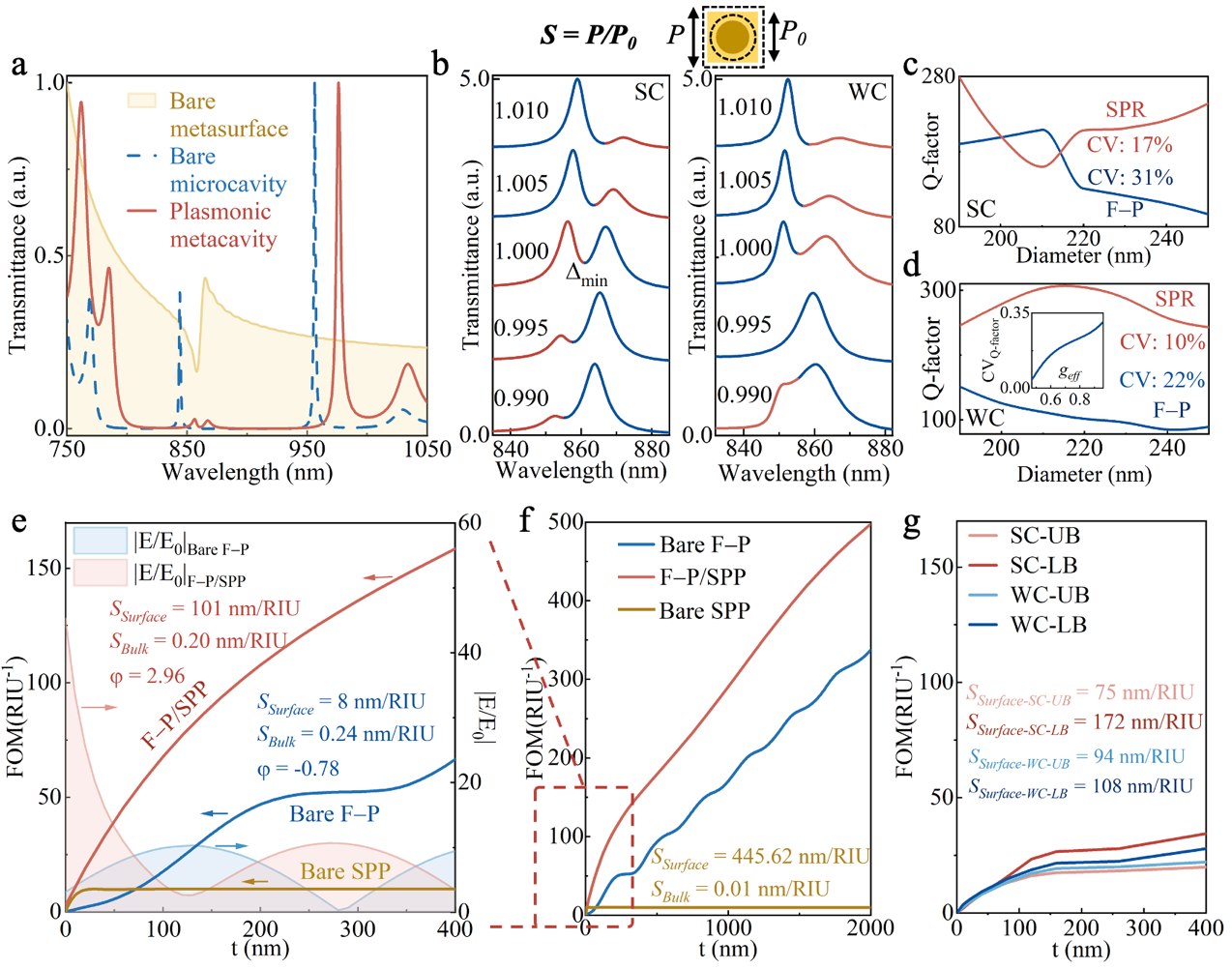
Figure 1. The plasmonic metacavity effectively couples the microscale F–P resonance to the nanoscale SPR, while maintaining a robust high Q‑factor under off‑resonant coupling, compared with bare SPR.
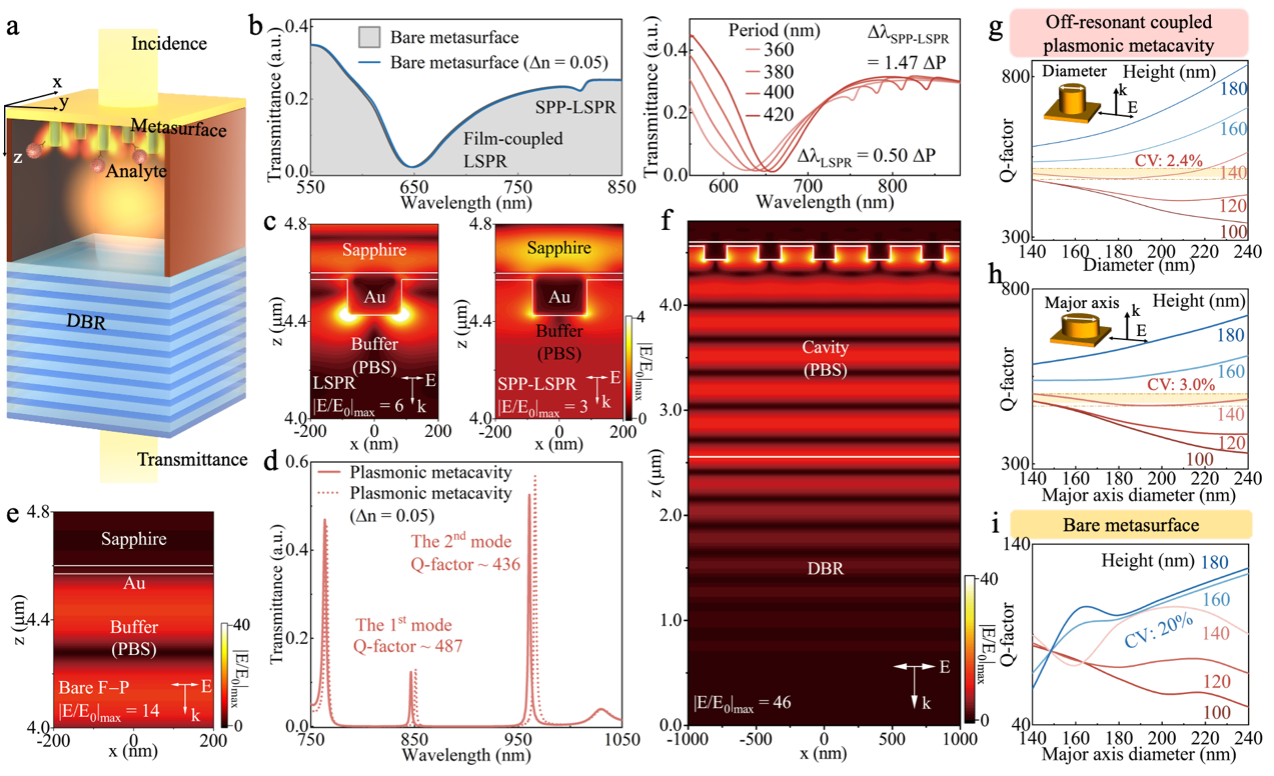
Figure 2. Compared with resonantly coupled conditions, the off‑resonant metacavity achieves high cross‑scale sensitivity from the nanoscale to the microscale.
Reference
Yuqiao Zheng, Sice Chen, Xixi Song, Yaqing Ma, Chengpeng Chai, Jiacheng Sun, Hongyong Zhang, Ying Tao, Liaoyong Wen, Sumin Bian, Peiwu Qin, and Mohamad Sawan, "Robust high quality-factor out-of-plane nonlocal metasurface-enhanced microcavity for multi-scale biosensing," Photon. Res. 14, 3972-3982 (2026)
More information can be found at the following link:
https://opg.optica.org/prj/fulltext.cfm?uri=prj-14-9-3972