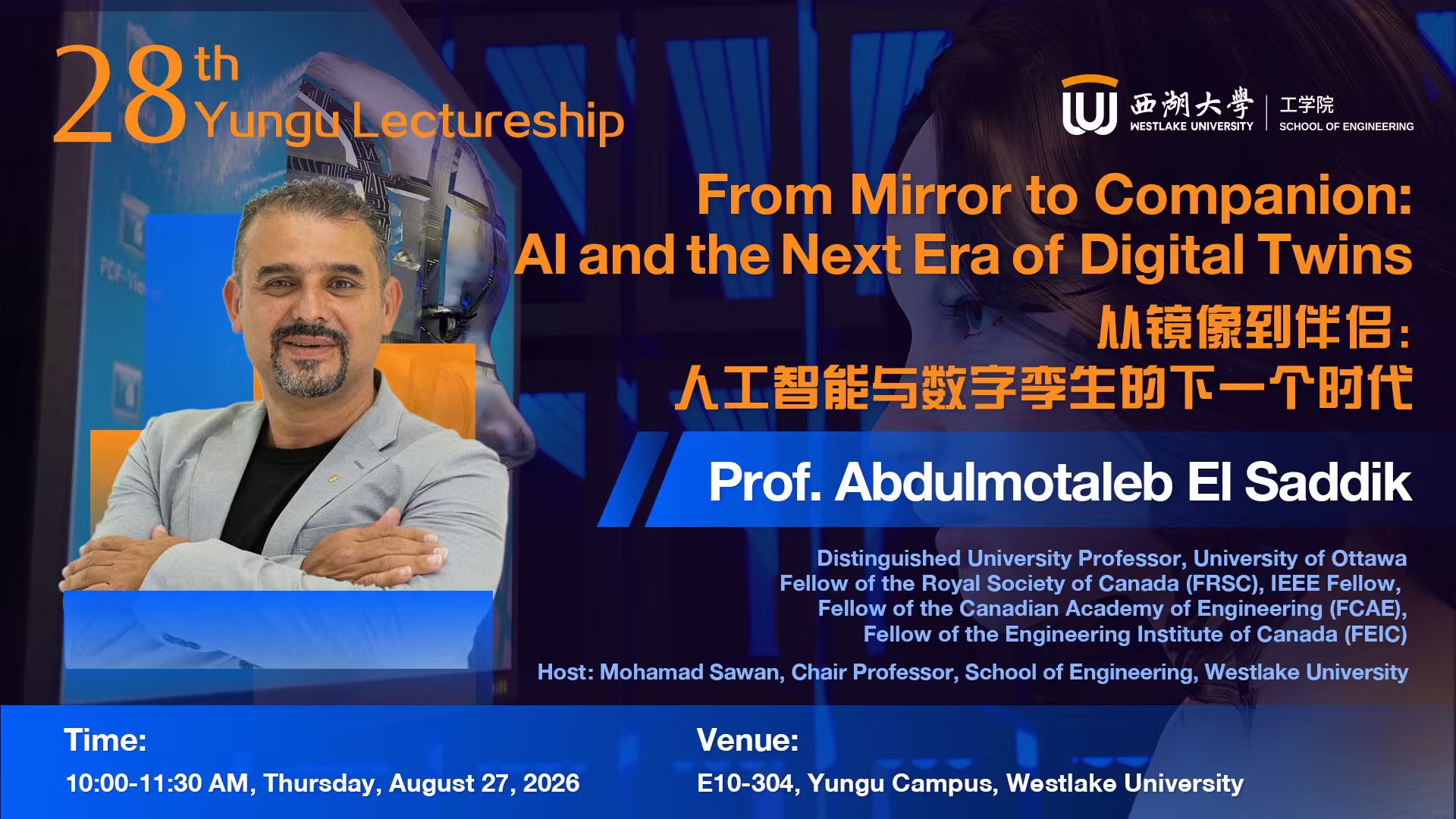
On August 27, 2026, the 28th Yungu Lectureship was successfully held at Westlake University. Chair Professor Mohamad Sawan invited Professor Abdulmotaleb El Saddik, a globally recognized scholar in intelligent multimedia, digital twins, and immersive technologies, and a Fellow of the Royal Society of Canada, Canadian Academy of Engineering, and Engineering Institute of Canada. He delivered an inspiring talk titled “From Mirror to Companion: AI and the Next Era of Digital Twins.”
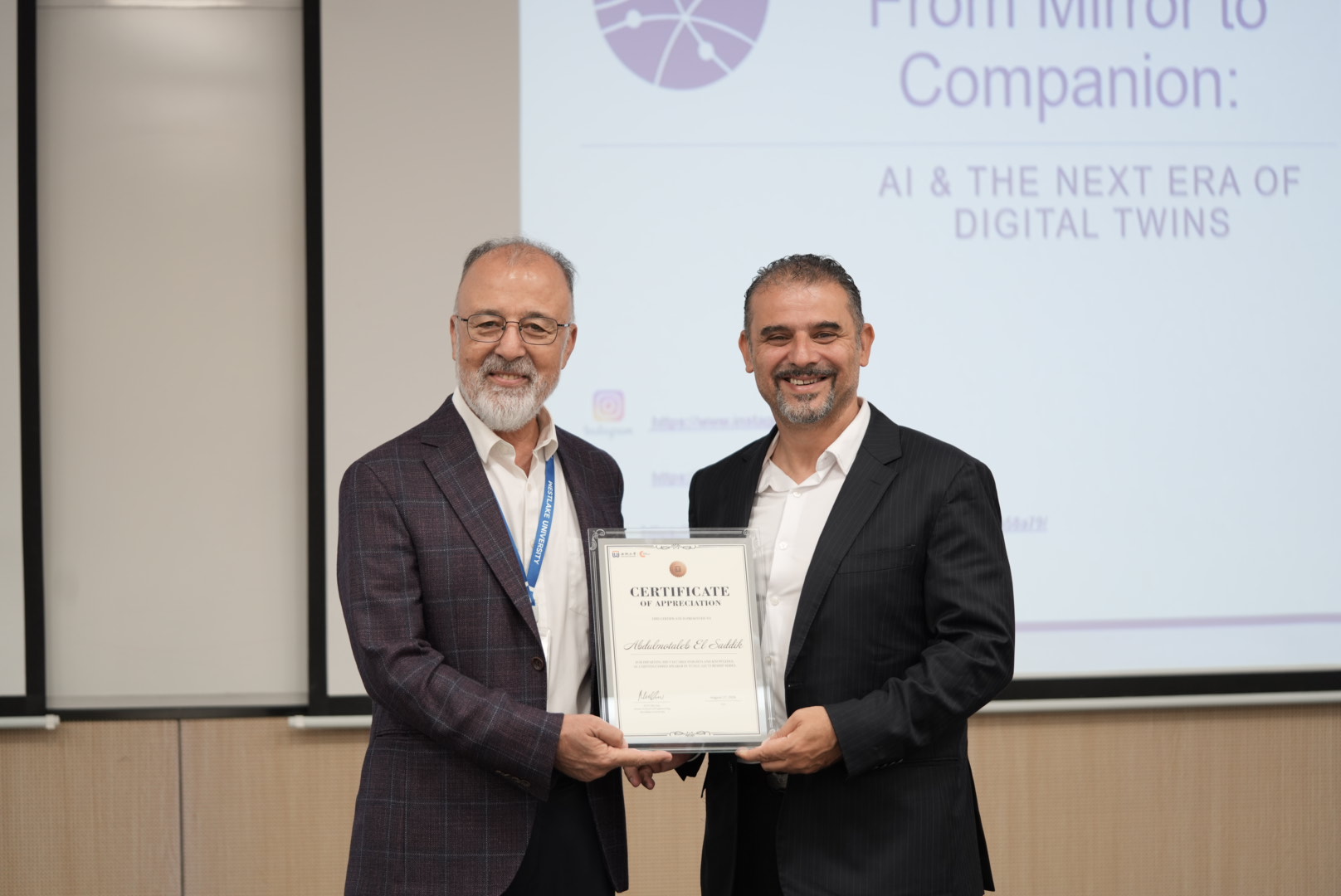
Fig.1. Prof. Mohamad Sawan and Prof. Abdulmotaleb El Saddik at the Westlake University Yungu Lectureship.
In the Lecture, Professor Saddik began by tracing the evolution of digital twins over the past decades, from static “mirrors” of physical systems to intelligent “companions” empowered by AI that can perceive, interpret, and respond. He noted that with the rapid advancement of multimodal large language models (MLLMs), immersive technologies (AR/VR/XR), and 5G, digital twins are undergoing a profound paradigm shift: they are no longer just monitoring and simulation tools, but collaborative partners capable of real-time, adaptive, and personalized interaction with humans.
He further shared the transformative potential of digital twins across multiple domains.
In healthcare, they can simulate patient conditions to assist personalized diagnosis and rehabilitation; in education, they create immersive learning environments tailored to individual needs; in smart cities, they optimize resource allocation and urban efficiency.
The goal of digital twins is not to build more complex systems, but to enrich human life, he emphasized.
Unlike a conventional presentation, Professor El Saddik turned the entire session into an interactive "living lab." He repeatedly invited audience members to raise questions and promptly constructed digital twin logic frameworks on the spot to address specific inquiries. Whether faced with questions in English or Chinese academic expressions, his "digital avatar" swiftly adapted to the context and generated responsive interaction logic in real time, making the atmosphere both electrifying and deeply engaging.
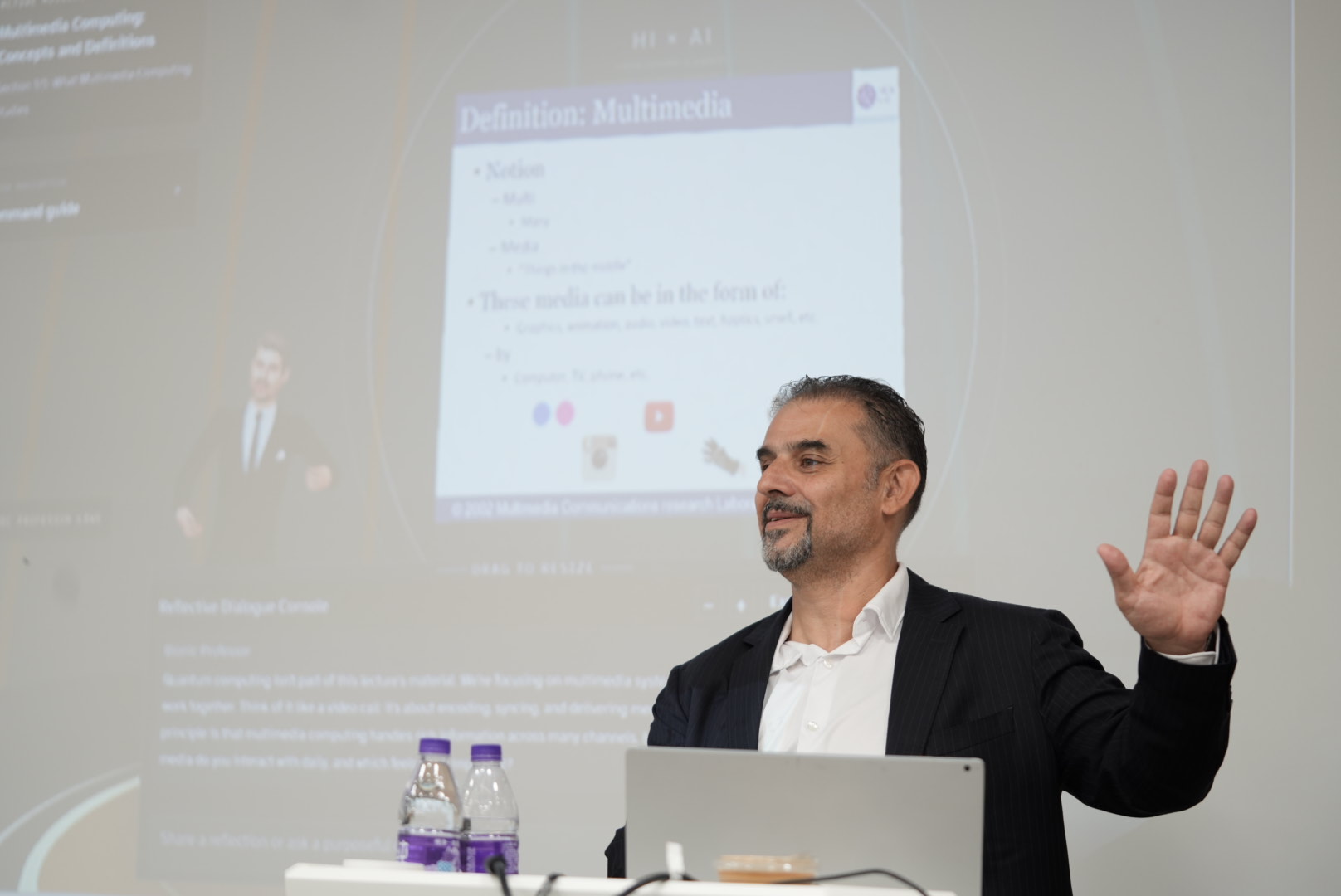
Fig.2. Prof. El Saddik sketches a digital twin framework on the fly in response to an audience question.
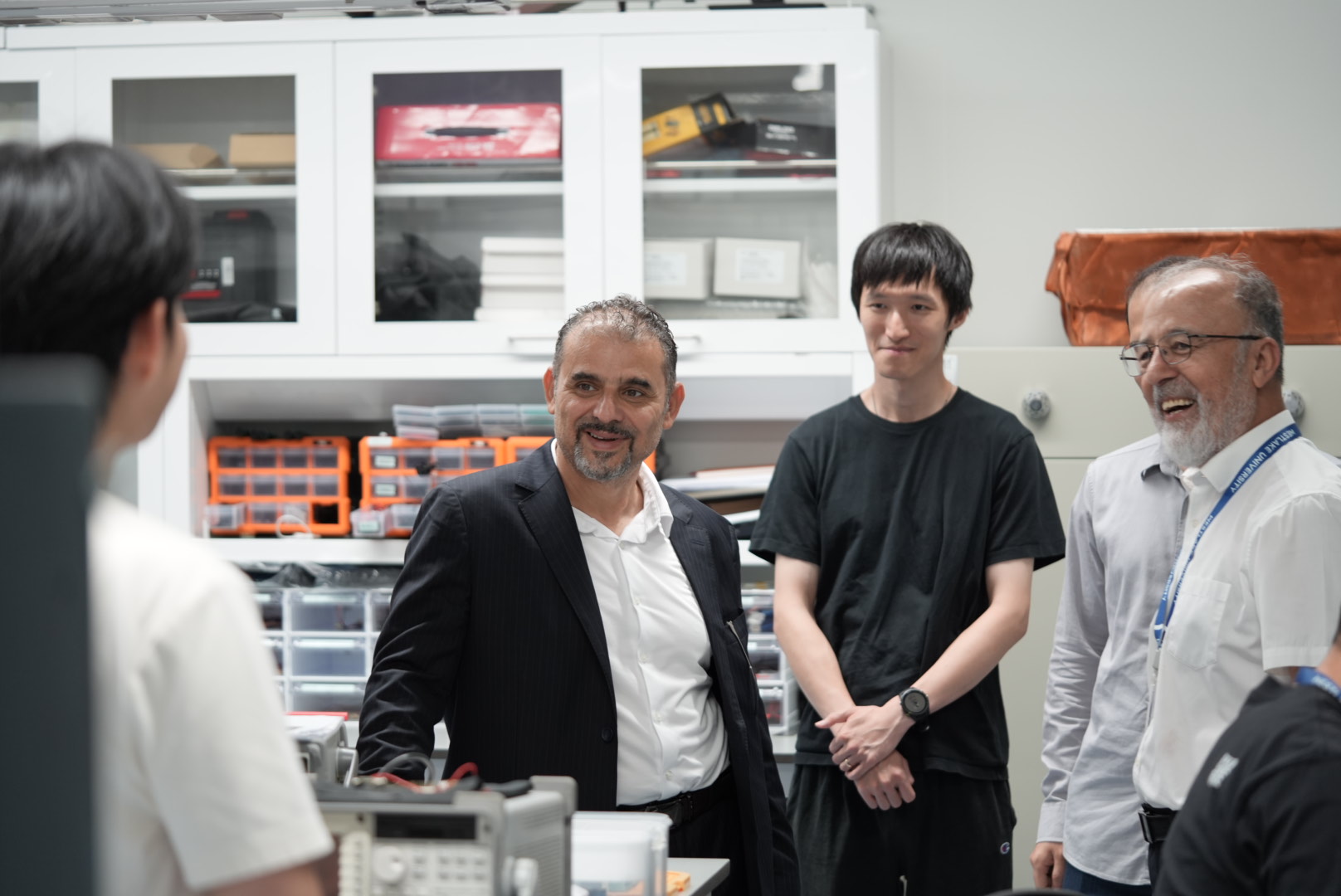
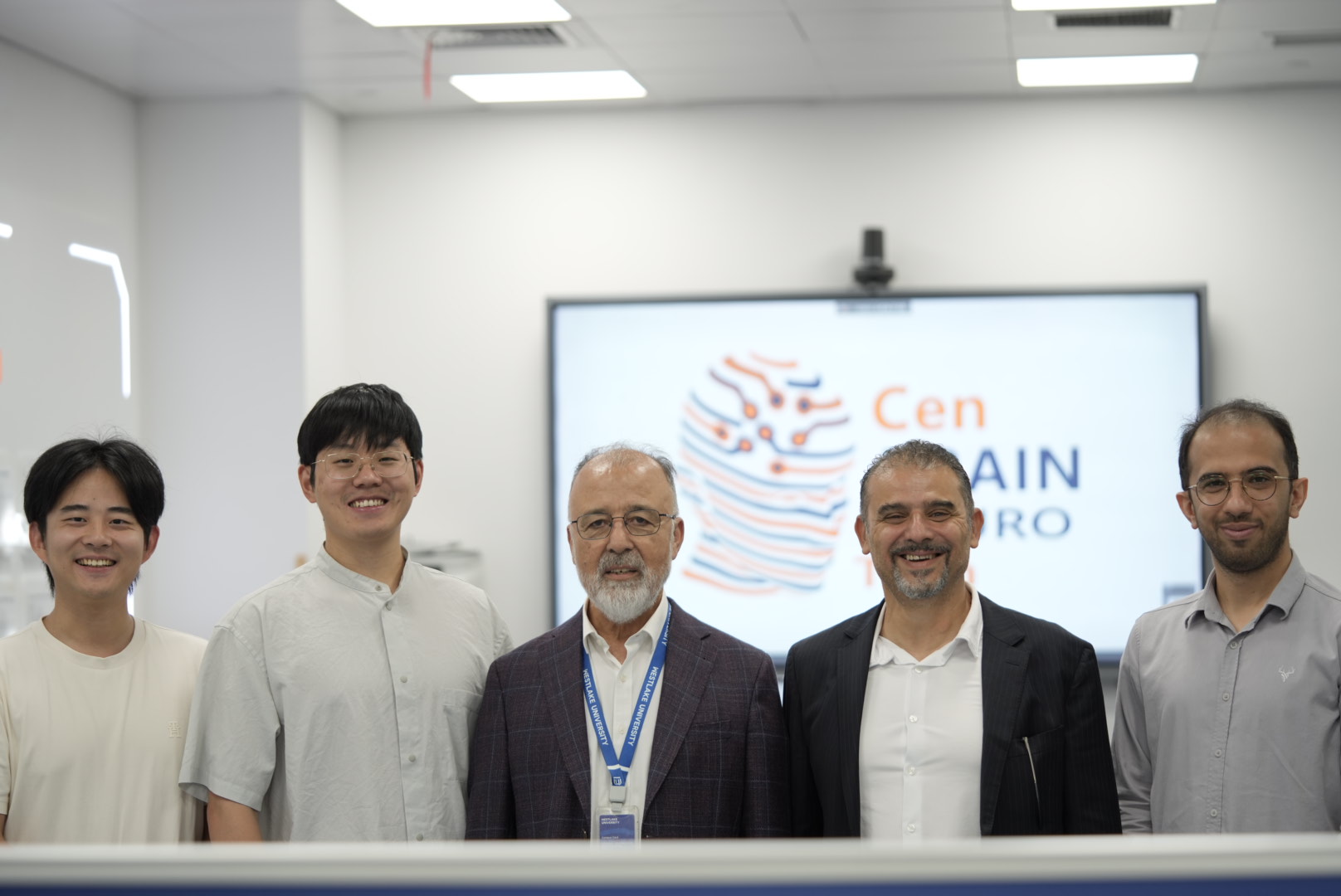
After the lecture, Professor Saddik enthusiastically toured the CenBRAIN Neurotech Center of Excellence. He was warmly received by Chair Professor Mohamad Sawan and our center members. We engaged in discussions on the application prospects of digital twins in neural rehabilitation and brain-computer interfaces and explored potential avenues for future collaboration in research projects and joint talent training.