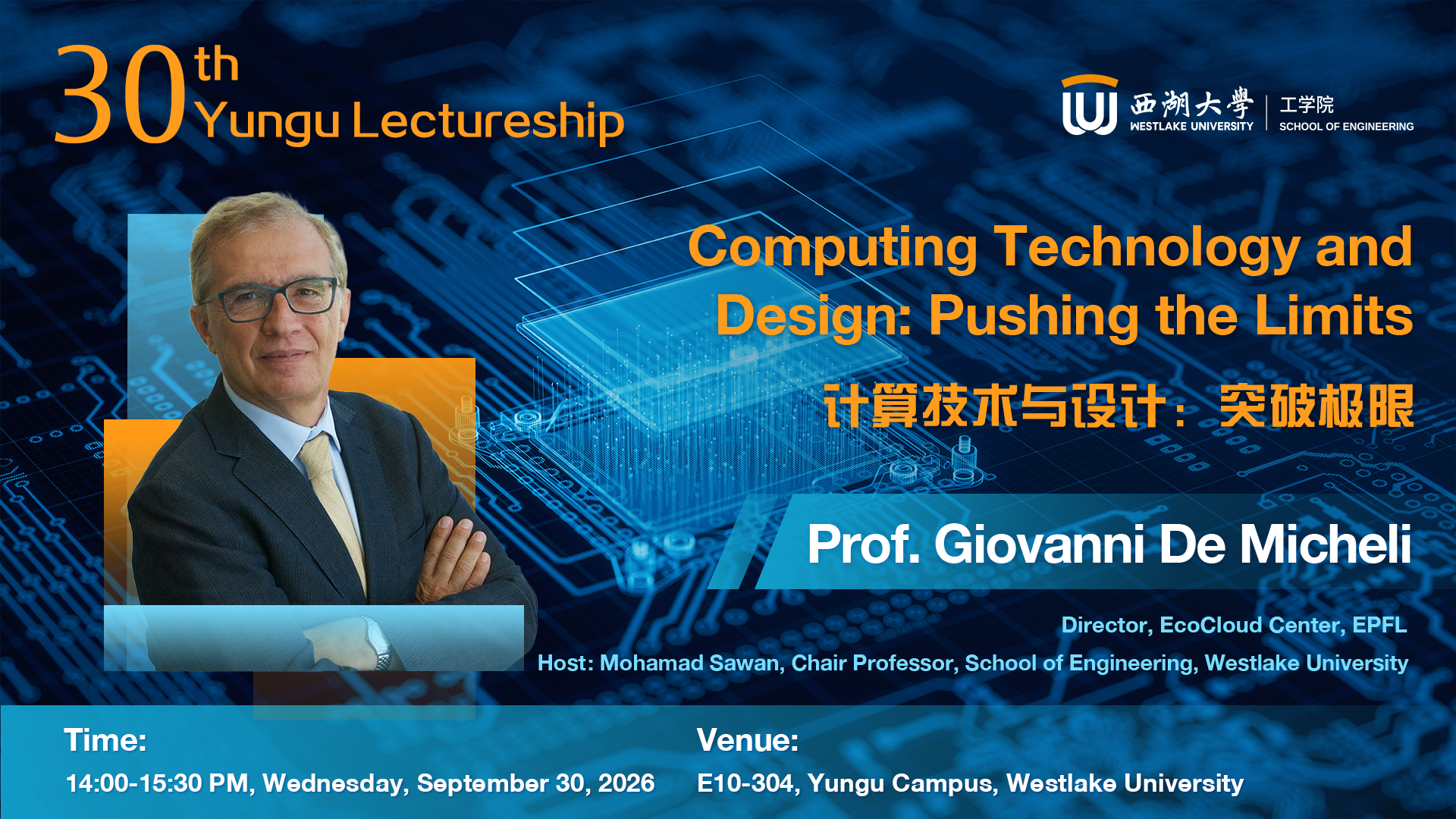
On September 30, the 30th Yungu Lectureship was held at Westlake University in Academic Ring E10-304. The lecture featured Professor Giovanni De Micheli, Scientific Director of the EcoCloud Center at EPFL Lausanne, Switzerland, as the distinguished speaker. He gave a talk titled "Computing Technology and Design: Pushing the Limits." Professor Mohamad Sawan, Founding Director of the CenBRAIN Neurotech Center of Excellence, hosted the lecture.
Professor Sawan extended a sincere welcome to Professor De Micheli for his visit. Professor De Micheli is currently the Director of the EcoCloud Center at EPFL. He is a Foreign Member of the U.S. National Academy of Engineering, a Foreign Honorary Member of the American Academy of Arts and Sciences, a Member of the European Academy of Sciences, and a Member of the Swiss Academy of Engineering Sciences. He is also a Fellow of ACM, AAAS and IEEE. He has received numerous prestigious international academic honors, including the 2025 IEEE Gustav Kirchhoff Award and the 2022 ESDA-IEEE/CEDA Phil Kaufman Award.
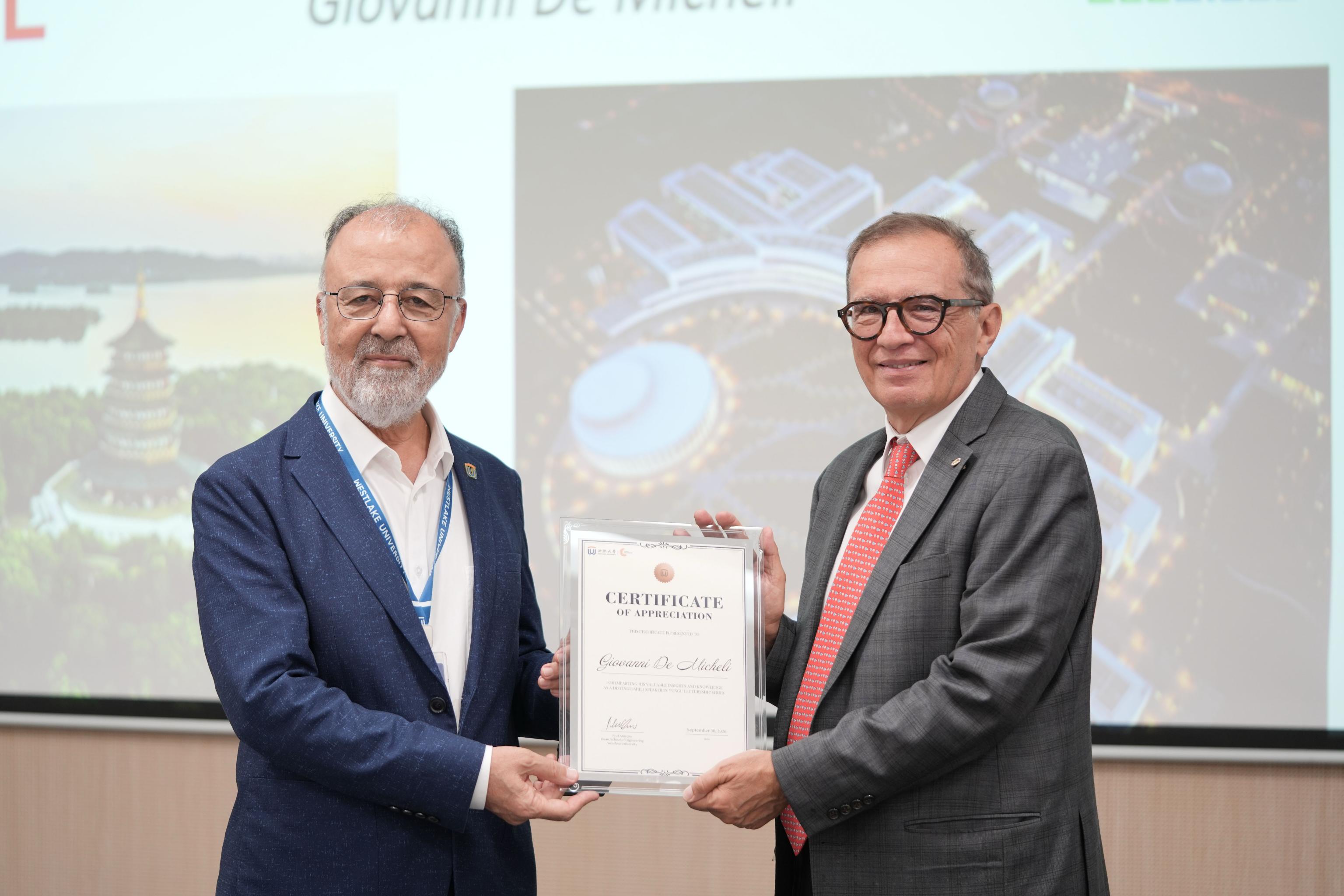
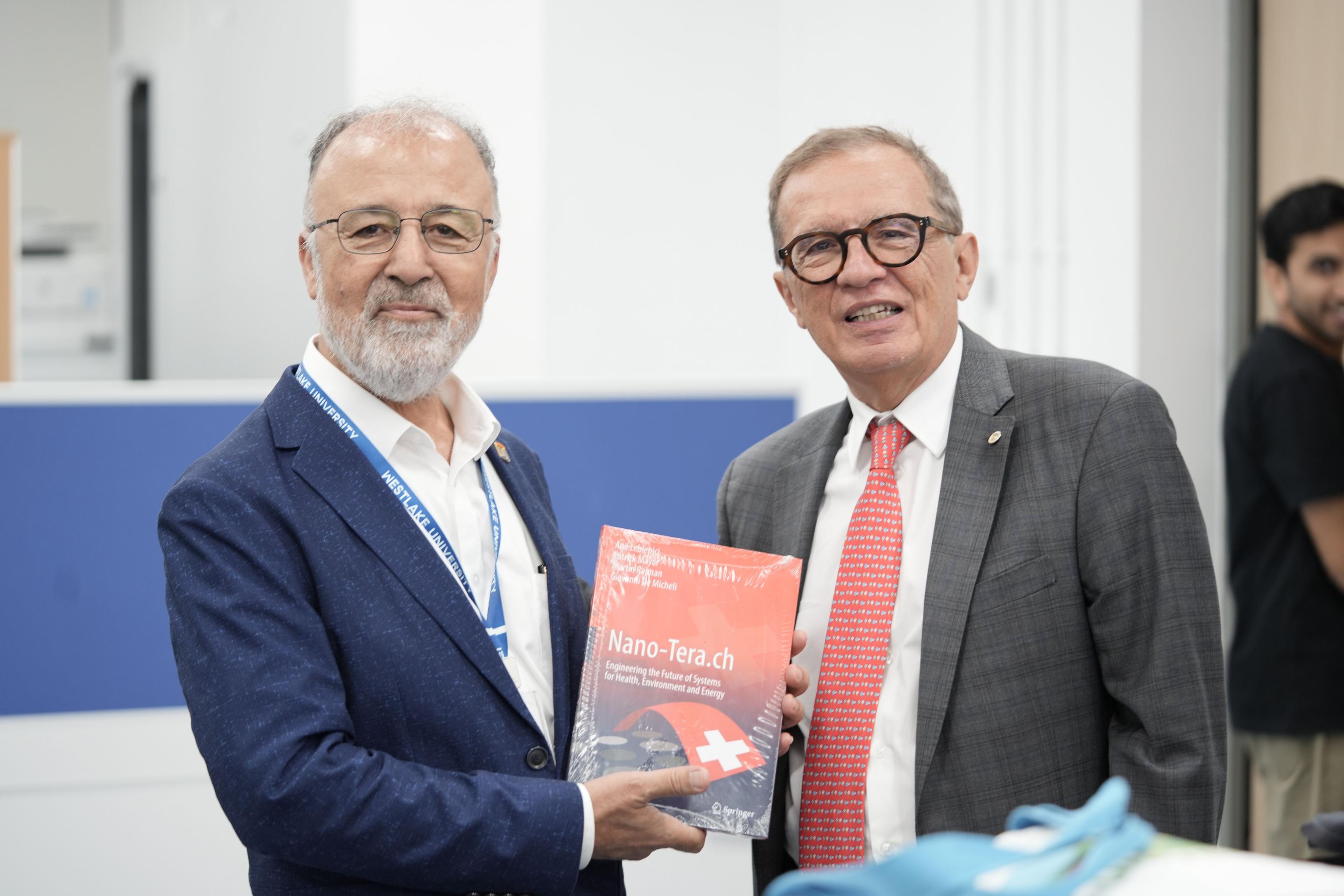
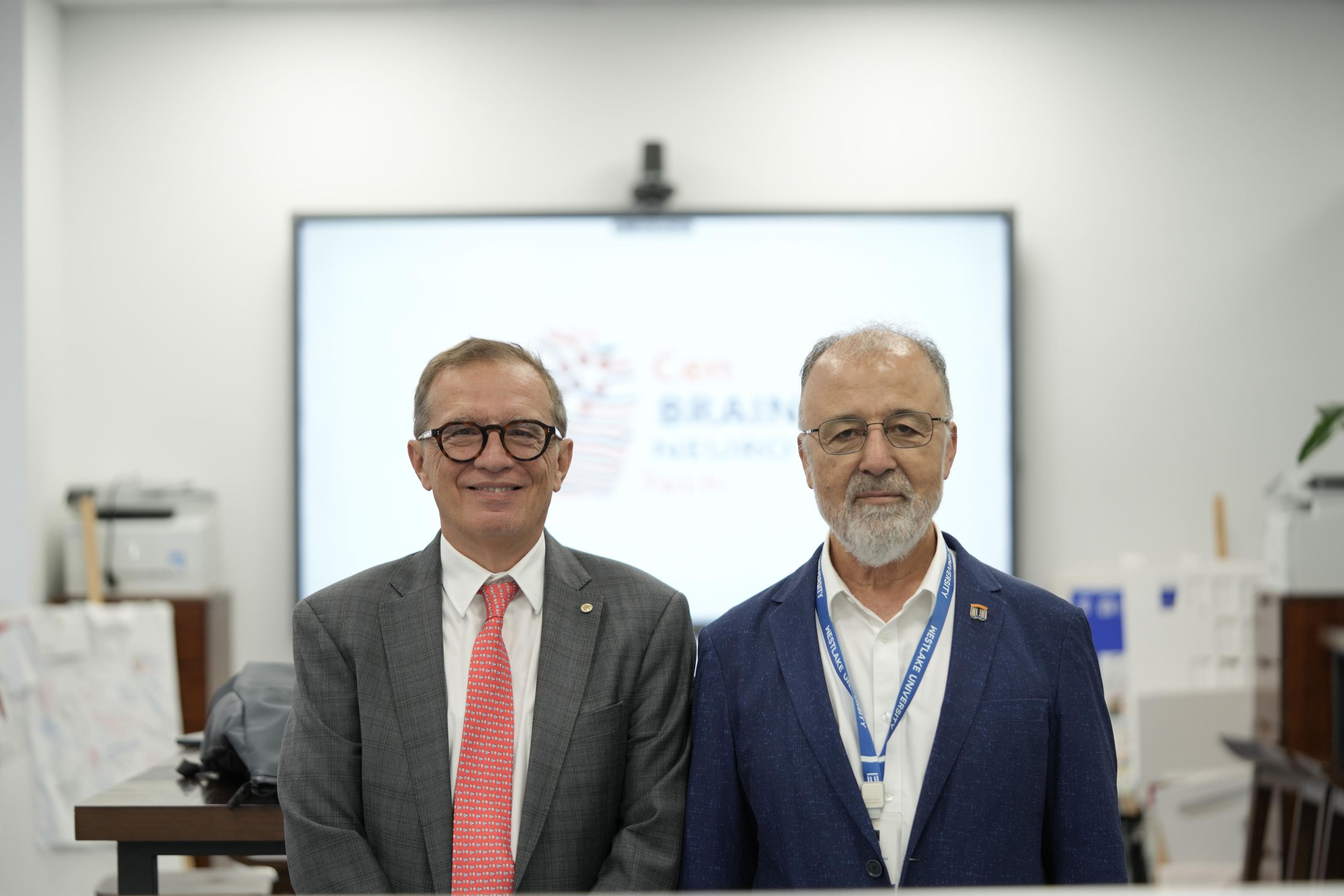
Prof. Mohamad Sawan and Prof. Giovanni De Micheli at the Westlake University Yungu Lectureship.
As the originator of the Network on Chip design automation paradigm and the builder of the EDA algorithm and design tool system, Professor De Micheli has long been deeply engaged in research on computing technology and design methods. In his Yungu Lectureship Talk, he pointed out that the unprecedented increase in computation requirements by AI and machine learning applications, and its cost in terms of electrical energy and heat disposal, create a formidable challenge in view of the non-negotiable protection of our planet. At the same time, the data deluge and the proliferation of smart software systems in everyday and everyone's life pose another challenge in view of the required protection of our privacy.
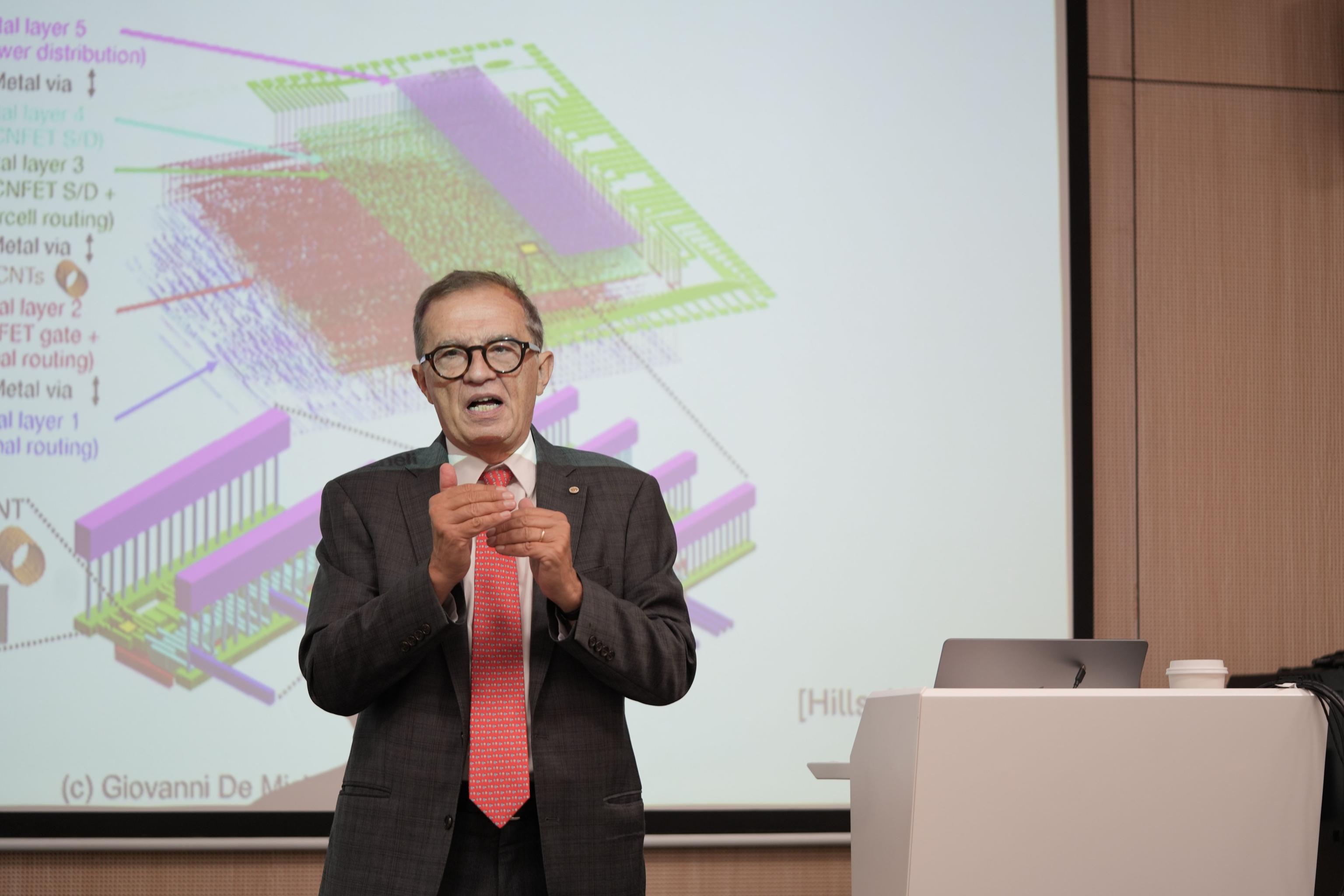
He emphasized that the design of new computation and communication systems must address these needs by leveraging devices, circuits and architectures within a comprehensive vision to fulfill the growth of a sustainable planet and a respectful society. He first addressed issues and solutions in data center design, as well as activities at the EcoCloud Center at EPFL. He then presented technology solutions and design methods for the synthesis and optimization of digital circuits, including applications to security. Finally, he concluded with a broad vision of future directions and challenges.
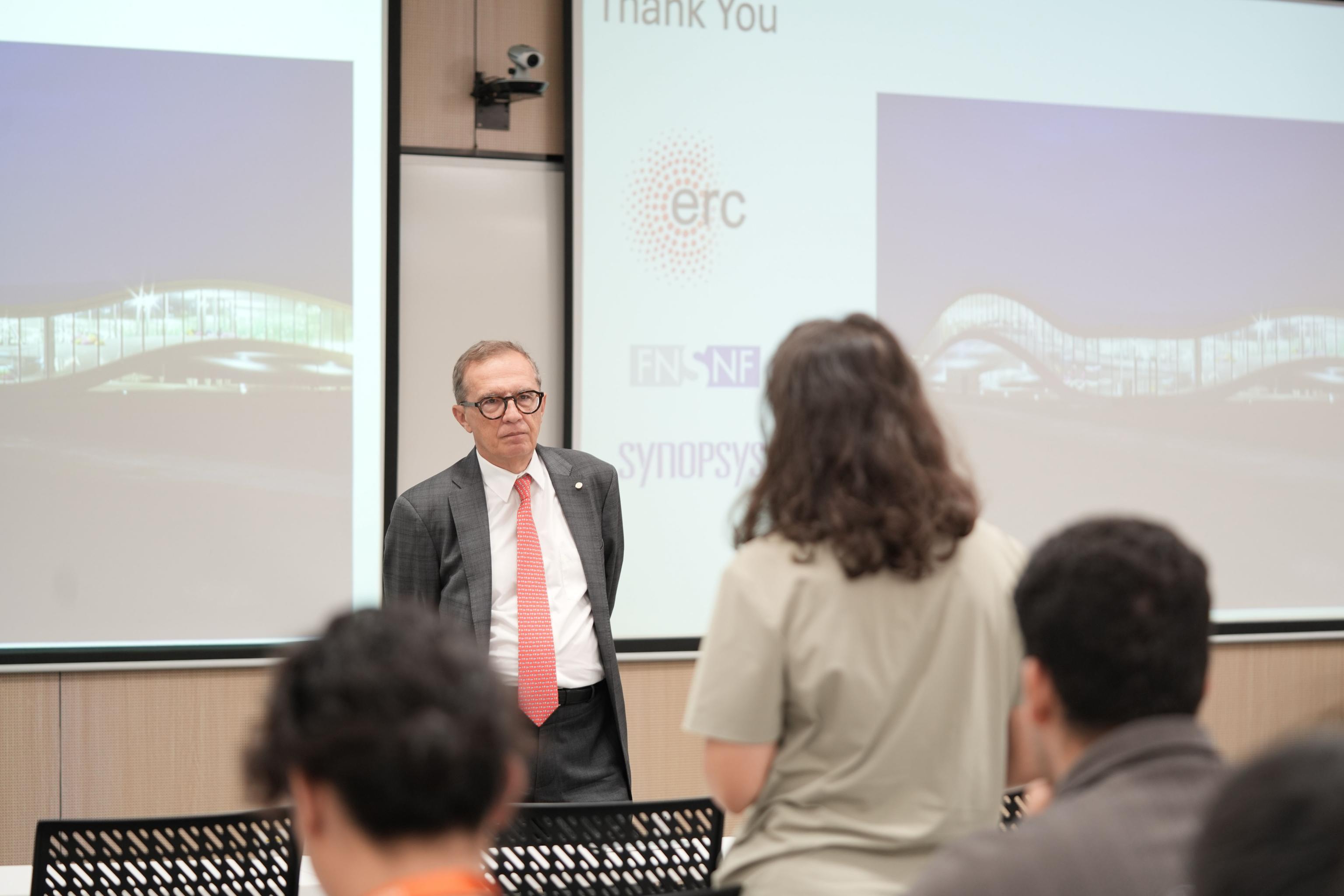
At the end of his report, Professor De Micheli raised a thought-provoking question. AI is changing the way we live and interact with peers and machines. An increasingly larger portion of design will leverage AI, and the way EDA is performed will also be reshaped by AI. Who will drive this transformation? Academia, design companies, EDA large companies, software companies, or start-ups? The question prompted further reflection among the faculty and students present.
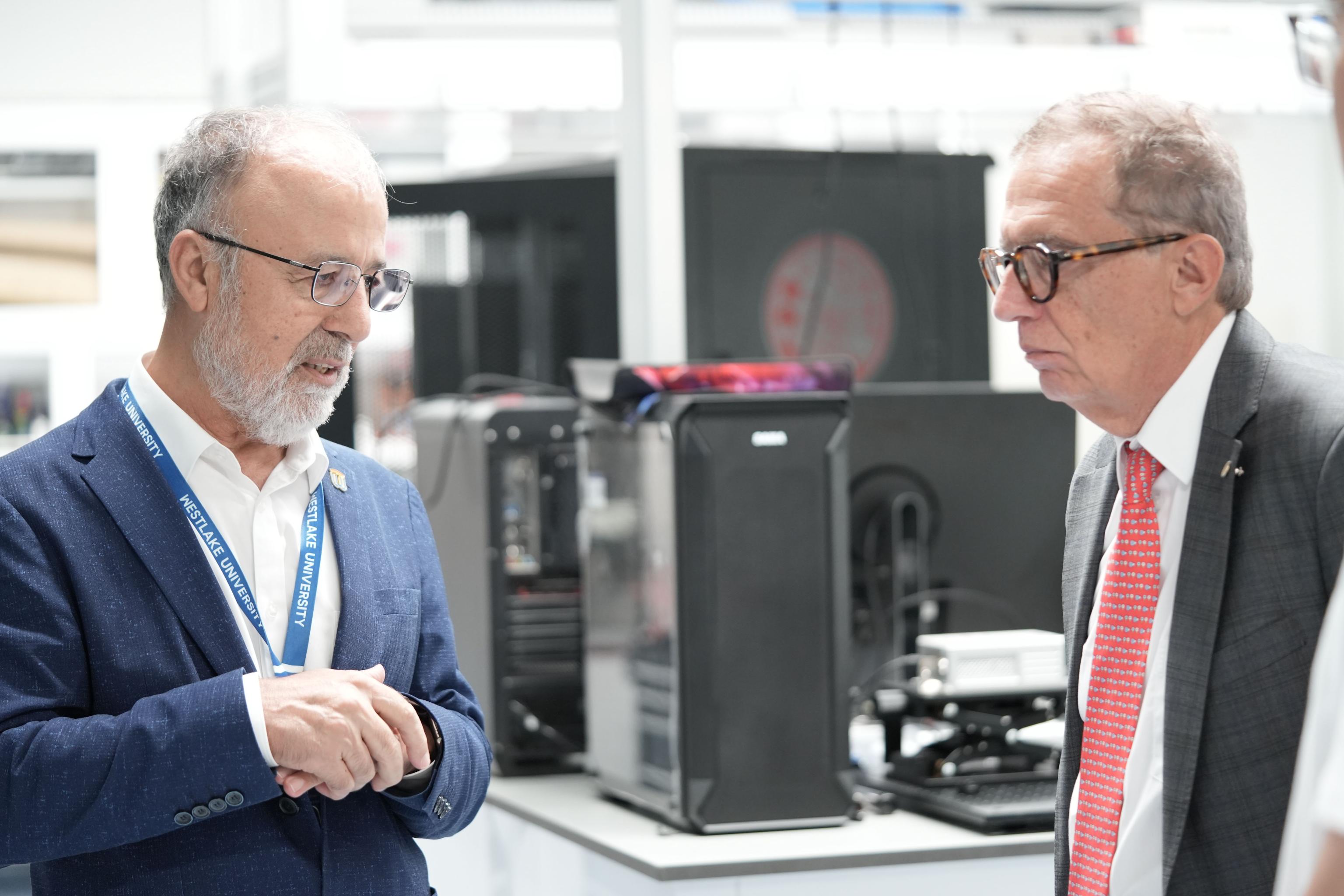
After the lecture, Professor Sawan accompanied Professor De Micheli on a visit to our CenBRAIN Neurotech Center of Excellence, introducing the center's research progress in neuromorphic chips, biosensing and multimodal neural imaging, and showcasing several multichannel neurorecording and neurostimulation chips independently achieved by our group. Our members held in-depth discussions with Professor De Micheli on topics such as brain-computer interfaces, vision enhansing processing, and brain organoids culture. In addition, Professor De Micheli gifted his book to Professor Sawan, a gesture that reflects the open spirit of academic exchange and our shared hope for future collaboration.