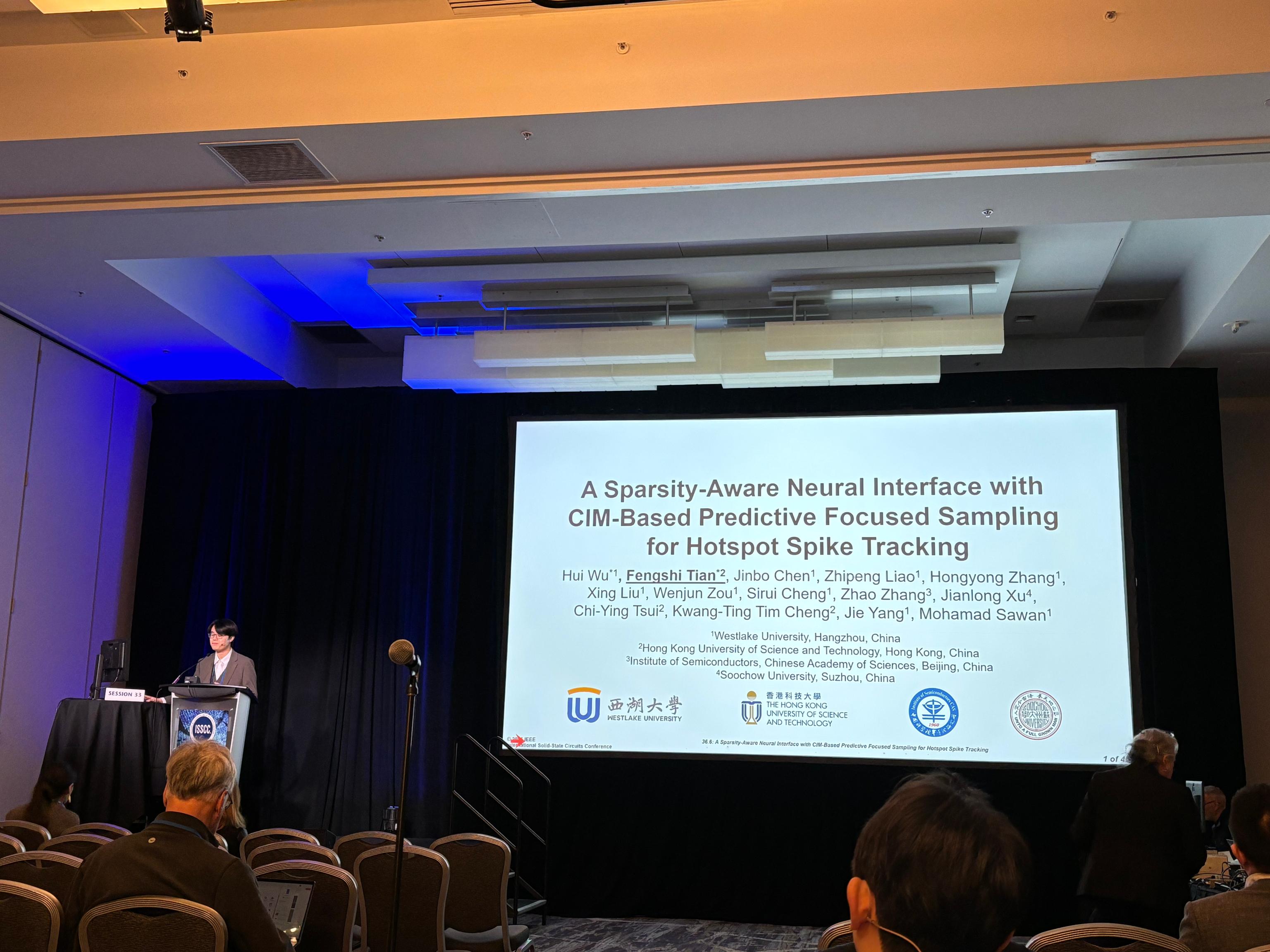
On October 23rd, the 58th CenBRAIN Neurotech Leading Lecture Series (CELLS) was held at Westlake University's Yungu Campus.
Since 2022, CenBRAIN Neurotech has been building a platform for sharing cutting-edge advances in biomedical engineering, integrated circuits, and neuromodulation, and has successfully held 58 lectures to date.
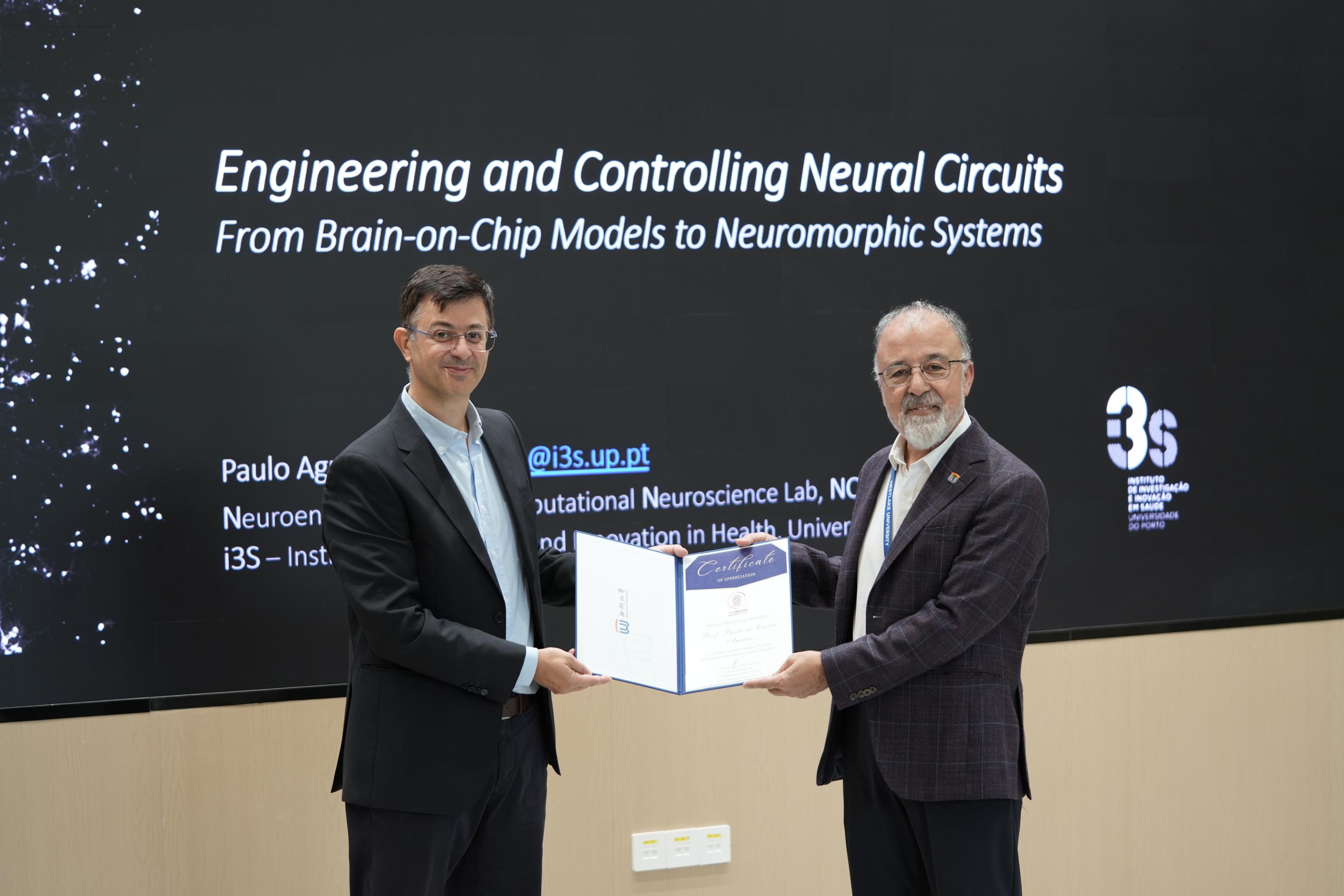
This lecture featured Associate Professor Paulo de Castro Aguiar from the Institute for Research and Innovation in Health (i3S) at the University of Porto, Portugal, as the invited speaker. Prof. Aguiar delivered a lecture entitled "Engineering and Controlling Neural Circuits: From Brain-on-Chip Models to Neuromorphic Systems." Chair Professor Mohamad Sawan hosted Prof. Aguiar and chaired his lecture’s session.
Biography
Dr. Paulo de Castro Aguiar graduated in Physics from the University of Lisbon and received his PhD in Computational Neuroscience from the University of Edinburgh. He is currently the head of the Neuroengineering and Computational Neuroscience Lab at i3S. His team investigates how neural circuits process, store, and transform information, while developing neuroengineering approaches to decode and modulate neural activity. The lab combines electrophysiology, brain-on-chip models, computational modelling, machine learning, and neuromorphic engineering, with a particular focus on adaptive neuromodulation and closed-loop neural systems. Recent work includes reinforcement-learning control of neuronal activity in vitro and low-latency neuromorphic detection and modulation of hippocampal oscillations in vivo using the SpiNNaker board. He has authored more than 80 peer-reviewed publications, including papers in Science, eLife, Nature Cell Biology, and Nature Methods, and is a core developer of several scientific open-source software tools.
Lecture review
In his talk, Dr. Paulo de Castro Aguiar presented his team's work on engineering neural systems across biological and artificial substrates. He first discussed brain-on-chip strategies, in which micro- and nanoscale patterning is used to impose defined connectivity on cultured neuronal networks, enabling systematic investigation of how circuit architecture shapes signal propagation and collective dynamics. He then introduced memristor-based systems for activity-dependent coupling and adaptive control of neuronal populations, as well as a neuromorphic framework that mimics brain computation for low-latency detection and modulation of hippocampal ripples in vivo.
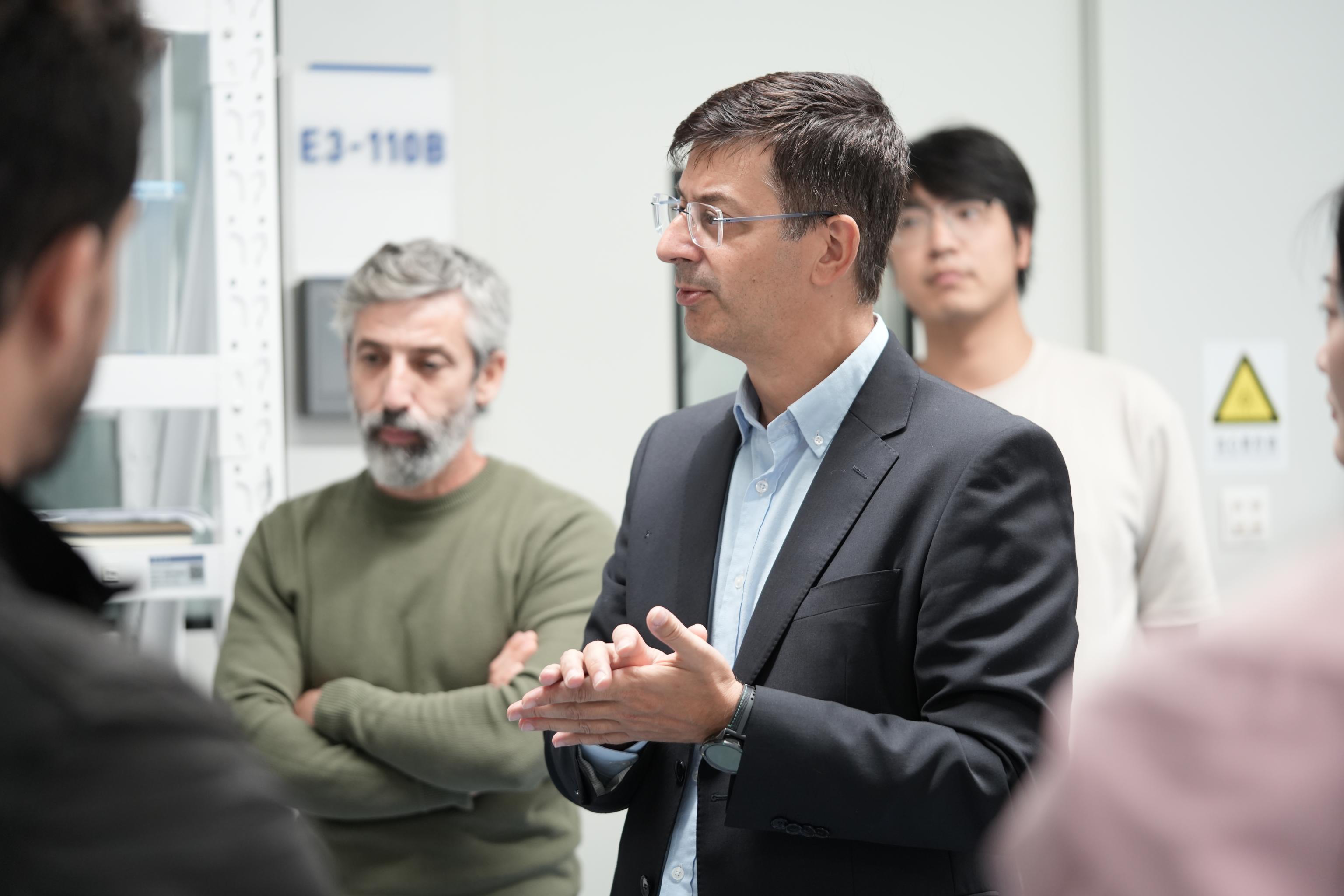
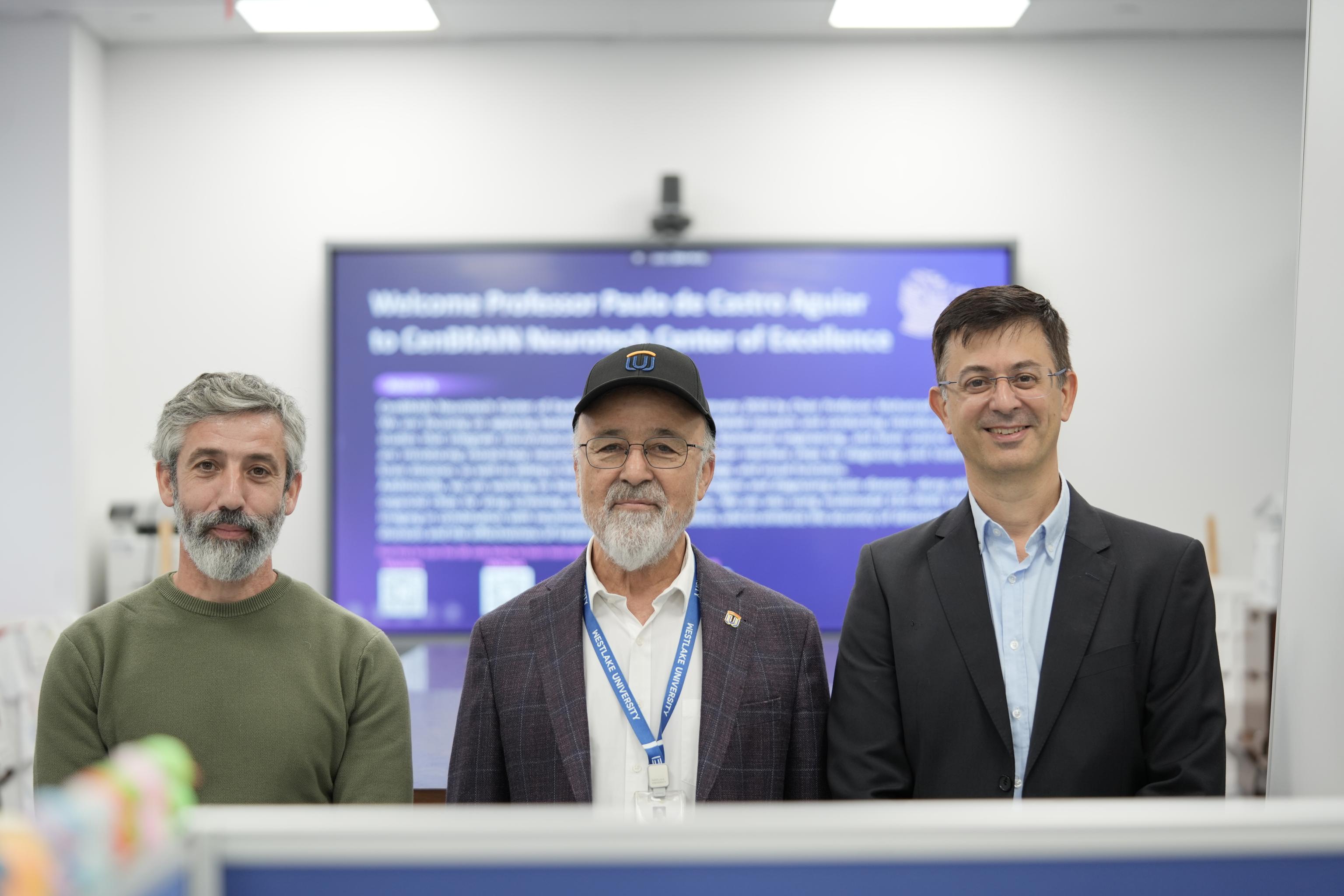
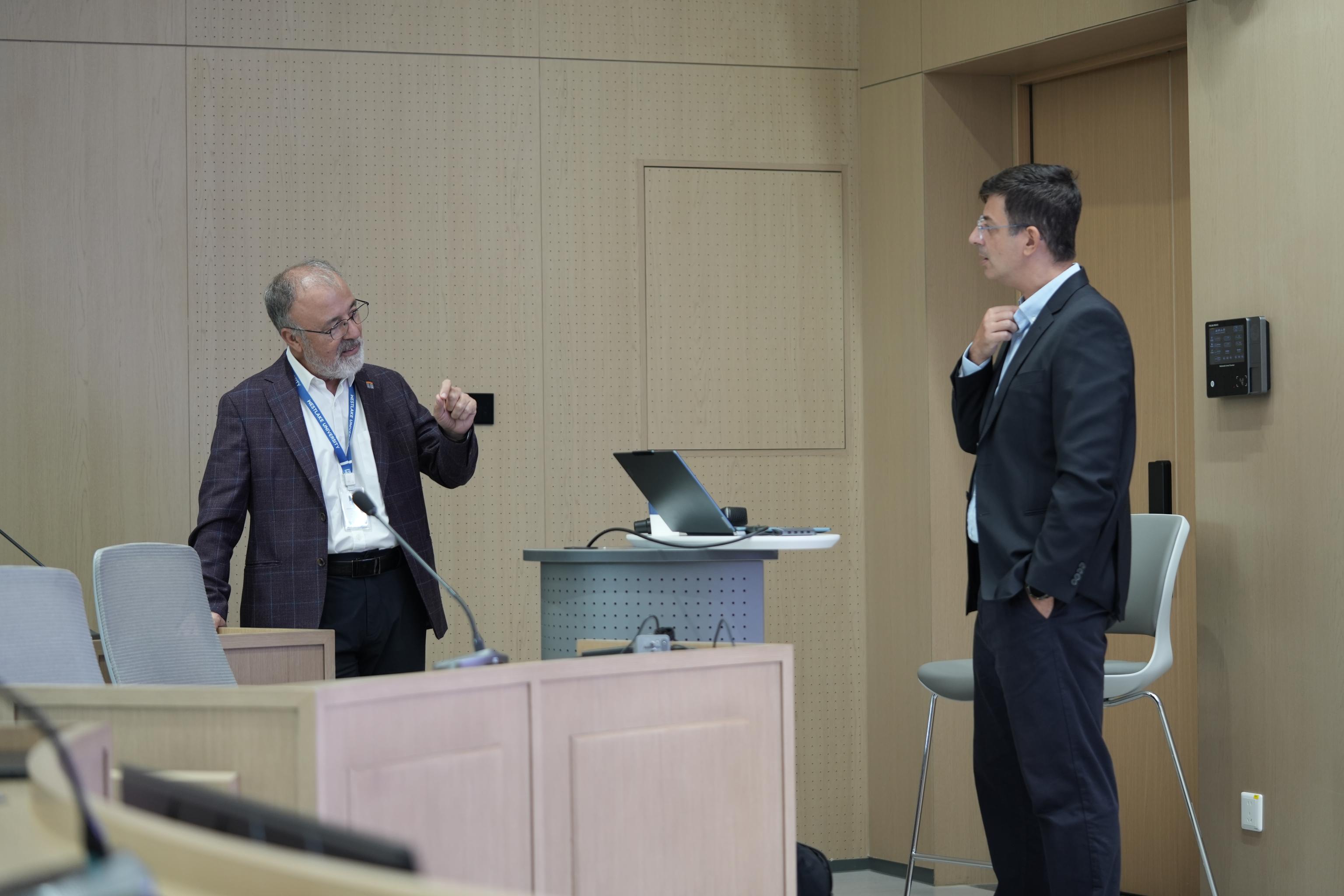
After the lecture, Dr. Paulo de Castro Aguiar visited CenBRAIN Neurotech, our team members had a lively discussion with him on the visual processing for BCI and brain organoid culture. He also patiently offered detailed advice on students' future academic development. Over the years, CenBRAIN Neurotech has accumulated substantial research achievements in BCI, memristors, and closed-loop neuromodulation, and this in-depth exchange with Dr. Paulo de Castro Aguiar and his team members has left us full of anticipation for potential collaboration ahead.