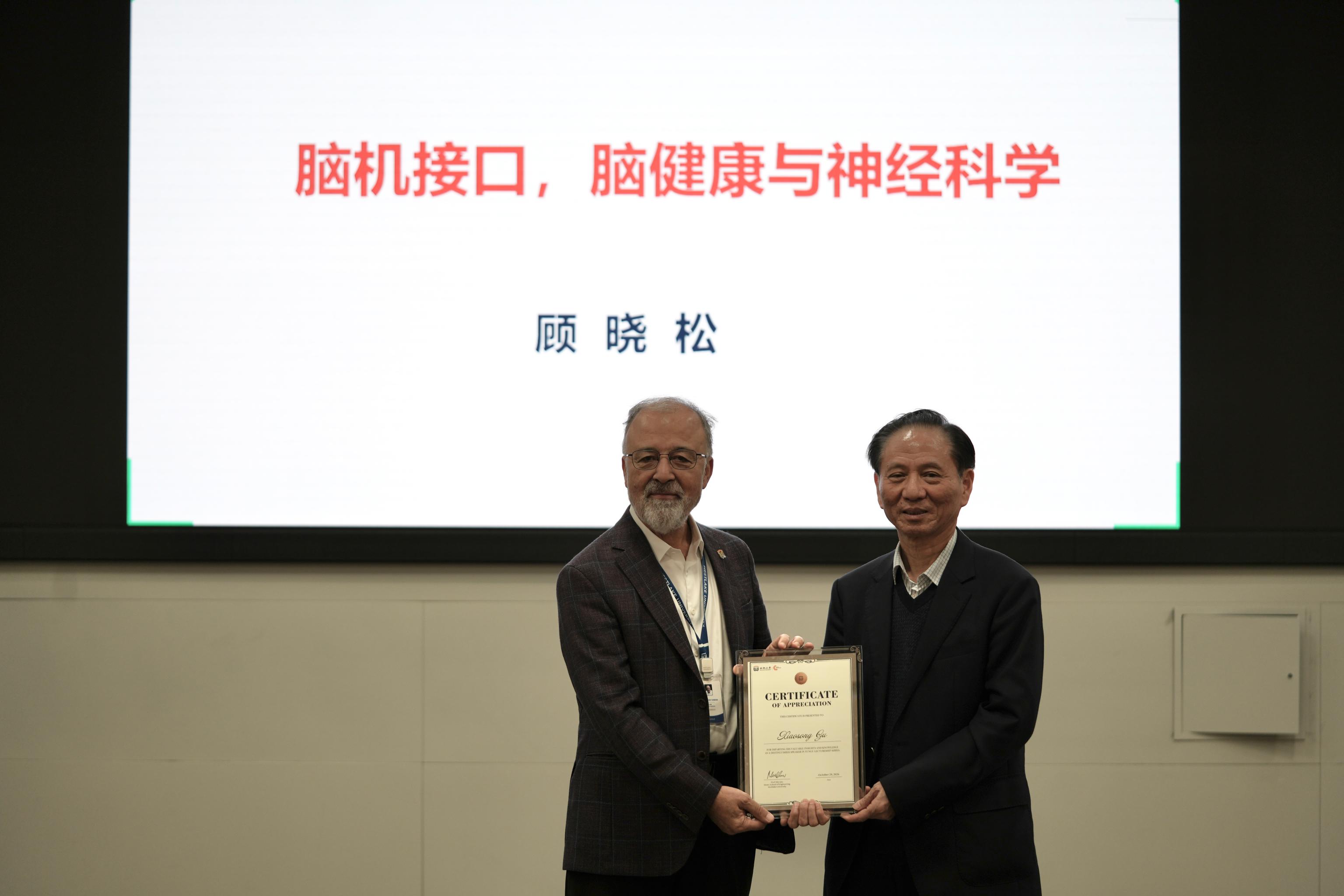
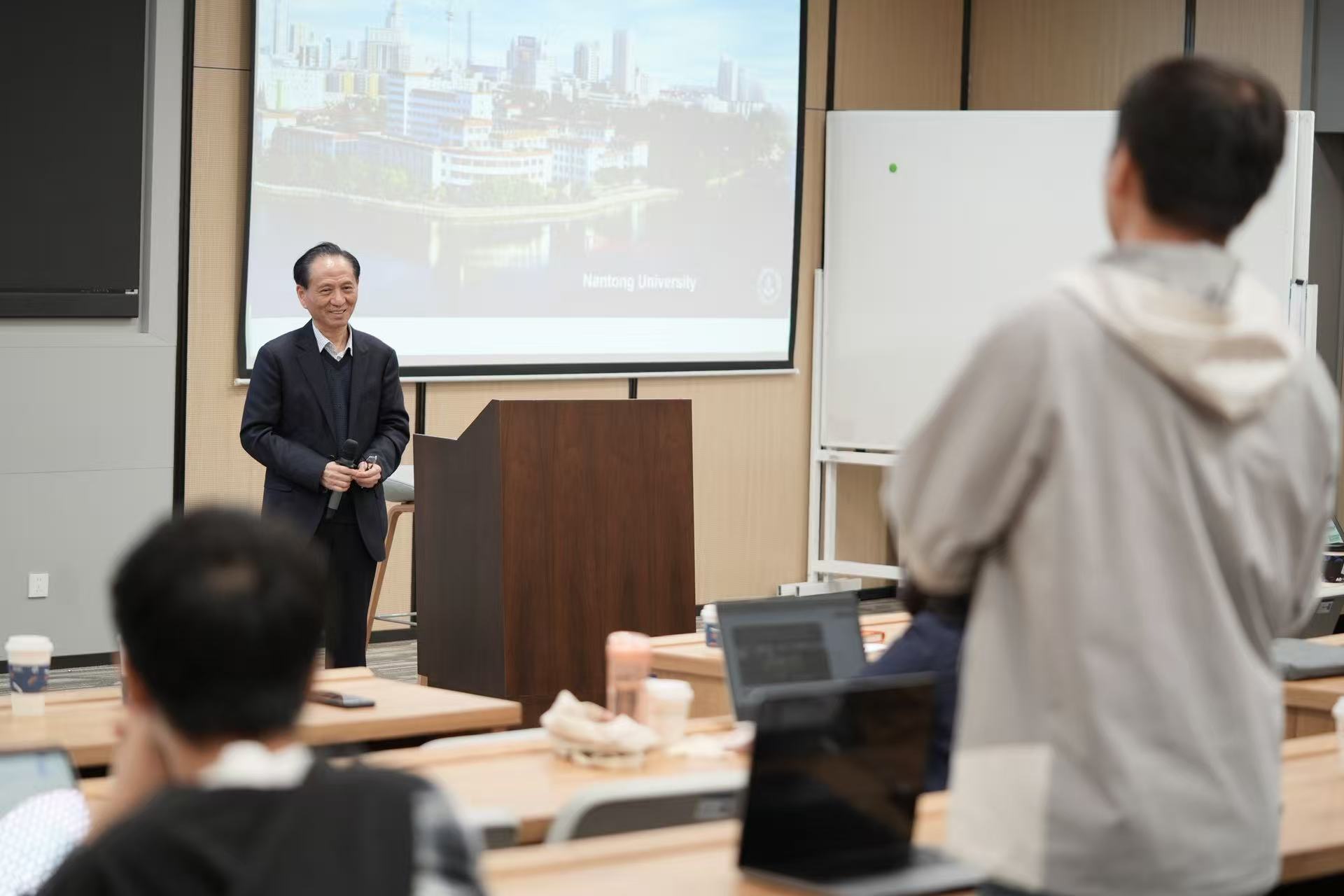
On the morning of October 29, the 32nd Yungu Lectureship was held at Westlake University. Professor Xiaosong Gu, Academician of the Chinese Academy of Engineering and Director of Jiangsu Key Laboratory of Tissue Engineering and Neuroregeneration, was our guest as distinguished speaker and gave a talk titled “Brain-computer interfaces, Brain health and Neuroscience.”
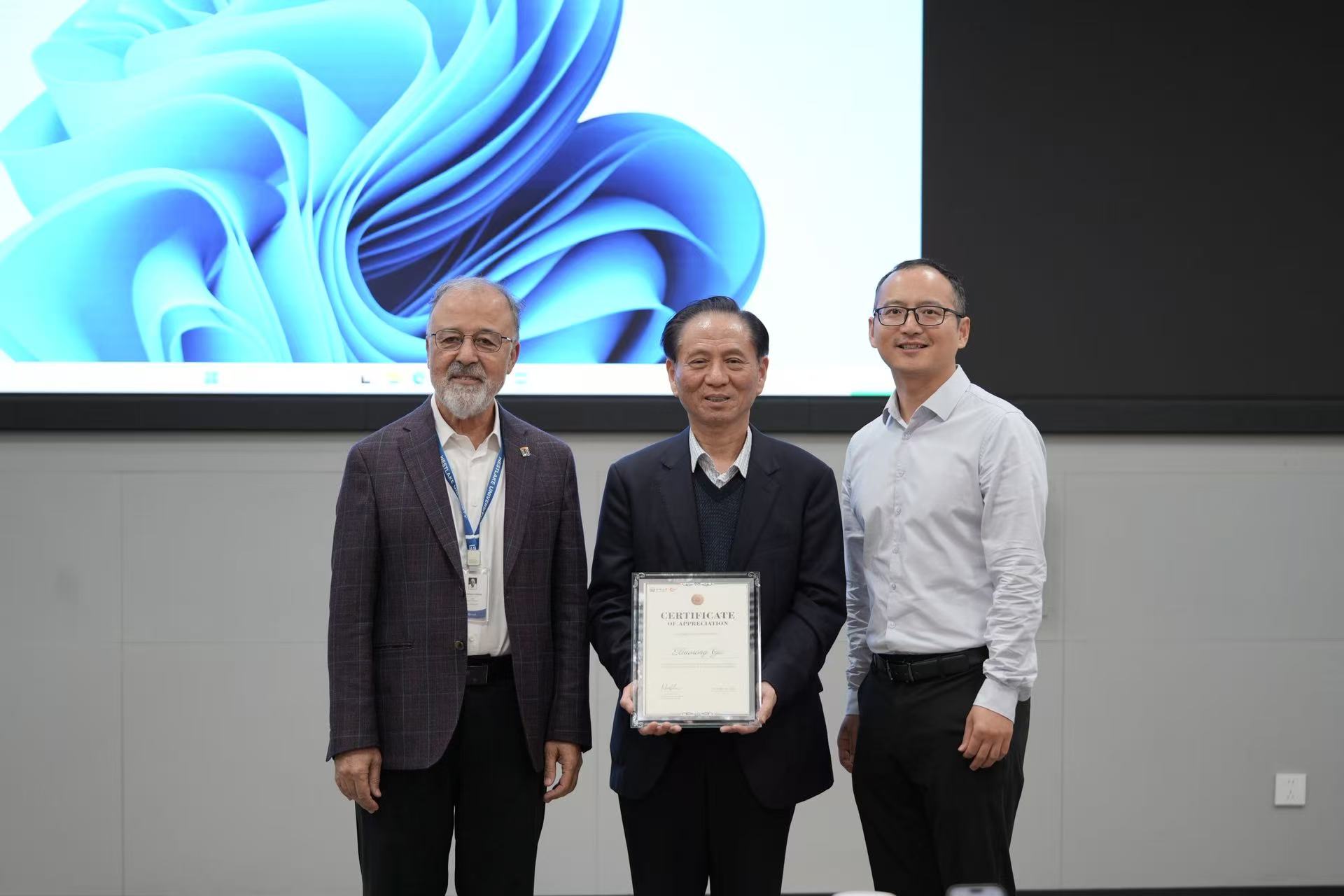
Chair Professor Min Qiu, Vice President of Westlake University and Dean of the School of Engineering, together with Chair Professor Mohamad Sawan, warmly welcomed Academician Xiaosong Gu. This session was co-hosted by Professor Mohamad Sawan and Associate Professor Bowen Zhu both from the School of Engineering.
Biography
Academician Xiaosong Gu has long been engaged in research on tissue engineering and nerve regeneration. He proposed the academic concept of "constructing biodegradable tissue-engineered nerves," which has been included in the new edition of a textbook at the University of Cambridge. The chitosan artificial nerve graft he invented has been approved for registration and marketing and applied in clinical practice and was selected as one of "China's Important Medical Advances in 2020." Science magazine once described him as "a pioneer in translational medicine for tissue-engineered nerves." He currently serves as Vice Director of the 11th Standing Committee of the Medical and Health Division of the Chinese Academy of Engineering, Chairman of the Expert Committee of the Brain-Computer Interface Industry Alliance, and Principal Investigator of the Chinese Academy of Engineering consulting project "Research on the Development Path of China's Brain-Computer Interfaces, Brain-Computer Interaction and Brain-Computer Intelligence Toward 2040."
Lecture Abstract
In his talk, Academician Gu pointed out that brain-computer interfaces represent a disruptive technology and a new quality productive force. The key challenges in their development center on signal acquisition, decoding algorithms, device safety, and legal and ethical issues. In the future, brain-computer interfaces will find expanded applications in healthcare, education and entertainment, transportation, aerospace, and individual capability enhancement.
Academician Gu particularly emphasized that the foundation of new quality productive forces is "brain capital," which consists of brain health and brain skills. Brain health is no longer merely a medical matter, but a strategic variable and element affecting a country's comprehensive competitiveness, social resilience and sustainable development. At the industrial level, artificial intelligence, brain-computer interfaces and brain science are helping to advance emerging and future industries.
In terms of the innovation development model, Academician Gu summarized it as "basic research—technology development—clinical translation—industrial implementation." He noted that the technological directions of brain-computer interfaces include high-bandwidth motor and language decoding for functional replacement, sensory restoration and neural encoding, precise closed-loop neuromodulation, and cognitive enhancement and brain-computer intelligence integration. The underlying core technologies involve flexible electronics, quantum technology, biomimetic flexible electrodes, biobatteries and micro-nano intelligent manufacturing.
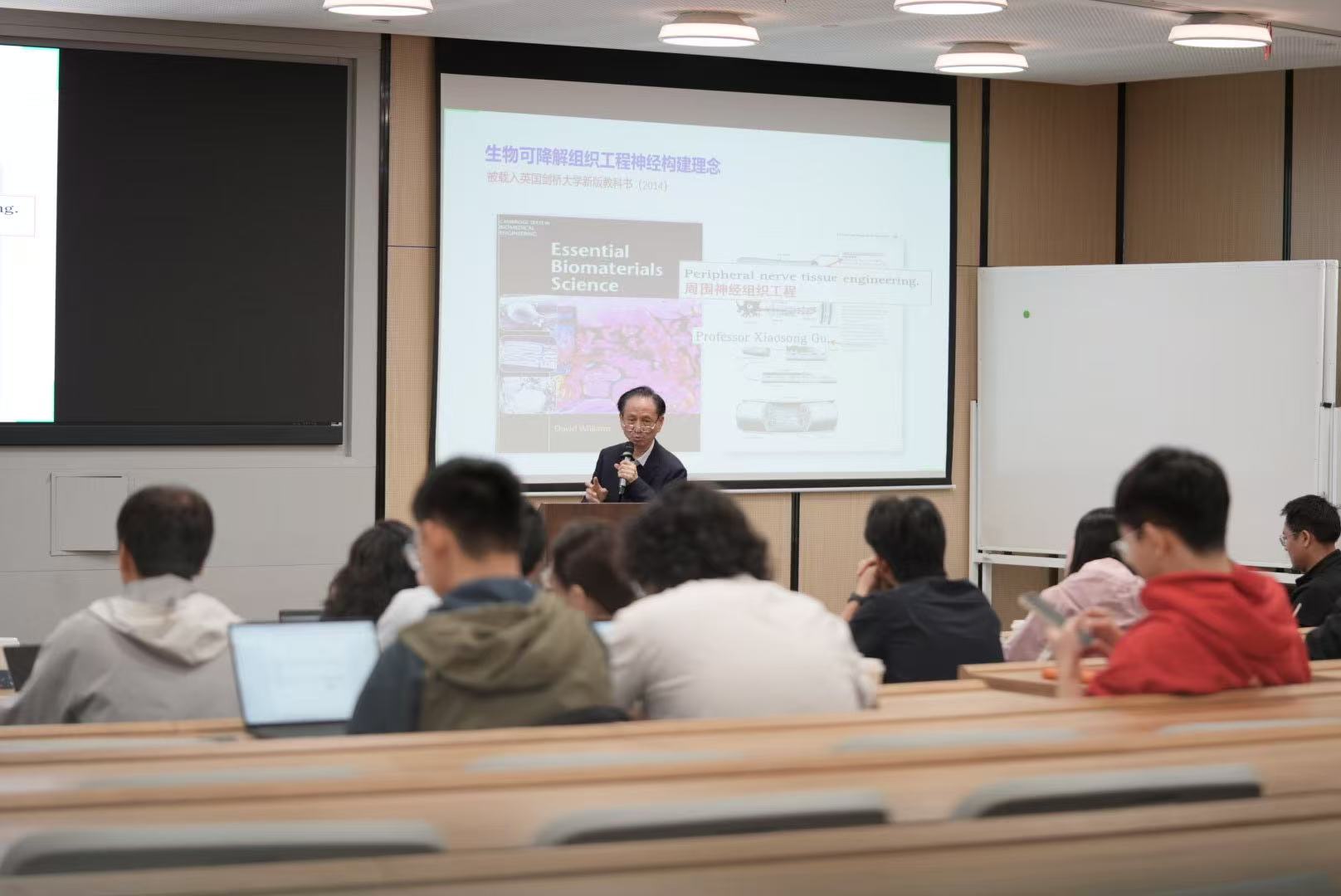
During the discussion session, faculty and students discussed with Academician Gu topics such as the application boundaries of brain-computer interfaces, neural repair mechanisms and complex functional mechanisms. Regarding whether the goal of brain-computer interfaces is limited to the medical field, he said that brain-computer interfaces have broad prospects beyond medicine but also carry ethical risks such as forced mind control. Brain-computer interfaces can currently address only some functions, and the technology is still at an early stage, requiring continuous iteration, upgrading and concentrated efforts. As understanding of the common mechanisms of the nervous system deepens, application scenarios will continue to expand.
After the lecture, Academician Gu, accompanied by Professor Sawan, visited the CenBRAIN Neurotech Center of Excellence. Professor Sawan introduced our center's research progress in neuromorphic chips, biosensing and multimodal neural imaging. Both Professors Gu and Sawan also exchanged views on issues of common interest, including signal acquisition, neural encoding and clinical translation of brain-computer interfaces-based devices.
The Yungu Lectureship aims to invite the most distinguished scholars, innovators and leaders across all engineering disciplines to disseminate cutting-edge scientific and technological discoveries to the students and faculty at Westlake University.
CenBRAIN Neurotech Center of Excellence, in collaboration with the School of Engineering, co-organized this session. We sincerely thank Academician Xiaosong Gu for visiting our Center and thank the School of Engineering and the Department of Electronics and Information Engineering for their support. We look forward to deeper exchanges and collaboration in the fields of brain-computer interfaces and neuroscience in the future.